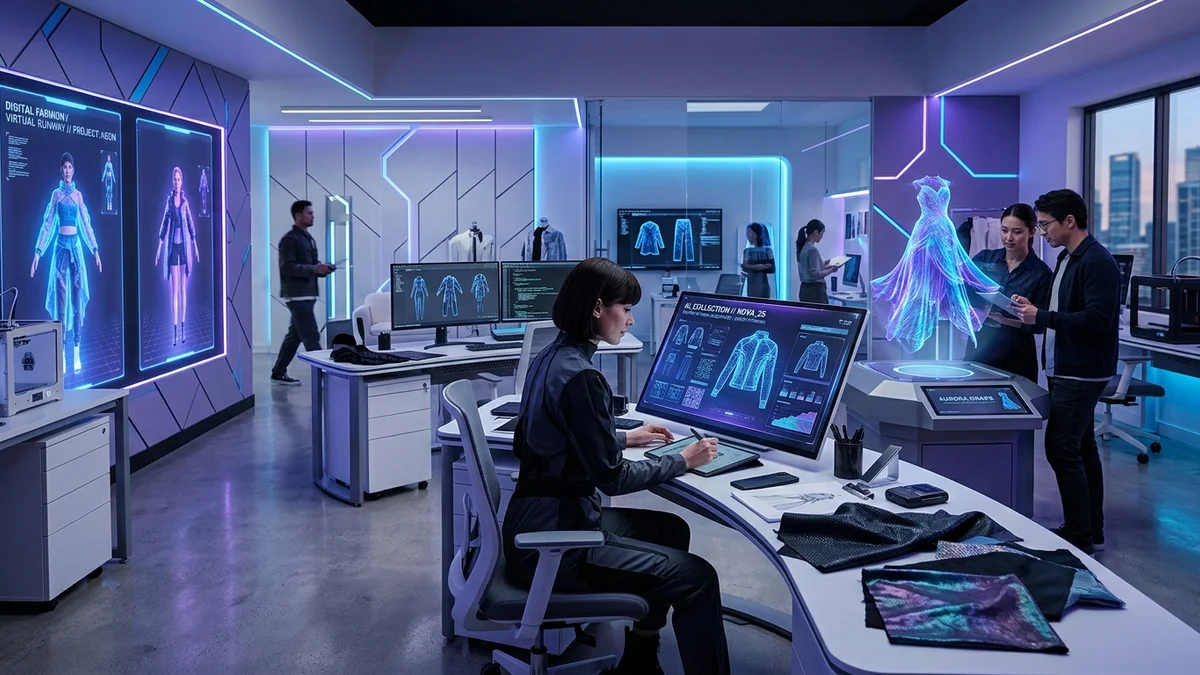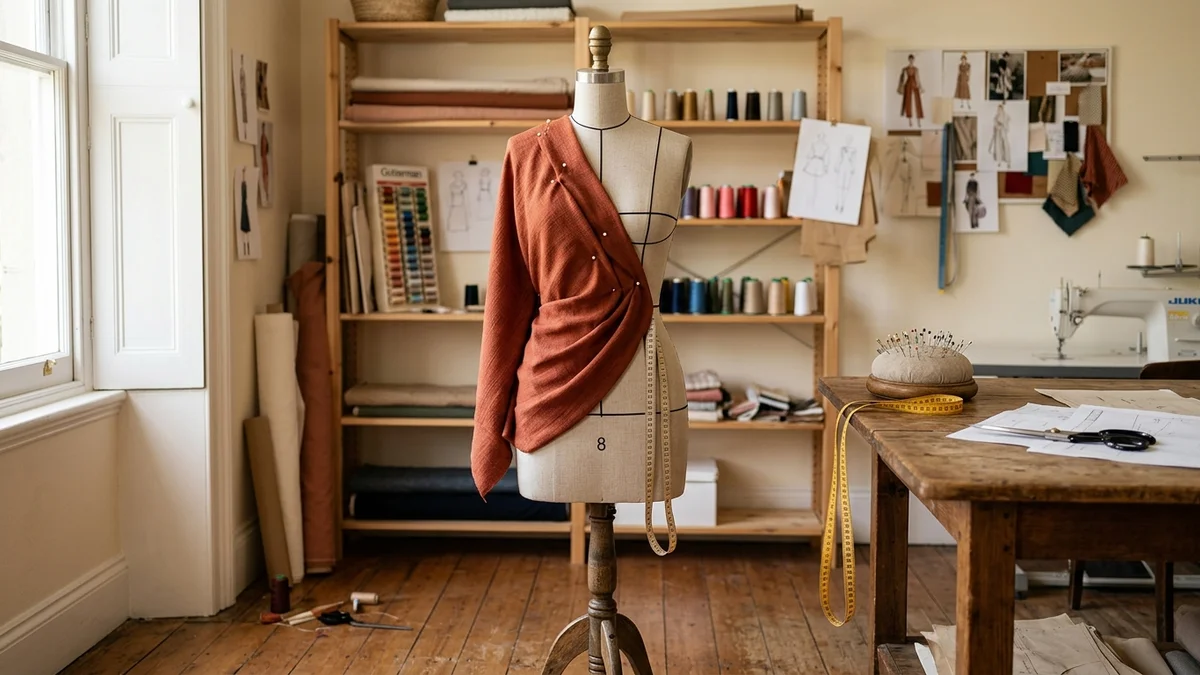
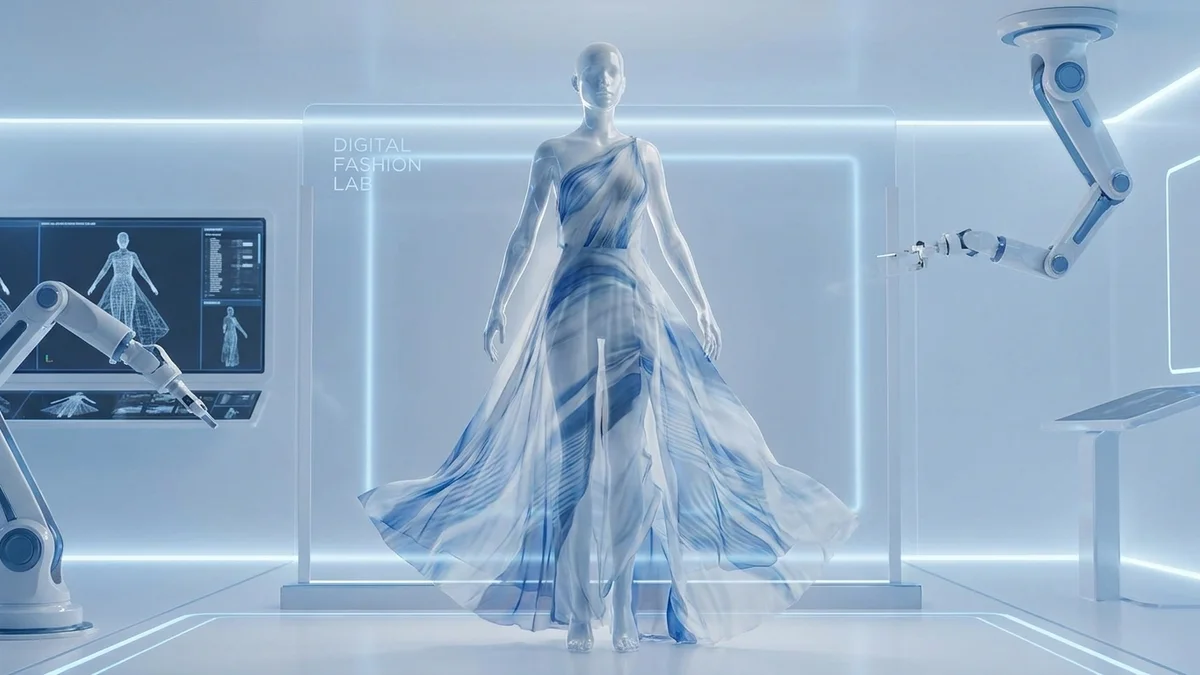
Rendering clothes has become one of the most transformative skills in both digital art and fashion technology. Whether you are an illustrator shading fabric folds or a fashion brand building photorealistic 3D garments, understanding how to render clothing is essential in 2025.
The global digital fashion market is expected to reach USD 1,714 billion by 2034, growing at a CAGR of 21.2%. From sketch-to-render AI pipelines to physics-based cloth simulation, the tools available today let anyone create lifelike garment visuals faster than ever. This guide covers every technique, software option, and best practice you need to master rendering clothes across digital art, 3D design, and AI-powered fashion workflows.
At a Glance
Rendering clothes refers to the process of creating realistic visual representations of garments, either through digital illustration techniques or 3D modeling software. Key methods include shading fabric folds in digital art, simulating cloth physics in programs like Marvelous Designer or CLO3D, and using AI tools that convert sketches into photorealistic fashion renders. The market is growing fast, with 3D fashion design software projected to hit USD 2.9 billion by 2030.
What Does Rendering Clothes Mean?
Rendering clothes is the process of creating a realistic visual depiction of garments using digital tools. It covers two main disciplines: digital illustration, where artists shade and color fabric on a 2D canvas, and 3D garment visualization, where software simulates how textiles drape, fold, and react to light.
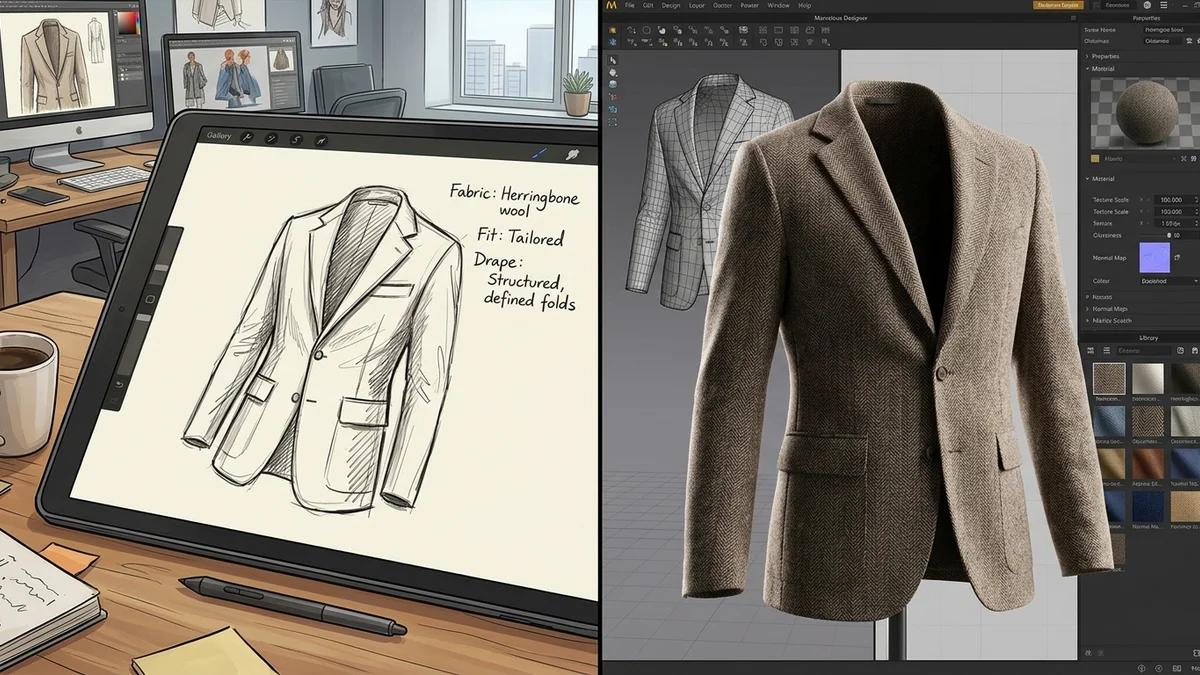
In digital art, rendering clothes means applying color, shadow, and highlight layers to drawn garments. Artists study fold types such as pipe folds, drop folds, zigzag folds, and spiral folds to add believable depth. Each fold type has a distinct shape that depends on how the fabric hangs from tension points.
In 3D fashion design, rendering involves creating a digital twin of a garment using specialized software. The system calculates how fabric behaves based on properties like weight, elasticity, friction, and weave density. The result is a photorealistic image or animation that looks nearly identical to a real photograph.
62% of online shoppers say they struggle to find clothes that fit when buying online.
Key Takeaway: Rendering clothes bridges the gap between design concept and final product, saving time and resources whether you work in illustration or fashion technology.
How Does 3D Clothing Rendering Work?
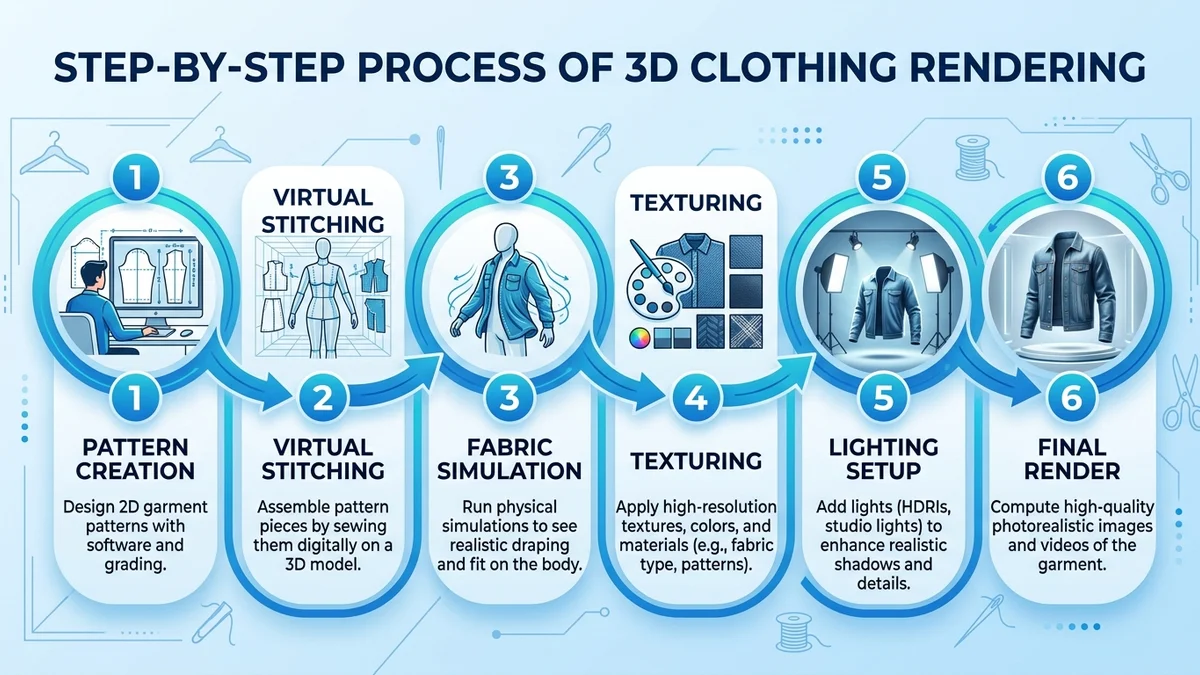
3D clothing rendering works by combining digital pattern-making, fabric simulation, and ray-tracing render engines to produce lifelike garment images. The process starts with a 2D pattern that gets stitched onto a virtual avatar, then the software simulates how the fabric drapes and moves before a final render captures every texture detail.
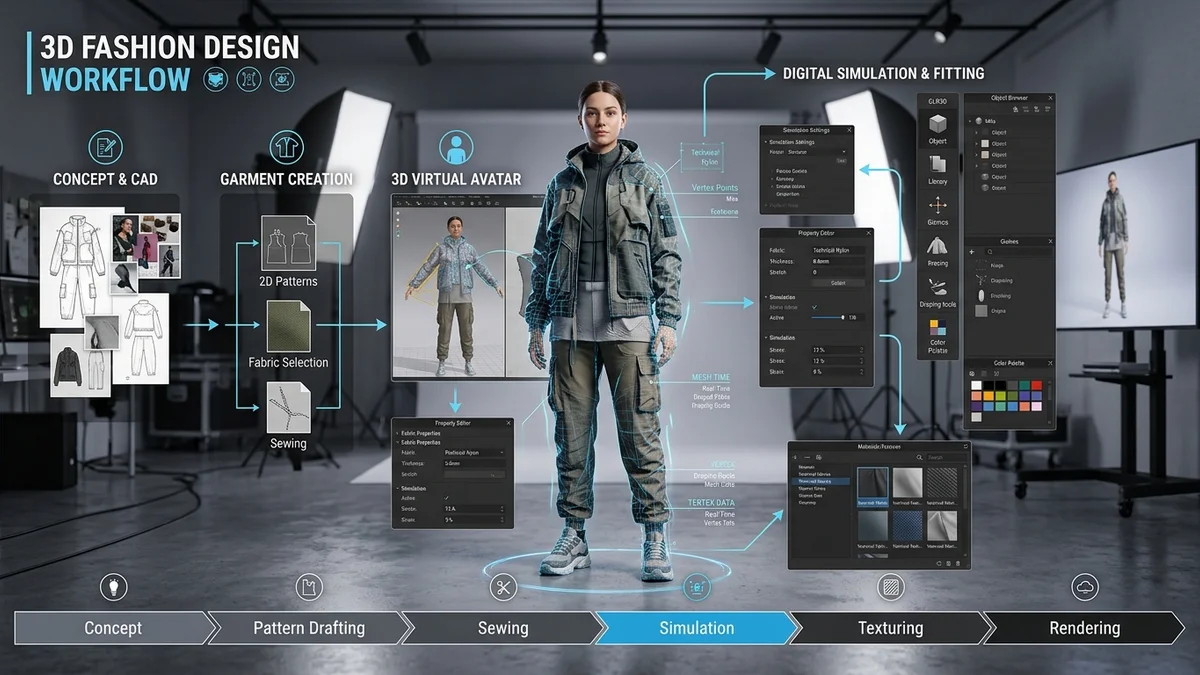
Here is the typical workflow for 3D garment rendering:
- Pattern creation -- Design flat 2D patterns based on garment measurements
- Virtual stitching -- Assemble patterns on a 3D avatar inside the software
- Fabric simulation -- The engine calculates drape, tension, and collision
- Texturing -- Apply PBR maps (diffuse, normal, roughness, specular) for material accuracy
- Lighting setup -- Position virtual lights to highlight fabric properties
- Final render -- Ray tracing or GPU rendering produces the photorealistic output
| Rendering Stage | Tools Used | Time Required |
|---|---|---|
| Pattern creation | CLO3D, Browzwear, Style3D | 30 min - 2 hours |
| Fabric simulation | Marvelous Designer, Houdini Vellum | 5 - 30 minutes |
| Texturing | Substance Painter, Substance Designer | 1 - 3 hours |
| Final render | V-Ray, KeyShot, Unreal Engine, Blender | 10 min - 2 hours |
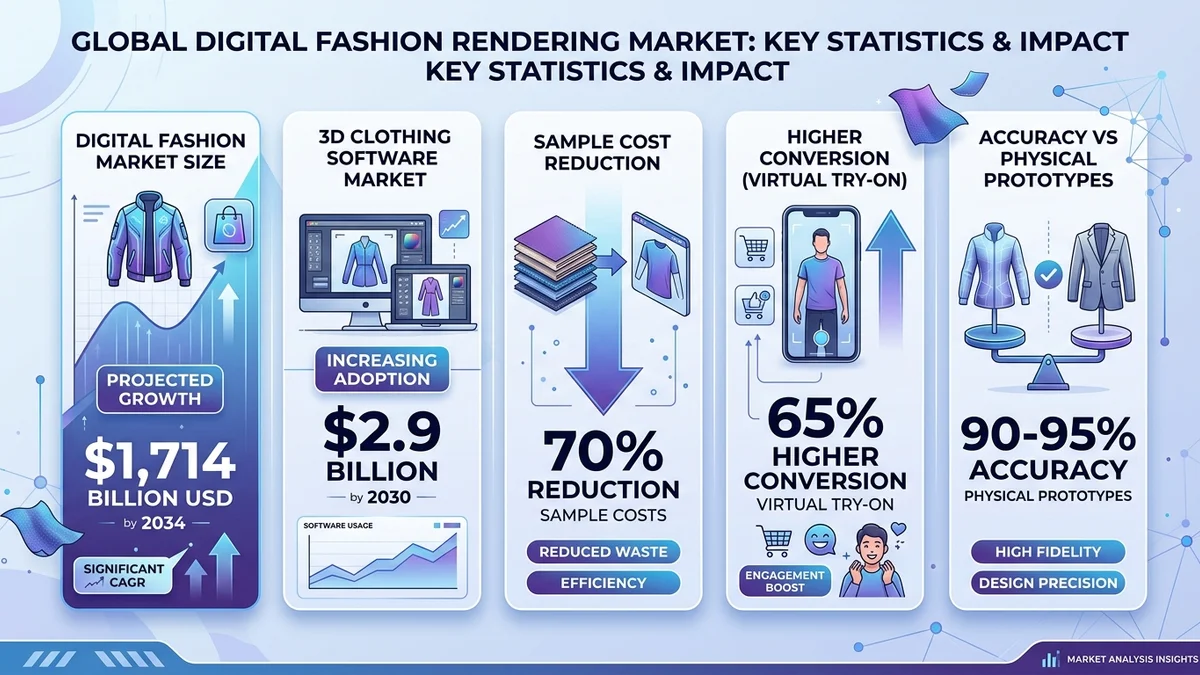
Key Takeaway: Modern 3D rendering pipelines achieve 90-95% accuracy compared to physical prototypes, making them reliable enough for production approval.
What Are the Best Software Tools for Rendering Clothes?
The best software for rendering clothes depends on your use case. Digital artists prefer Clip Studio Paint and Procreate for illustration, while fashion professionals rely on CLO3D, Marvelous Designer, and Style3D for 3D garment visualization.
Here is a comparison of the leading tools:
| Software | Best For | Price Range | Key Feature |
|---|---|---|---|
| CLO3D | Fashion industry professionals | $50-100/month | True-to-life garment simulation |
| Marvelous Designer | Game and film character clothing | $40-300/year | Advanced cloth physics |
| Style3D | Digital fashion and e-commerce | Custom pricing | AI-powered rendering |
| Blender | Budget-friendly 3D rendering | Free | Full cloth simulation suite |
| Substance Painter | Fabric texturing | $20/month | PBR material creation |
| V-Ray | Photorealistic final renders | $60/month | Industry-leading ray tracing |
| KeyShot | Quick product visualization | $100/month | Real-time rendering |
| Procreate | Digital art illustration | $13 one-time | Brush-based fabric rendering |
3D Fashion Design Software
CLO3D and Marvelous Designer dominate the 3D garment space. Both tools let you build garments from 2D patterns, simulate realistic fabric behavior, and export high-quality renders. The 3D fashion design software market was valued at USD 1.2 billion in 2024 and is projected to reach USD 2.9 billion by 2030 at a 13.5% CAGR.
Digital Art Rendering Tools
For illustrators, the process involves understanding fabric fold types and applying layered shading. Tools like Clip Studio Paint offer dedicated brushes for fabric rendering, while Procreate provides a portable option for iPad artists. The key is recognizing how different materials react to light -- shiny silk versus matte cotton, thin chiffon versus heavy wool.
AI-Powered Rendering Platforms
A newer category includes AI sketch-to-render tools like Fashion Diffusion, Resleeve, and The New Black. These platforms let you upload a simple sketch and receive a photorealistic garment render in minutes, democratizing access to professional-quality visuals.
Key Takeaway: Choose your software based on your goals. Use CLO3D or Style3D for fashion production, Blender for budget rendering, and AI tools for rapid prototyping.
What Are the Different Types of Fabric Folds in Rendering?
Fabric folds in rendering fall into six main categories: pipe folds, zigzag folds, spiral folds, drop folds, half-lock folds, and diaper folds. Understanding these fold types is the foundation of realistic cloth rendering in both 2D illustration and 3D simulation.
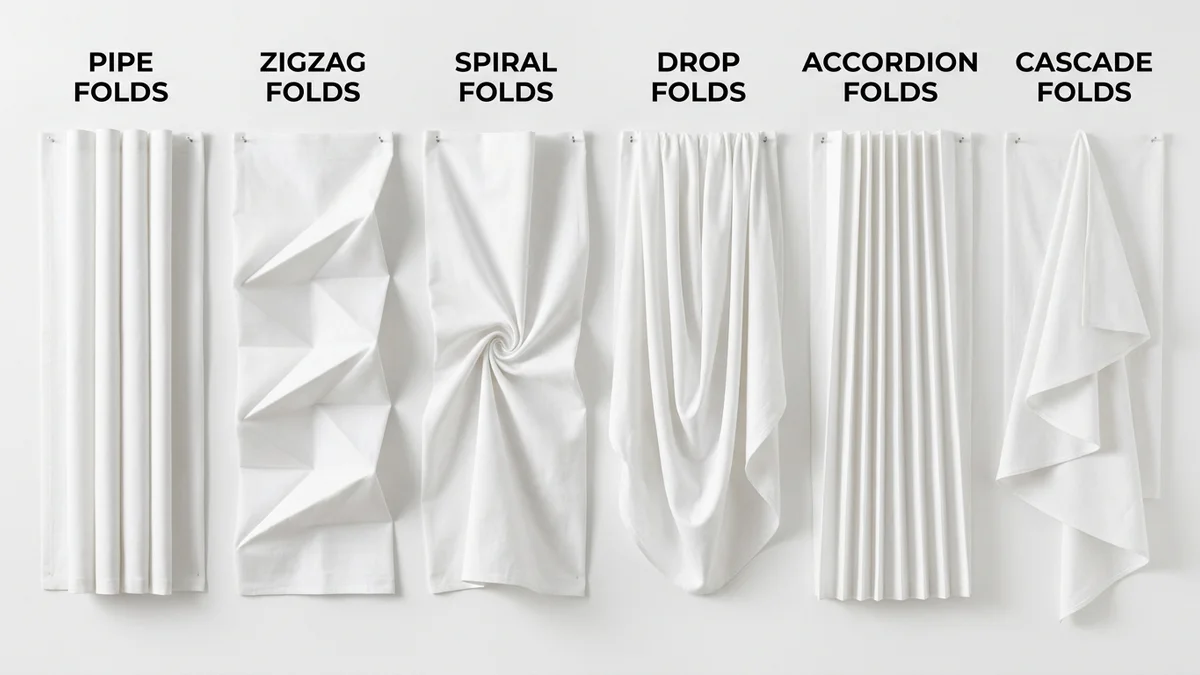
| Fold Type | Shape | Caused By | Common In |
|---|---|---|---|
| Pipe fold | Cylindrical tubes | Fabric hanging from two points | Curtains, skirts |
| Zigzag fold | Alternating angles | Fabric compressed between points | Pants at knees, elbows |
| Spiral fold | Twisted tubes | Fabric wrapping around a form | Sleeves, tight garments |
| Drop fold | Conical cascade | Fabric hanging from one point | Tablecloths, capes |
| Half-lock fold | Interlocking zigzags | Fabric changing direction | Fabric pooling on surfaces |
| Diaper fold | U-shaped sags | Fabric supported at two ends | Scarves, draped necklines |
In digital art, artists study these folds to shade garments convincingly. Each fold type creates predictable shadow patterns. Pipe folds produce parallel shadows along the cylinder walls. Zigzag folds create sharp alternating planes of light and dark.
In 3D rendering, cloth simulation engines calculate these folds automatically based on fabric parameters. You control properties like stiffness, weight, and friction to influence how folds form on the virtual model.
Thin fabrics like chiffon create smaller, softer folds, while thick materials like denim produce fewer, more defined creases.
Key Takeaway: Master the six fold types to render any fabric convincingly, whether you paint by hand or adjust simulation parameters.
How Is Rendering Clothes Transforming the Fashion Industry?
Rendering clothes is transforming fashion by replacing physical prototyping with digital visualization, cutting sample production costs by up to 70% and reducing time-to-market by half. Brands like Tommy Hilfiger, Adidas, and Gucci now render entire collections digitally before producing a single physical sample.
Sustainability Benefits
Traditional fashion relies on multiple rounds of physical sampling, generating significant textile waste. Digital rendering eliminates most of this waste. A single garment can go through dozens of virtual iterations without consuming any raw materials.
E-Commerce and Virtual Try-On
Rendered garments power virtual try-on technology that lets shoppers see how clothes look on their body before purchasing. Conversion rates increase by up to 65% when products are supported by virtual try-on software. This technology also dramatically reduces fashion returns caused by sizing and fit issues.
Tools like CheckMyFit take this concept further by letting you upload your own photo and virtually try on any clothing item. Instead of guessing whether a garment will suit your body type, you get an AI-powered preview in seconds. This bridges the gap between browsing online and the confidence of trying clothes in a physical store.
Virtual Fashion Shows
Brands now host entirely digital fashion shows where every garment is rendered in 3D. DressX and other digital fashion platforms sell clothing that exists only as rendered images -- designed to be worn in photos and social media rather than in physical form.
Marketing and Product Photography
Rendered garment images replace traditional photo shoots for catalogs and e-commerce listings. A single 3D model can generate hundreds of color and fabric variations without scheduling models, photographers, or studio time. This approach cuts clothing photo editing costs significantly.
Key Takeaway: Clothing rendering is not just a design tool. It powers the entire modern fashion pipeline from concept to customer experience.
How Can You Render Clothes Realistically Step by Step?
You can render clothes realistically by following a structured process that covers reference gathering, base color application, shadow mapping, highlight placement, and texture overlay. This applies to both digital illustration and 3D workflows.
For Digital Artists (2D Rendering)
- Gather references -- Study real fabric photos for your garment type
- Block in base colors -- Fill the garment silhouette with flat color
- Map shadow areas -- Identify where folds create darkness based on fold types
- Paint core shadows -- Apply the main shadow layer using a soft brush
- Add cast shadows -- Paint darker areas where one fold blocks light from another
- Place highlights -- Add light reflections on fold peaks and exposed surfaces
- Refine edges -- Sharpen fold transitions and add subtle color variation
- Overlay textures -- Blend fabric texture patterns on a separate layer
For 3D Designers
- Import or create patterns -- Use flat pattern files or draw directly in CLO3D
- Set fabric properties -- Define weight, stretch, friction, and thickness
- Run simulation -- Let the engine calculate draping on the avatar
- Apply textures -- Add PBR material maps for realistic surface detail
- Set up lighting -- Use HDRI environments or manual light placement
- Adjust camera -- Frame the garment for the best angle
- Render -- Export at production quality using your render engine
Key Takeaway: Whether working in 2D or 3D, realistic cloth rendering follows a systematic layering approach from broad shapes to fine details.
What Role Does AI Play in Rendering Clothes?
AI plays a growing role in rendering clothes by automating fabric simulation, enabling sketch-to-photorealistic conversion, and powering virtual try-on experiences. Real-time AI rendering delivers high-quality fashion visuals in seconds instead of the hours required by traditional pipelines.
Key AI applications in clothing rendering include:
- Sketch-to-render conversion -- Upload a hand-drawn sketch and receive a photorealistic garment image within minutes
- Text-to-design generation -- Describe a garment in words and AI creates the visual from scratch
- Automated fabric simulation -- AI-driven physics models calculate cloth behavior faster than traditional solvers
- Virtual try-on -- AI maps rendered garments onto user photos for realistic previews
- Style transfer -- Apply the look of one fabric or pattern to a completely different garment
- Automated color variations -- Generate dozens of colorways from a single AI-generated clothing design
Platforms like Style3D AI, Fashion Diffusion, Resleeve, and The New Black are leading this shift. These tools democratize professional-quality rendering, letting independent designers and small brands access capabilities that were previously exclusive to large fashion houses with dedicated rendering teams.
The 3D fashion design software market is projected to grow from USD 2.7 billion in 2025 to USD 4.8 billion by 2035, at a 5.92% CAGR.
Key Takeaway: AI does not replace traditional rendering skills but accelerates every stage of the process, from initial concept to final output.
Recommended Products for Rendering Clothes
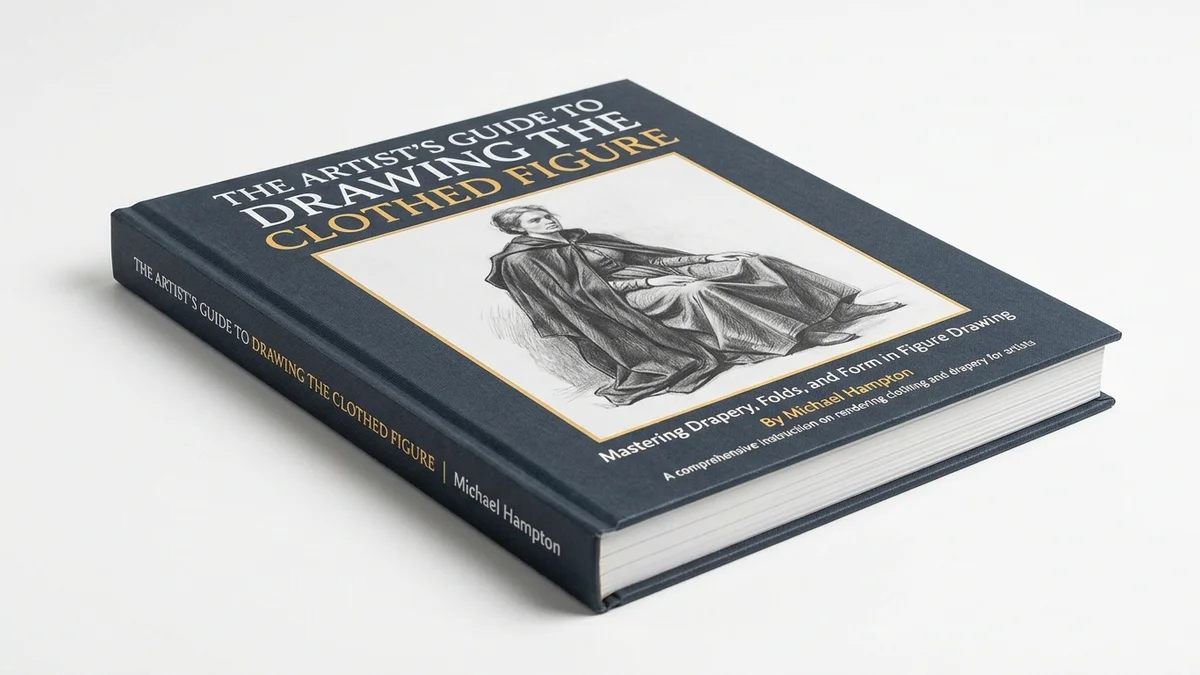
A comprehensive resource on rendering clothing and drapery for artists. Covers fold types, fabric behavior, and shading techniques essential for realistic garment illustration.
View on Amazon →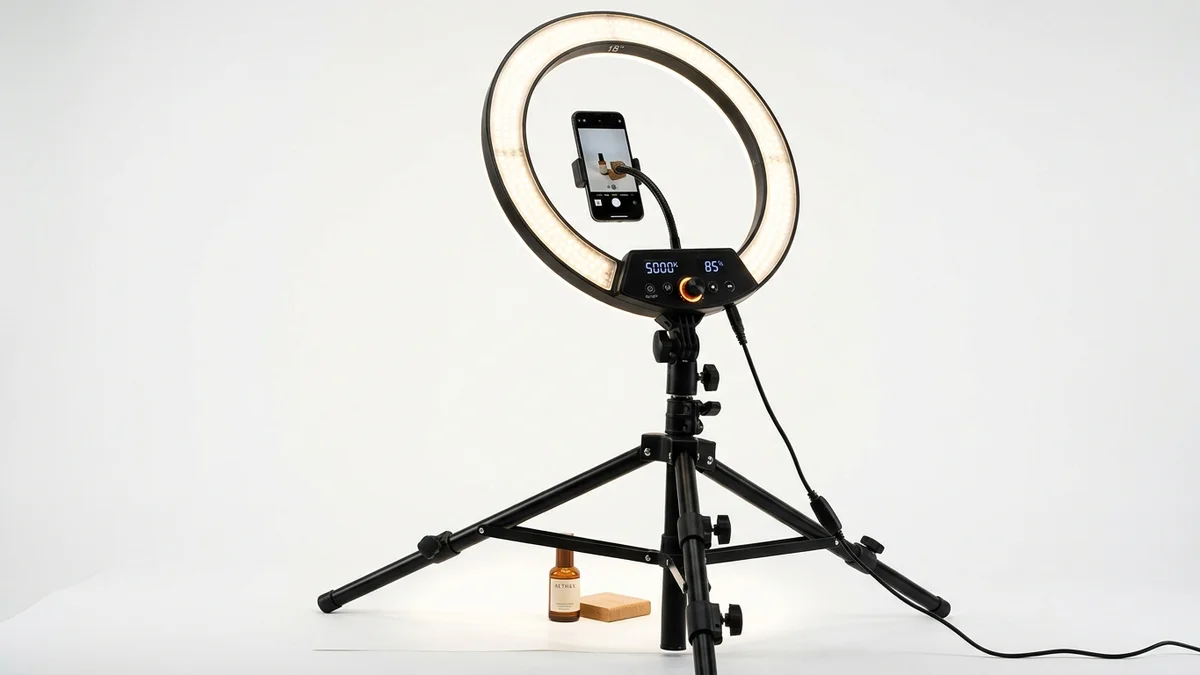
Professional lighting for photographing fabric references and garment samples. Consistent, shadow-free illumination helps capture accurate textures for digital rendering projects.
View on Amazon →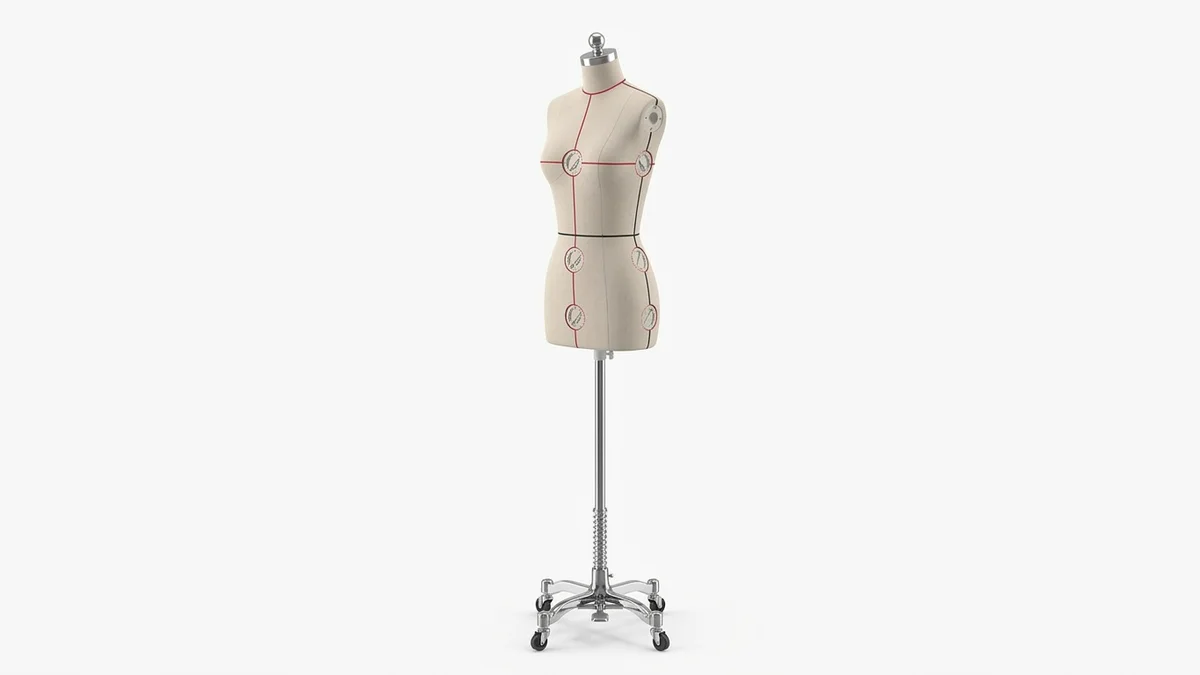
An adjustable mannequin that serves as the perfect physical reference for understanding how fabric drapes and folds. Invaluable for artists and designers studying cloth behavior for rendering.
View on Amazon →Frequently Asked Questions
What is the best software for rendering clothes in 3D?
The best software depends on your industry. CLO3D and Marvelous Designer lead for fashion design and garment prototyping with advanced cloth physics. Blender offers a powerful free alternative with built-in cloth simulation. For AI-powered rendering, Style3D and Fashion Diffusion provide fast sketch-to-photorealistic conversion without deep technical expertise.
How much does professional 3D clothing rendering cost?
Professional 3D clothing rendering typically costs between $200 and $2,000 per garment depending on complexity, detail level, and turnaround time. Simple garments like t-shirts cost less, while complex designs with intricate embroidery or layered fabrics cost more. AI-powered tools have reduced costs significantly for basic renders.
Can AI replace traditional cloth rendering techniques?
AI enhances but does not fully replace traditional rendering techniques. AI tools excel at rapid prototyping, generating color variations, and producing quick visualizations from sketches. However, fine art illustration and high-end production still require manual skill for precise control over fabric detail, artistic style, and brand-specific aesthetics.
What fabric types are hardest to render realistically?
Transparent and semi-transparent fabrics like chiffon, organza, and lace are the most challenging to render. They require accurate subsurface scattering, translucency mapping, and careful attention to how light passes through layered material. Highly reflective materials like satin and patent leather also demand precise specular control.
How long does it take to render a single garment in 3D?
Rendering a single garment from scratch takes 2 to 8 hours depending on complexity. Pattern creation takes 30 minutes to 2 hours, simulation runs in 5 to 30 minutes, texturing requires 1 to 3 hours, and final rendering adds 10 minutes to 2 hours. AI tools can cut this total to under 30 minutes for basic designs.
Do I need a powerful computer for cloth rendering?
You need at least 16 GB of RAM, a dedicated GPU with 4 GB VRAM, and a modern multi-core processor for basic 3D cloth rendering. Professional work with complex simulations and high-resolution textures benefits from 32 GB RAM, an NVIDIA RTX series GPU, and fast SSD storage. Cloud rendering services offer an alternative for less powerful machines.
How does virtual try-on use rendered clothing?
Virtual try-on technology uses rendered clothing by mapping 3D garment models onto user photos or avatars in real time. The system analyzes body shape and proportions, then adjusts the rendered garment to simulate realistic fit and drape. Platforms like CheckMyFit make this technology accessible to everyday shoppers.
What file formats are used for 3D clothing renders?
Common formats include OBJ and FBX for 3D garment meshes, GLTF for web-based visualization, and DXF for pattern exchange. Texture files use PNG, TIFF, or EXR for PBR maps. Final rendered images typically export as PNG or TIFF for print and WebP or JPEG for web use. CLO3D uses its proprietary ZPAC and ZPRJ formats.
Conclusion
Rendering clothes sits at the intersection of art, technology, and commerce. Whether you are an artist learning to shade denim folds or a fashion brand replacing physical samples with 3D models, the skills and tools covered in this guide apply directly to your work.
The numbers tell the story: digital fashion is growing at over 21% annually, 3D rendering reduces sampling costs by up to 70%, and virtual try-on boosts conversion rates by 65%. The barriers to entry keep dropping as AI tools make professional-quality rendering accessible to everyone.
Ready to see how rendered garments look on your own body? Try CheckMyFit free and experience virtual try-on technology powered by the same rendering principles covered in this guide.