A great fashion clothes photo tells a story before anyone reads a single word. Whether you're launching a clothing brand, building a lookbook, or posting outfits on social media, the quality of your fashion photography determines how people perceive your style.
The fashion photography industry has changed dramatically. AI tools now generate studio-quality images in seconds. Smartphone cameras rival professional DSLRs. And virtual try-on technology lets shoppers see clothes on their own body before buying. Yet the fundamentals of capturing beautiful clothing remain the same: great lighting, smart composition, and deliberate styling.
This guide covers everything you need to create professional fashion clothes photos in 2026. From essential equipment and shooting techniques to AI-powered tools and current trends, you'll learn what works right now.
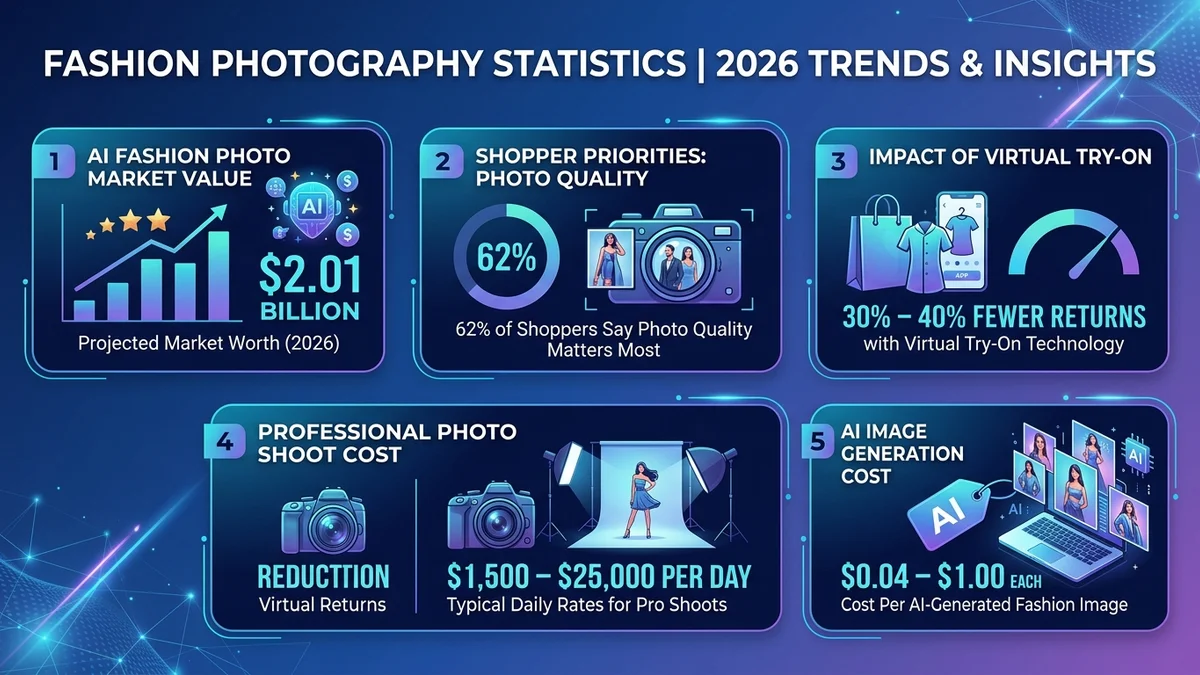
The AI-generated fashion photography market reached $2.01 billion in 2025, transforming how brands create clothing images.
At a Glance
Fashion clothes photography captures garments in their best light through techniques like flat lay, editorial, catalog, and lifestyle shoots. Essential elements include proper lighting, clean backgrounds, and thoughtful styling. In 2026, AI tools and smartphone cameras make professional results accessible to everyone. Virtual try-on technology adds a new dimension by letting viewers see clothes on real body types.
What Is Fashion Clothes Photography?
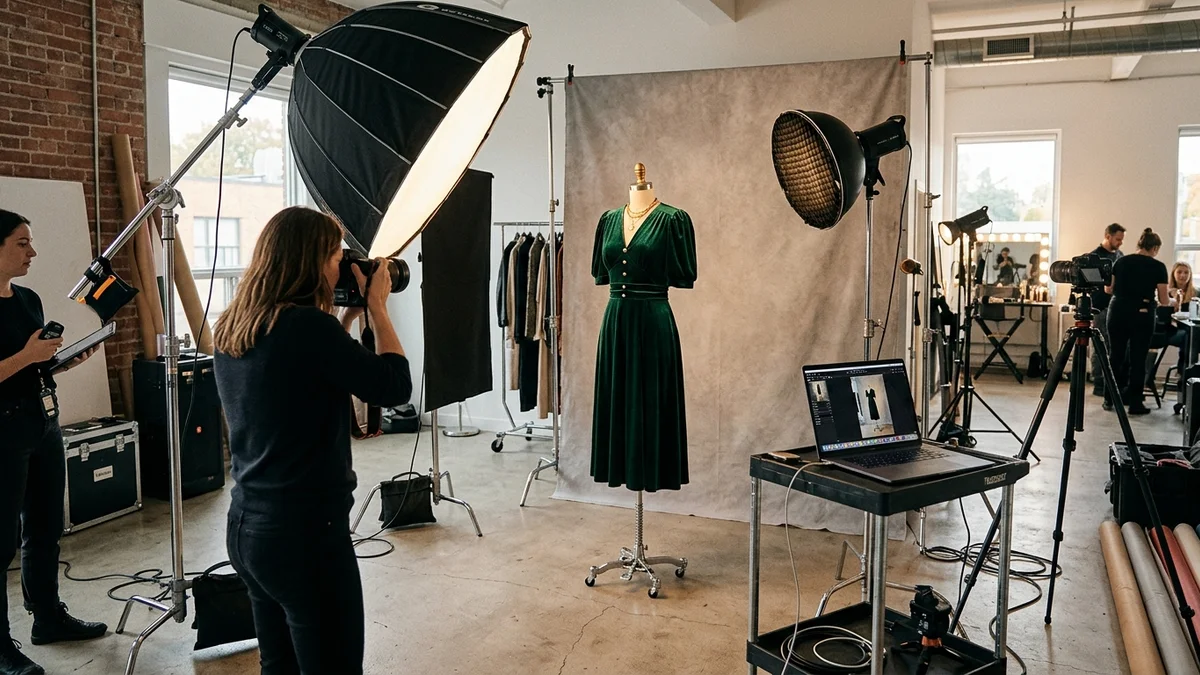
Fashion clothes photography is the art of capturing garments in ways that showcase their design, fit, texture, and appeal. It goes beyond simple product shots by creating visual narratives that connect viewers emotionally with clothing.
Unlike standard product photography, fashion photography emphasizes mood, styling, and storytelling. A catalog shot shows what a dress looks like. A fashion clothes photo shows how that dress makes someone feel.
Key Takeaway: Fashion clothes photography combines technical skill with creative vision to present garments as desirable, aspirational items rather than mere products.
The field spans several contexts:
- Brand marketing for e-commerce stores and websites
- Social media content for Instagram, TikTok, and Pinterest
- Lookbook creation for seasonal collections
- Editorial spreads for magazines and online publications
- Personal style documentation for influencers and fashion bloggers
What Are the Different Types of Fashion Clothing Photos?
There are six main styles of fashion clothes photography. Each serves a different purpose and requires different techniques. Choosing the right type depends on your platform, audience, and budget.
| Photo Type | Best For | Difficulty | Cost | Equipment Needed |
|---|---|---|---|---|
| Flat Lay | Social media, e-commerce | Easy | Low | Smartphone, surface, natural light |
| Ghost Mannequin | E-commerce catalogs | Medium | Medium | Mannequin, camera, editing software |
| On-Model | Lookbooks, campaigns | Hard | High | Model, photographer, lighting kit |
| Editorial | Magazines, brand campaigns | Hard | High | Full crew, location, creative direction |
| Lifestyle | Social media, blogs | Medium | Medium | Model, natural setting, camera |
| Catalog | Online stores, wholesale | Medium | Medium | Model or mannequin, studio, consistent lighting |
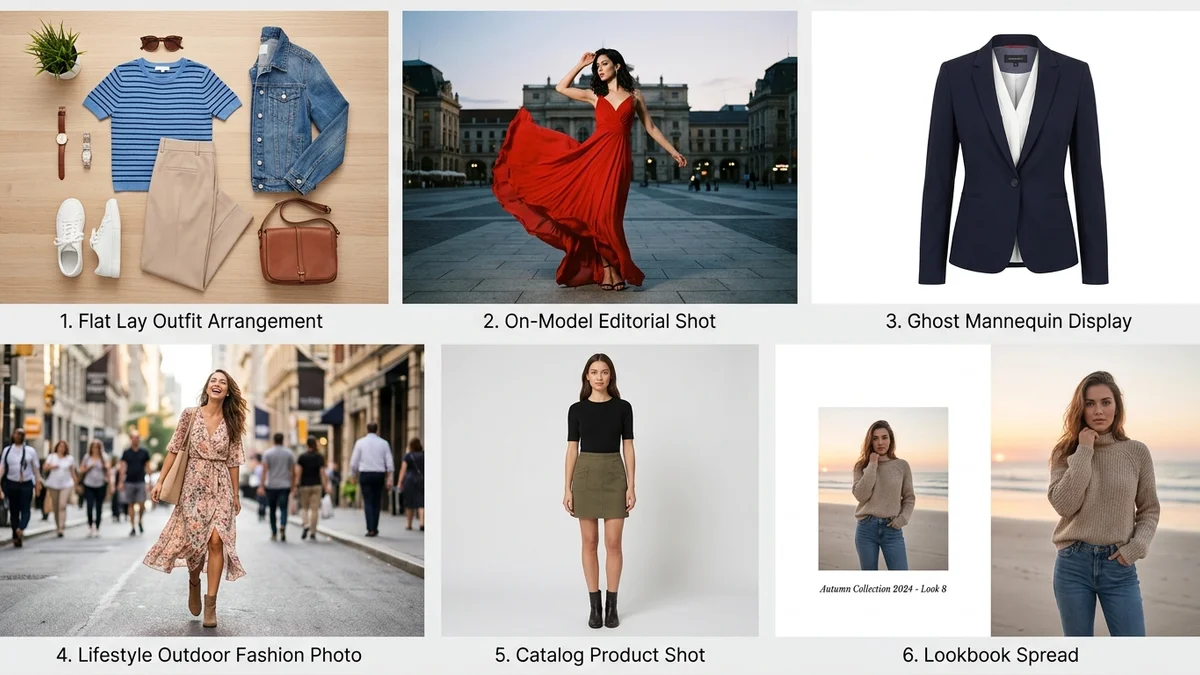
Flat Lay Photography
Flat lay photography arranges clothes on a flat surface and shoots from directly above. It's the most accessible style for beginners because it requires minimal equipment.
Style outfits with accessories like watches, sunglasses, or shoes to create context. Use a clean white surface or textured background like wood or marble. Iron every garment before shooting.
On-Model Photography
On-model shots show how garments fit, drape, and move on a real person. This style builds the strongest emotional connection with viewers because shoppers can imagine themselves wearing the outfit.
Direct your model to move naturally. Walking, spinning, and interacting with the environment creates dynamic shots that bring clothes to life.
Editorial Fashion Photography
Editorial photography tells a story through a curated series of images. Think magazine spreads with dramatic lighting, bold poses, and creative backdrops.
This style requires the most planning and investment but produces the most impactful images for brand building.
Ghost Mannequin Photography
Ghost mannequin (invisible mannequin) photography uses a mannequin that gets edited out in post-production. The result shows the garment's shape and fit without a visible model or mannequin.
This style is popular for e-commerce because it keeps focus entirely on the clothing.
How Do You Take Professional Fashion Clothes Photos?
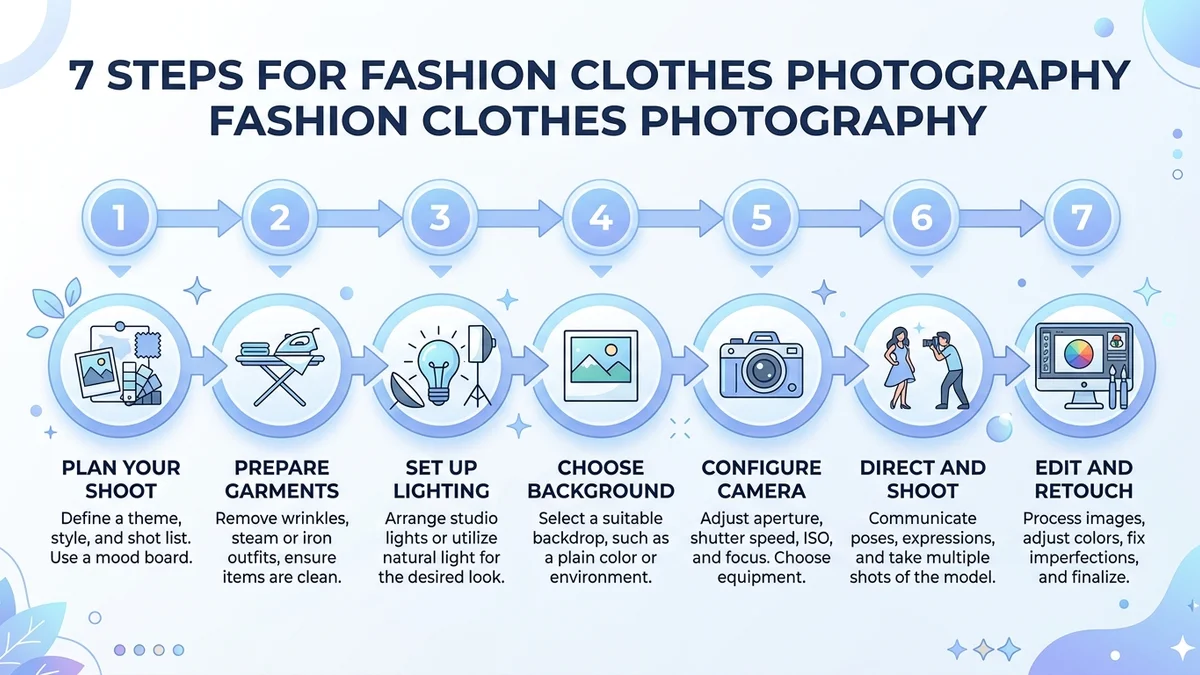
Professional fashion clothes photos require planning, proper equipment, and attention to detail at every stage. Follow these seven steps to achieve results that rival studio productions, even on a limited budget.
Step 1: Plan Your Shoot
Create a mood board on Pinterest or Canva. Define the style, color palette, and mood you want. Write a shot list covering every angle and outfit combination.
Step 2: Prepare the Garments
Steam or iron every piece. Remove lint, loose threads, and tags. Use clips on the back to create a tailored fit on mannequins. Bring a portable steamer to the shoot for touch-ups.
Step 3: Set Up Lighting
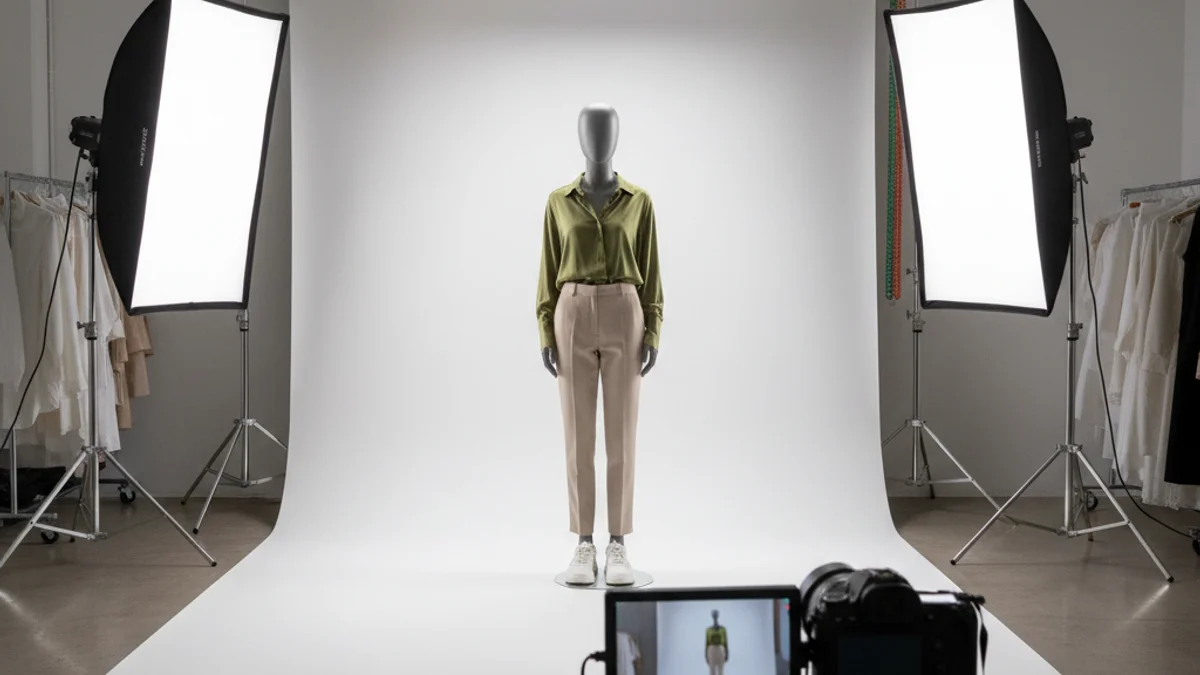
Lighting makes or breaks a fashion clothes photo. Here are the three main approaches:
| Lighting Type | Effect | Best For | Cost |
|---|---|---|---|
| Natural light (window/outdoor) | Soft, flattering, authentic | Lifestyle, social media | Free |
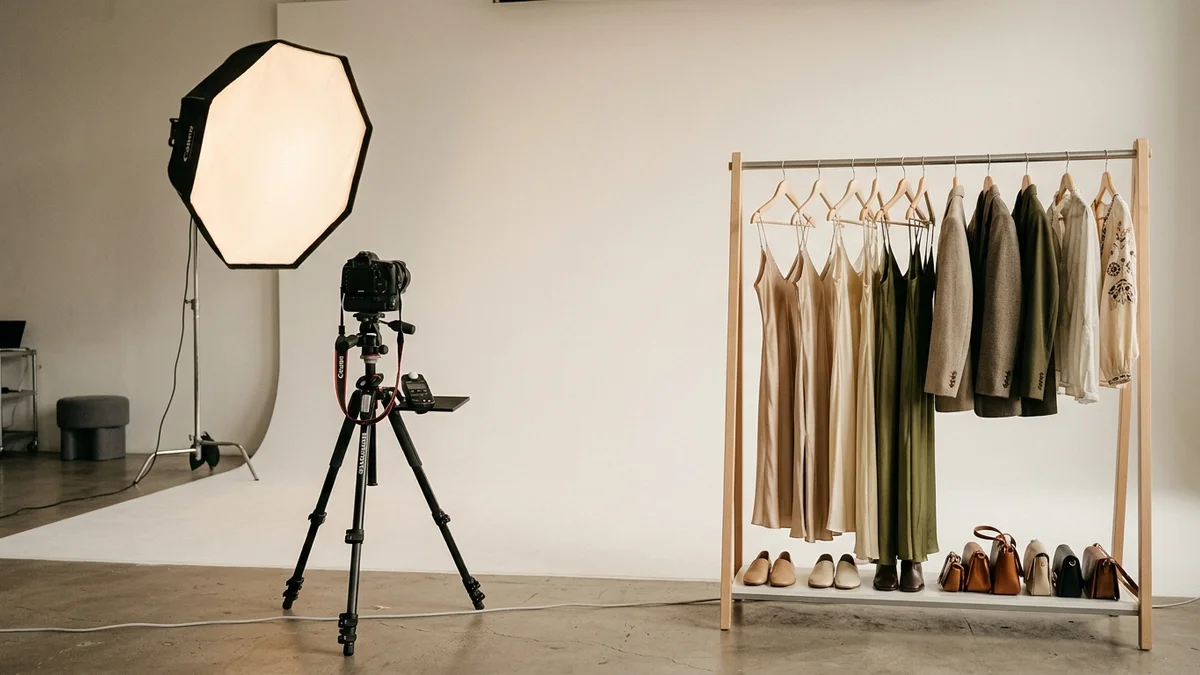
| Softbox lighting (1-2 lights) | Even, professional, controlled | Catalog, e-commerce | $100-$300 |
| Studio strobe (multi-light) | Dramatic, editorial, precise | Editorial, campaigns | $500-$2,000+ |
For natural light, shoot near a large window during golden hour (early morning or late afternoon). Overcast days provide the softest, most even light for clothing.
Step 4: Choose Your Background
A clean background keeps attention on the clothes. White seamless paper works for catalog shots. Textured walls, urban settings, or nature scenes add character for lifestyle and editorial work.
Step 5: Configure Camera Settings
Set your aperture between f/8 and f/11 to keep the entire garment sharp. Keep ISO at 100-200 for clean images. Use a 50mm or 85mm lens to avoid distortion. Shoot in RAW format for maximum editing flexibility.
Step 6: Direct and Shoot
For on-model shoots, communicate clearly about the mood you want. Encourage movement. Shoot from multiple angles: front, side, three-quarter, and detail close-ups.
Step 7: Edit and Retouch
Adjust white balance first to ensure accurate colors. Then fine-tune exposure, contrast, and sharpness. Use clothing photo editing tools for background removal or color correction.
Key Takeaway: Planning is 50% of the work. A well-prepared shoot with steamed garments, tested lighting, and a clear shot list produces better results than expensive equipment alone.
Essential Equipment for Fashion Clothes Photography
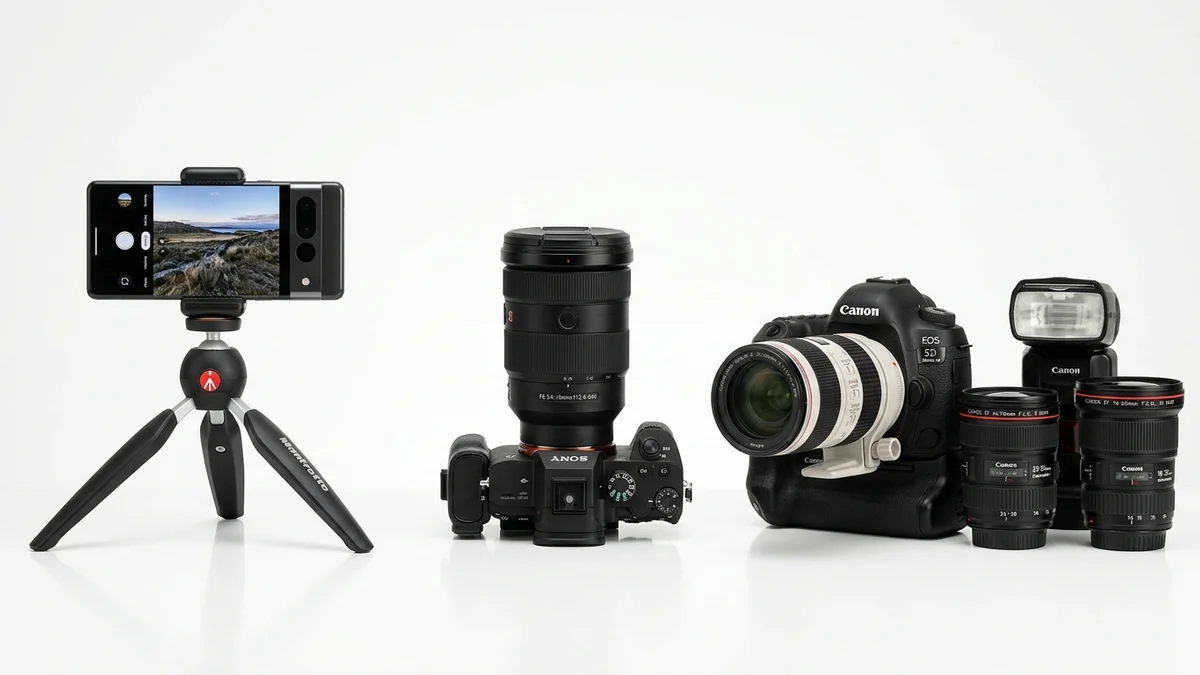
You don't need a $5,000 camera to take great fashion clothes photos. Here's what actually matters at different budget levels.
| Equipment | Budget Option | Mid-Range | Professional |
|---|---|---|---|
| Camera | Smartphone (iPhone/Pixel) | Mirrorless (Sony a6400) | Full-frame (Canon R6) |
| Lens | Built-in phone lens | 50mm f/1.8 ($100-200) | 24-70mm f/2.8 ($1,000+) |
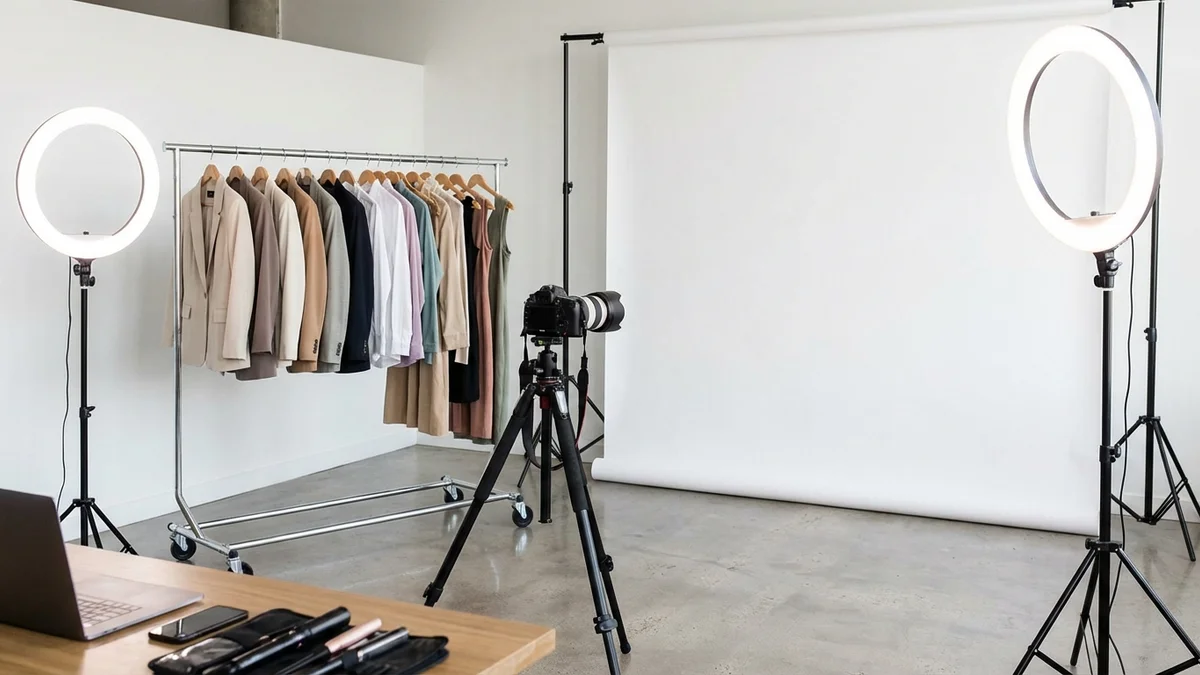
| Lighting | Window light | Ring light ($30-60) | Softbox kit ($200-500) |
| Tripod | Phone clip ($15) | Travel tripod ($50-100) | Studio tripod ($150-300) |
| Background | White wall/sheet | Seamless paper roll ($30) | Backdrop stand + paper ($100) |
| Total | $0-30 | $300-600 | $2,000-5,000+ |
Smartphone Photography Tips
Modern smartphones produce remarkable fashion photos. The latest iPhone and Pixel models shoot in RAW format with excellent dynamic range.
- Use portrait mode for natural background blur
- Lock focus and exposure by tapping and holding on the garment
- Attach a clip-on lens for wider shots
- Mount your phone on a mini tripod for stability
- Shoot in the highest resolution setting available
62% of online shoppers say photo quality is the most important factor in purchasing decisions.
Fashion Clothes Photography Trends in 2026
The fashion photography landscape is shifting. Here are the trends defining 2026.
Authenticity over perfection. The "imperfect aesthetic" embraces motion blur, intentional grain, and overexposure. Polished, overly retouched images feel dated. Brands want photos that look real and relatable.
AI-generated model photography. Brands use AI to generate on-model photos without physical shoots. Tools create realistic images from flat lay or mannequin shots for a fraction of the cost. The market grew from $1.51 billion in 2024 to $2.01 billion in 2025.
Diversity and representation. Age-positive casting, diverse body types, and inclusive representation define modern fashion photography. Shoppers demand to see themselves reflected in brand imagery.
Bold color palettes. Neon reds, electric blues, and saturated tones dominate. Cyberpunk-inspired lighting setups create dramatic, eye-catching fashion images.
Cinematic storytelling. Fashion photos that look like movie stills. Photographers use narrative framing, dramatic lighting, and environmental context to create images with depth.
Smartphone-first creation. With 90%+ of fashion content consumed on mobile, photographers optimize composition for vertical, mobile-friendly formats from the start.
How Much Does Fashion Clothes Photography Cost?
Fashion photography costs range dramatically based on the approach. Here's what brands actually pay in 2026.
| Approach | Cost Per Image | Cost Per Season (100 SKUs) | Quality | Speed |
|---|---|---|---|---|
| DIY smartphone | $0-1 | $0-100 | Good | Fast |
| Freelance photographer | $25-100 | $2,500-10,000 | Very good | Medium |
| Professional studio | $75-350 | $7,500-35,000 | Excellent | Slow |
| Full campaign shoot | $500-2,000+ | $50,000-200,000+ | Premium | Slow |
| AI-generated | $0.04-1.00 | $45-600 | Very good | Instant |
| Hybrid (hero + AI) | Varies | $1,500-3,000 | Excellent | Fast |
The hybrid approach is becoming the industry standard. Brands invest in professional hero shots for key pieces and use AI tools to generate catalog-quality images for the remaining inventory.
Key Takeaway: AI photography tools cut fashion photo costs by 90%+ while maintaining quality comparable to professional studio work.
How AI and Virtual Try-On Transform Fashion Photos
AI is reshaping fashion clothes photography in two major ways: creating images and letting customers interact with them.
AI-Generated Fashion Photography
Tools like AI model generators take a flat lay or ghost mannequin photo and produce realistic on-model images. The AI handles pose, lighting, and fabric draping automatically. ASOS launched its AI try-on feature in February 2026 with 10,000 products, and Zara introduced interactive virtual try-on in January 2026.
Virtual Try-On for Customers
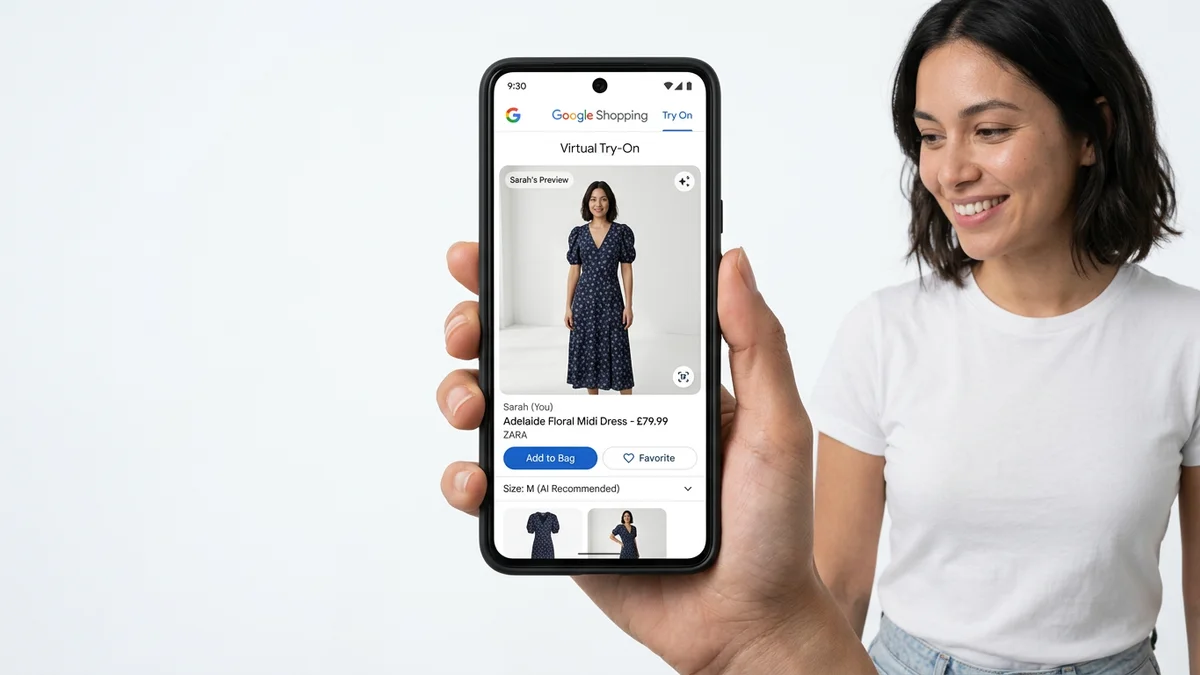
Virtual try-on technology lets shoppers upload their own photo and see how clothes look on their body. This bridges the gap between fashion photos and real-life fit.
CheckMyFit takes this further by letting you virtually try on any outfit using AI. Upload your photo, select a garment, and see how it looks on your actual body shape within seconds. It eliminates the guesswork of online shopping and brings fashion photography to life in a personal way.
Brands using virtual try-on report 30-40% fewer returns and higher customer satisfaction.
How Virtual Try-On Works
- Upload your photo to the CheckMyFit app
- Select clothing items you want to try
- AI processes the image using advanced body mapping
- View the result showing the outfit on your body type
This technology turns passive fashion photos into interactive shopping experiences. Instead of guessing how a photographed outfit will look on you, virtual try-on shows you in seconds.
Key Takeaway: Virtual try-on technology transforms static fashion clothes photos into personalized shopping tools, reducing return rates by up to 40%.
Styling Tips for Better Fashion Clothes Photos
Great styling elevates a good photo to an exceptional one. Apply these principles regardless of your photography type.
Color coordination. Use complementary or analogous colors between the garment and background. Avoid backgrounds that match the clothing color.
Accessorize strategically. Add watches, bags, shoes, and jewelry to flat lays and model shoots. Accessories create context and suggest a complete look.
Create visual hierarchy. The garment should always be the focal point. Everything else (background, accessories, model's pose) supports this.
Iron and steam everything. Wrinkles are the fastest way to make fashion photos look amateur. Always steam garments immediately before shooting.
Use negative space. Don't fill every inch of the frame. White space creates breathing room and draws attention to the clothing.
Recommended Products for Fashion Clothes Photography
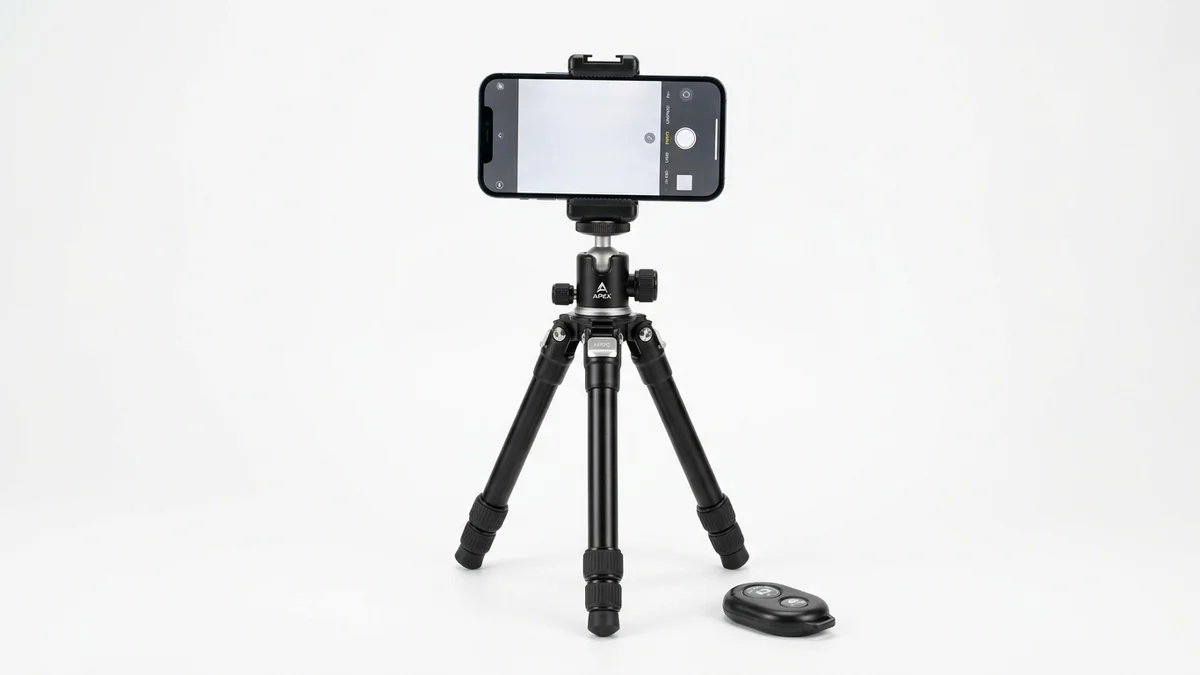
Perfect for smartphone fashion photography. The adjustable tripod with wireless remote lets you shoot flat lays and model shots hands-free with stable, consistent results.
View on Amazon →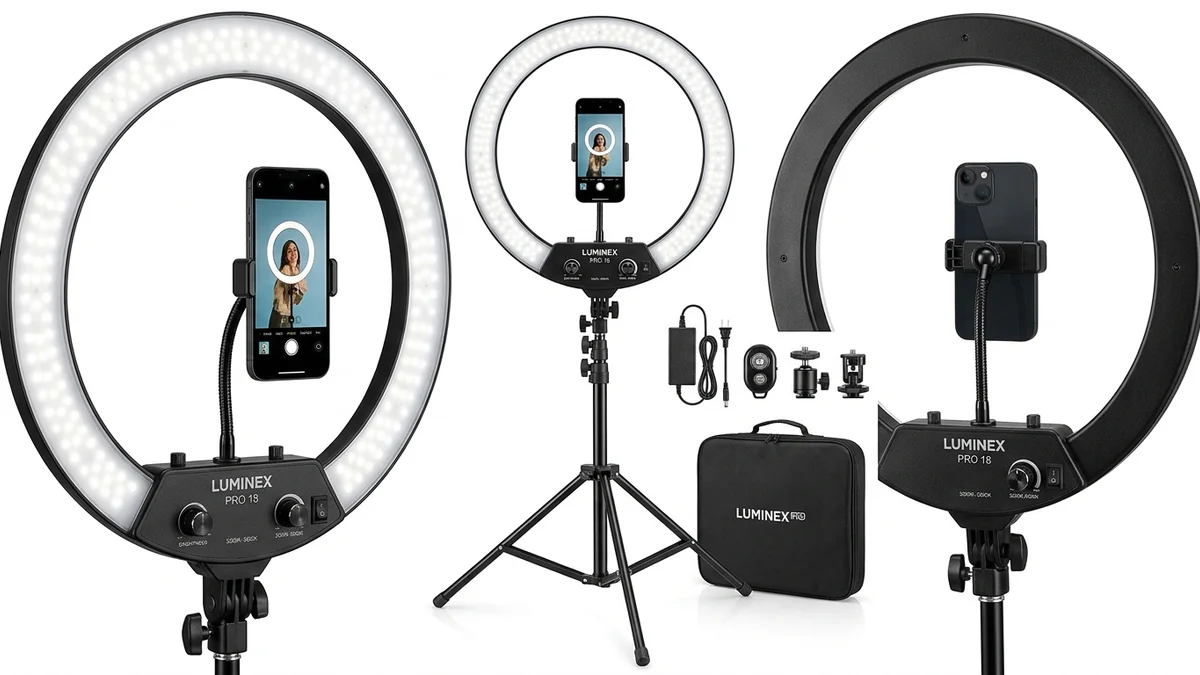
Professional-grade ring light that provides even, shadow-free illumination for fashion clothing photos. Adjustable color temperature ensures accurate garment colors in any setting.
View on Amazon →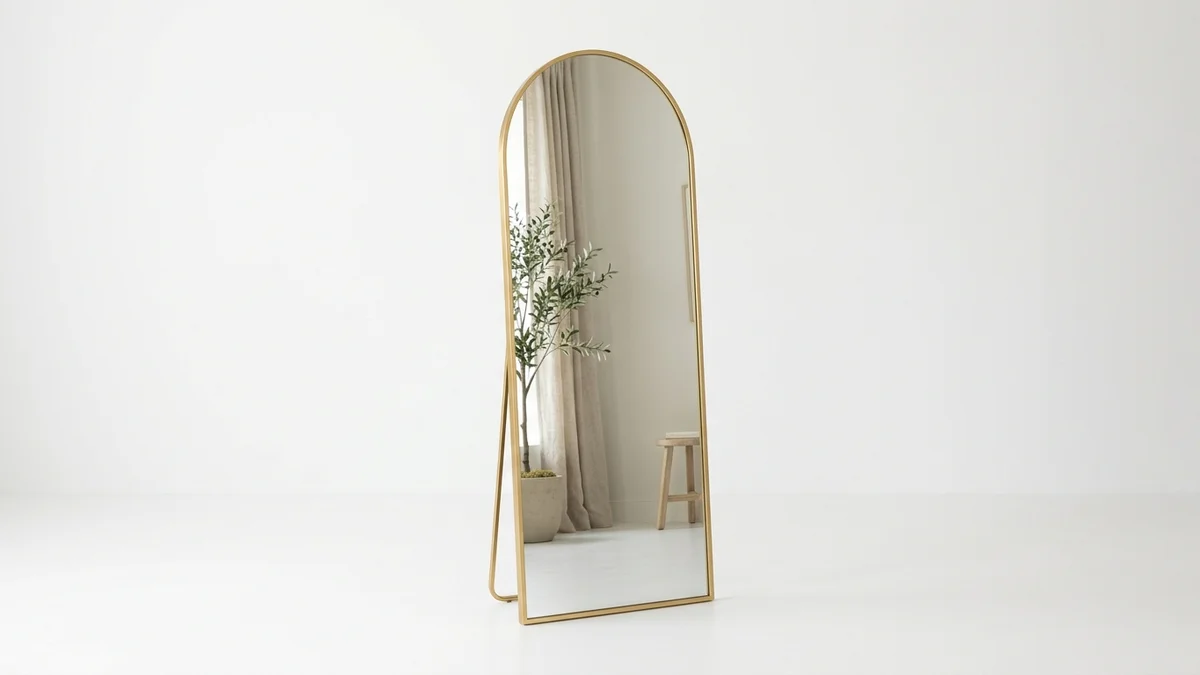
Full-length mirror ideal for outfit-of-the-day photos and checking garment fit before shooting. The arched design adds visual interest to mirror selfie fashion content.
View on Amazon →Frequently Asked Questions
What equipment do you need for fashion photography?
At minimum, you need a camera (even a smartphone works), good lighting (natural window light is free), and a clean background. For professional results, add a 50mm lens, softbox lighting kit, tripod, and seamless backdrop paper. Budget photographers can start with under $100 in gear and upgrade over time.
How much does a fashion photoshoot cost?
Fashion photoshoot costs range from free (DIY smartphone) to $50,000+ per day for major campaign shoots. Freelance photographers charge $25-350 per image. AI-generated fashion photos cost $0.04-$1.00 per image, making them the most affordable option for catalog-scale production at $45-600 per season.
Can you take fashion photos with a smartphone?
Yes. Modern smartphones like the iPhone 16 and Google Pixel 9 produce publication-quality fashion photos. Use portrait mode for background blur, shoot in RAW format for editing flexibility, and invest in a phone tripod for stability. Many successful fashion influencers and small brands photograph exclusively with smartphones.
What is the best lighting for clothing photography?
Natural window light provides the most flattering, accurate illumination for fashion clothes photos. Shoot near a large north-facing window for consistent soft light. For studio work, two softboxes at 45-degree angles create even lighting that shows fabric texture and color accurately without harsh shadows.
How do I photograph clothes without a model?
Use flat lay photography (arrange clothes on a surface, shoot from above), ghost mannequin technique (shoot on mannequin, edit it out), or hanger shots against a clean wall. Flat lay is the easiest and most popular option for social media. Ghost mannequin works best for e-commerce stores that need to show garment shape and fit.
What are the 2026 fashion photography trends?
Key 2026 trends include the "imperfect aesthetic" embracing motion blur and grain, AI-generated model photography, diverse and inclusive casting, bold neon color palettes, cinematic storytelling approaches, and smartphone-first vertical compositions. AI photography tools grew to a $2.01 billion market, making professional results accessible to everyone.
How can AI help with fashion clothes photography?
AI transforms fashion photography through automated background removal, AI model generation from flat lay photos, virtual try-on experiences, intelligent color correction, and batch editing. Tools like AI clothes changers generate on-model images without physical shoots, cutting costs by over 90% compared to traditional photography.
What camera settings work best for clothing photography?
Use aperture f/8 to f/11 for sharp garment details throughout the frame. Keep ISO at 100-200 for noise-free images. Set white balance manually to ensure accurate colors. Shoot in RAW format for maximum post-processing flexibility. Use a shutter speed of 1/125 or faster when shooting moving models.
Conclusion
Fashion clothes photography combines technical knowledge with creative vision. Whether you're shooting flat lays on your kitchen table or directing an editorial campaign, the fundamentals stay the same: prepare your garments, master your lighting, and tell a visual story.
The biggest shift in 2026 is accessibility. Smartphone cameras, AI tools, and virtual try-on technology put professional fashion photography within everyone's reach. You don't need a massive budget to create images that stop the scroll.
Start with what you have. Practice the techniques in this guide. And when you want to see how those photographed outfits actually look on you, try CheckMyFit to virtually try on any clothing item using AI.