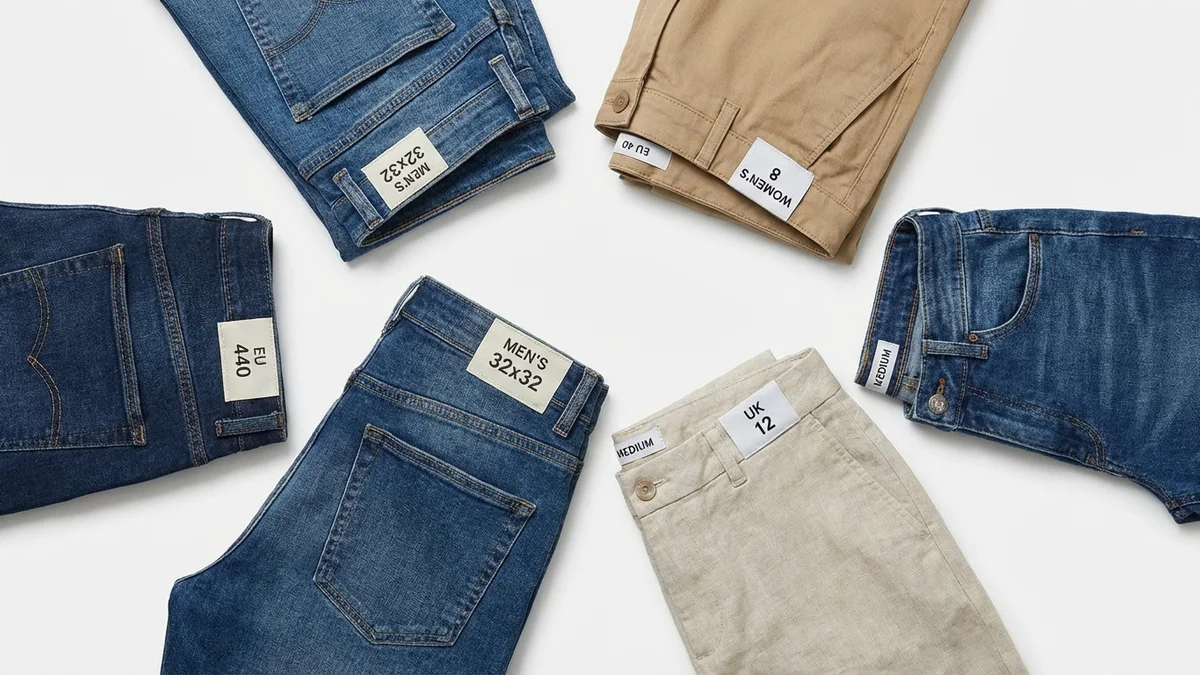
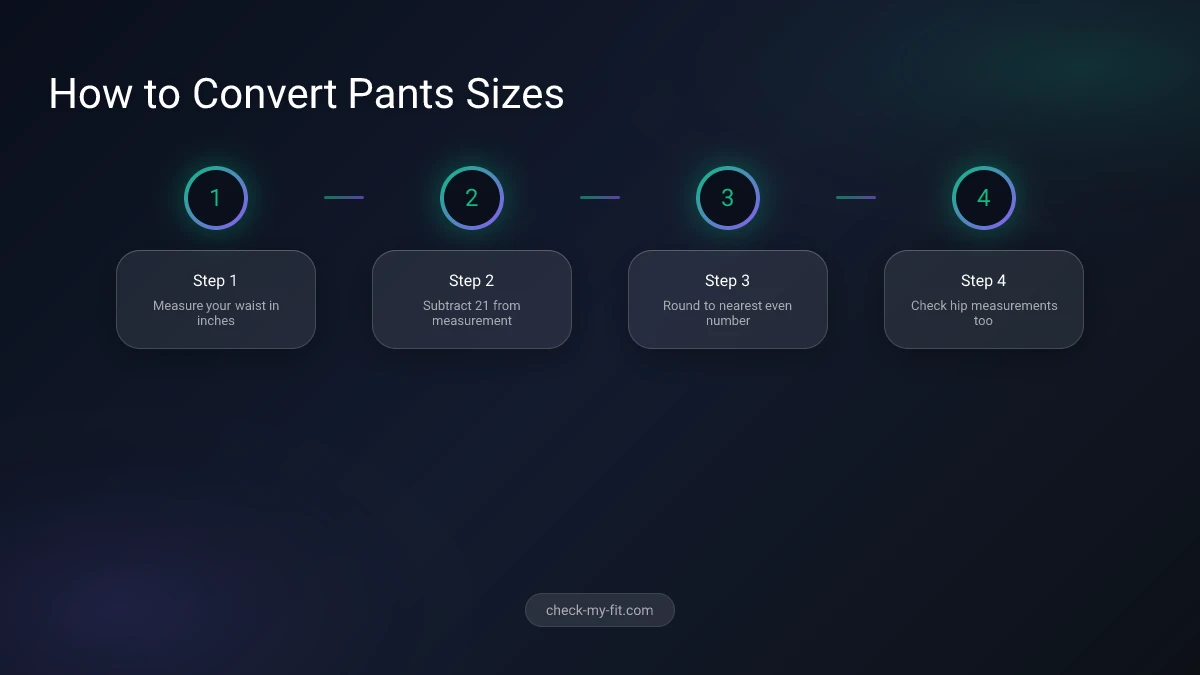
Converting men's pants sizes to women's sizes can feel like decoding a secret language. The two sizing systems use completely different measurements and labels. Men's pants display waist and inseam numbers like "32x30." Women's pants use single numbers like 8, 10, or 12. This guide breaks down the male to female size conversion for pants with simple formulas, complete charts, and practical tips.
At a Glance
To convert men's pants to women's sizes, subtract 21 from the men's waist measurement. A men's 32-inch waist equals approximately a women's size 11. Since women's sizes run in even numbers, round to 10 or 12. Always check hip measurements too, as men's pants are cut narrower through the hips than women's styles.
How Do I Convert Men's Pants Size to Women's?
Converting men's pants sizes to women's requires one simple formula: subtract 21 from the men's waist measurement. This gives you the approximate women's size number. For example, a men's waist of 34 inches converts to a women's size 13. Since women's US sizes typically come in even numbers, you would round to either 12 or 14.
The reverse works too. To convert women's sizes to men's, add 21 to the women's size number. A women's size 8 equals roughly a men's 29-inch waist. This formula provides a starting point, but actual fit depends on brand, style, and body proportions.
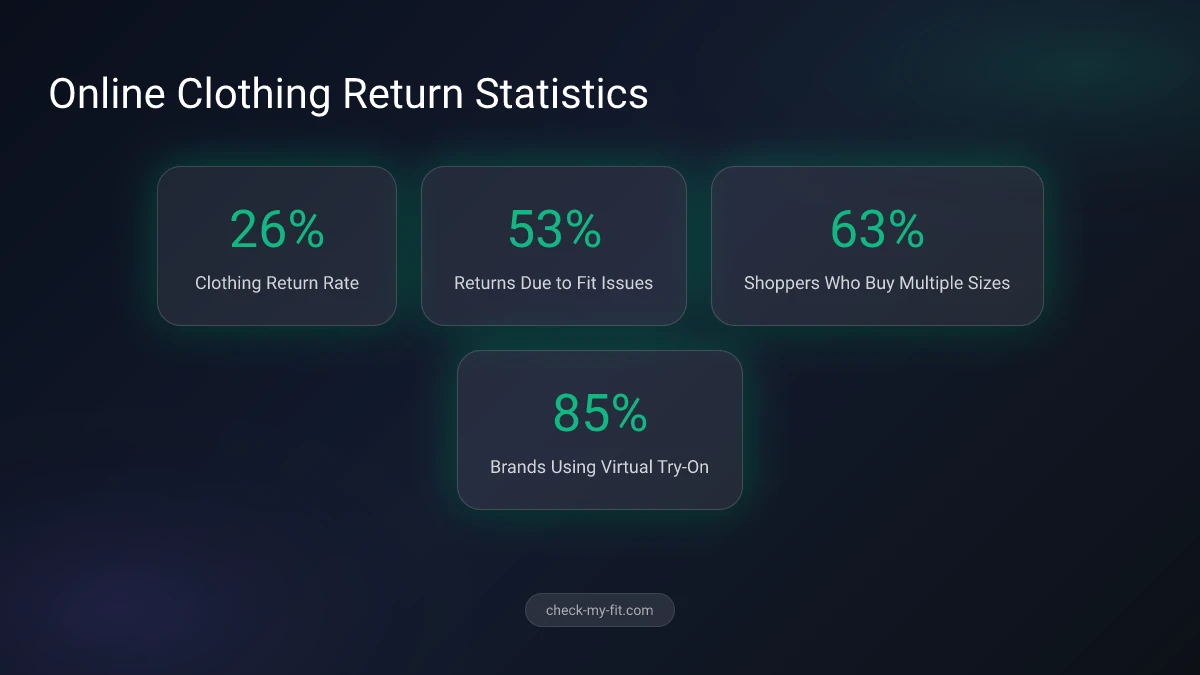
53% of online clothing returns happen because of size and fit issues. Getting your conversion right saves time and money.
Key Takeaway: The subtract 21 formula works for quick conversions, but always verify with actual measurements when possible.
Complete Male to Female Pants Size Conversion Chart
This comprehensive size chart shows men's waist sizes converted to women's numerical sizes:
| Men's Waist (inches) | Women's US Size | Women's UK Size | Women's EU Size |
|---|---|---|---|
| 26 | 4-6 | 8 | 34 |
| 27 | 6 | 10 | 36 |
| 28 | 6-8 | 10 | 36-38 |
| 29 | 8 | 12 | 38 |
| 30 | 8-10 | 12 | 38-40 |
| 31 | 10 | 14 | 40 |
| 32 | 10-12 | 14 | 40-42 |
| 33 | 12 | 16 | 42 |
| 34 | 12-14 | 16 | 42-44 |
| 36 | 14-16 | 18 | 44-46 |
| 38 | 16-18 | 20 | 46-48 |
| 40 | 18-20 | 22 | 48-50 |
Important Note: These conversions are approximate. Brand sizing varies significantly across manufacturers. A size 10 at one store may fit like a size 12 at another.
What Are the Key Differences Between Men's and Women's Pants?
Men's and women's pants differ in five fundamental ways beyond just the size numbers. Understanding these differences helps you find pants that actually fit your body shape, regardless of which section they come from.
| Feature | Men's Pants | Women's Pants |
|---|---|---|
| Sizing System | Waist x Inseam (32x30) | Single number (8, 10, 12) |
| Hip Cut | Narrower hip area | Fuller hip allowance |
| Rise | Lower rise | Higher rise options |
| Inseam | Longer (30-36") | Shorter (28-32") |
| Pockets | Deep, functional | Often smaller or decorative |
Hip-to-Waist Ratio
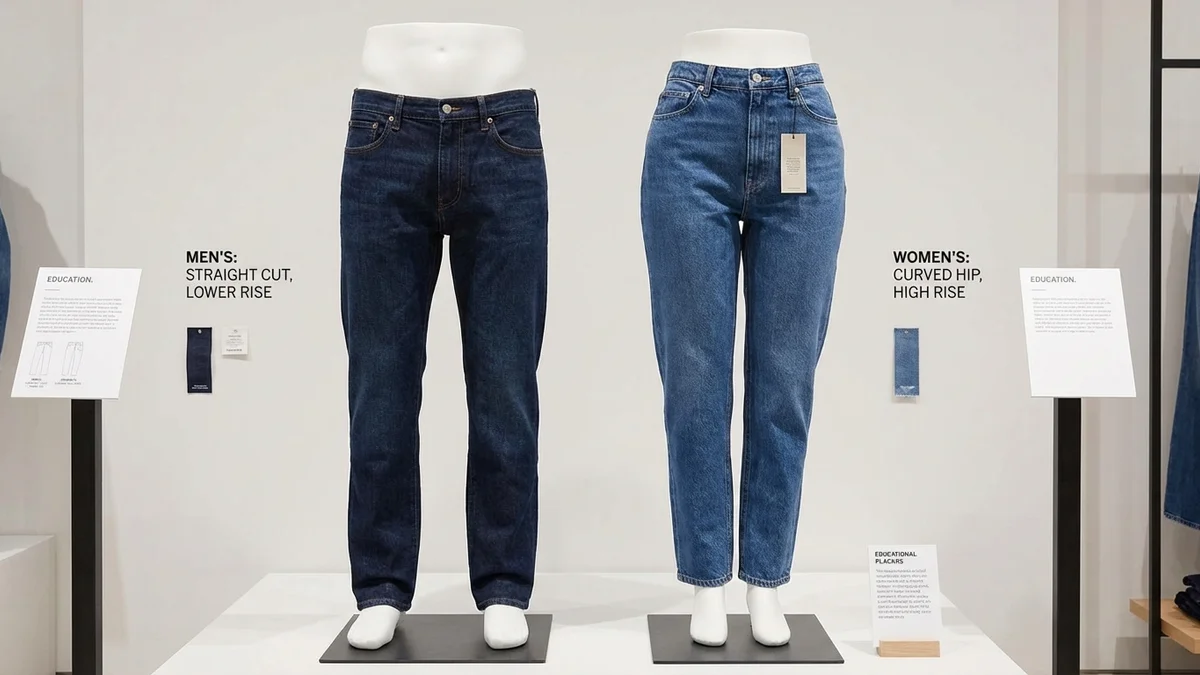
The most significant difference lies in the hip cut. Men's pants have a smaller hip measurement relative to waist size. Women's pants account for wider hips and a curvier silhouette. When shopping across genders, focus on hip measurements as much as waist size.
Rise Height
Women's pants typically feature a higher rise, sitting at or above the natural waist. Men's pants usually have a lower rise, resting on the hips. This affects how the pants look and feel throughout the day.
Inseam Length
Men's pants generally come with longer inseams, ranging from 30 to 36 inches. Women's standard inseams run shorter. Taller individuals may need to size up or look for "tall" options when buying women's pants.
Key Takeaway: Matching waist size alone won't guarantee a good fit. Check hip measurements and rise to avoid buying pants that are tight in the wrong places.
How Do I Measure My Pants Size Correctly?
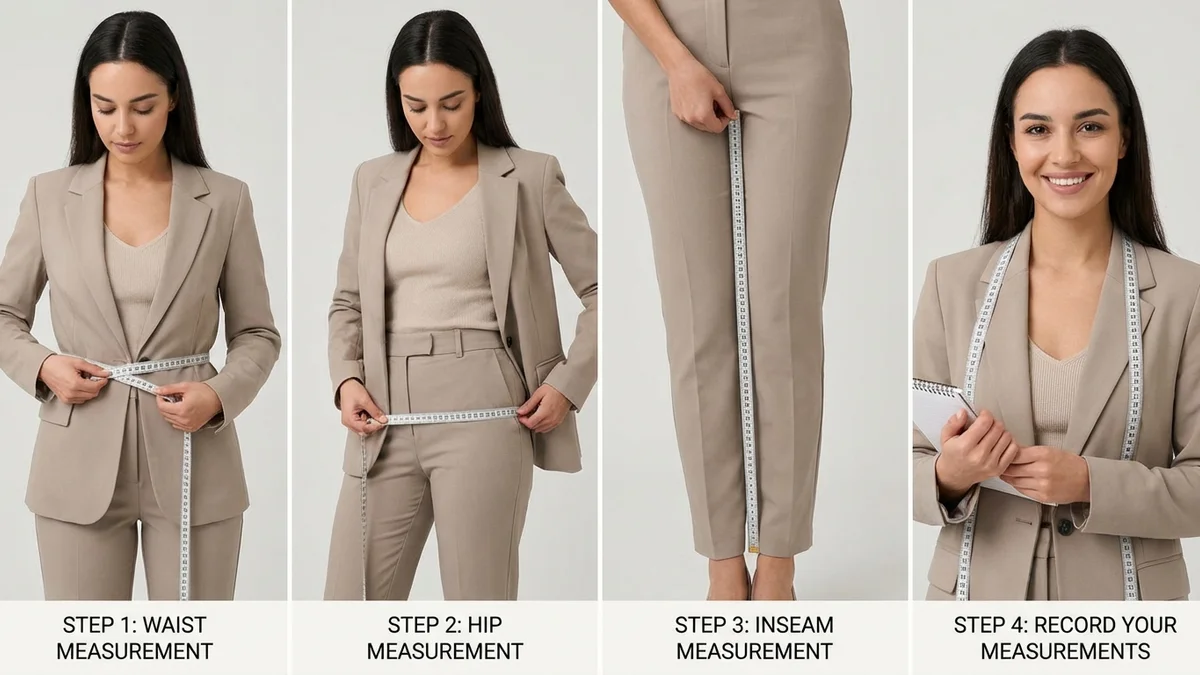
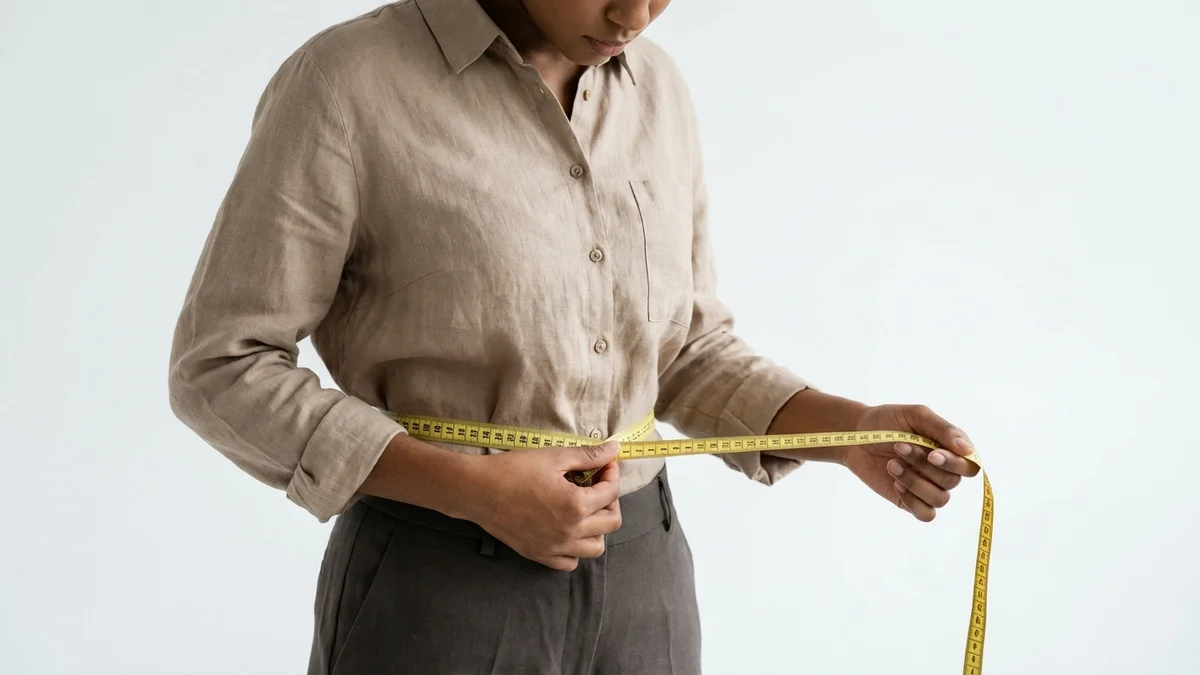
Accurate body measurements eliminate guesswork from size conversion. You need three measurements: waist, hips, and inseam. Here's how to measure each one correctly.
Step 1: Measure Your Waist
For dress pants and formal styles, measure at your natural waist. This is the narrowest point between your ribs and hip bones, usually near your navel. For jeans and casual pants, measure where you normally wear the waistband, typically lower on your body.
Wrap a flexible tape measure around your waist. Keep it parallel to the floor. The tape should be snug but not tight. Breathe normally and don't suck in your stomach.
Step 2: Measure Your Hips
Stand with your feet together. Wrap the tape around the fullest part of your hips and buttocks. Keep the tape level all the way around. This measurement matters more than you might think when buying pants designed for different body types.
Step 3: Measure Your Inseam
The inseam runs from your crotch to the bottom of your ankle. The easiest method uses pants that already fit well. Lay them flat and measure from the crotch seam straight down to the hem along the inner leg.
Alternatively, stand against a wall and have someone measure from your crotch to the floor. Subtract about half an inch if you don't want the pants to touch the ground.
| Measurement | Where to Measure | Tips |
|---|---|---|
| Waist | Narrowest point above hips | Breathe normally, don't pull tight |
| Hips | Fullest part of buttocks | Keep tape level, feet together |
| Inseam | Crotch to ankle | Use well-fitting pants as guide |
Key Takeaway: Write down your measurements in both inches and centimeters. Compare these numbers directly to brand size charts for the most accurate fit.
What Size is a Women's 8 in Men's Pants?
A women's size 8 translates to approximately a men's waist size of 27-29 inches. Using the add 21 formula, size 8 plus 21 equals 29. However, different sources and brands may show this as 27-32 depending on their specific size charts.
The variation exists because women's size 8 corresponds to waist measurements ranging from about 27 to 31 inches across different brands. When converting, always check your actual waist measurement against the men's sizing chart rather than relying solely on the formula.
For women shopping in the men's section, remember that men's pants will fit tighter through the hips even if the waist size matches. Consider sizing up one inch in the waist to accommodate hip differences.
International Pants Size Conversion Guide
Shopping internationally adds another layer to size conversion. US, UK, and European sizes all use different systems.
| US Women's | UK Women's | EU Women's | US Men's Waist |
|---|---|---|---|
| 4 | 8 | 34 | 26-27 |
| 6 | 10 | 36 | 27-28 |
| 8 | 12 | 38 | 28-29 |
| 10 | 14 | 40 | 30-31 |
| 12 | 16 | 42 | 32-33 |
| 14 | 18 | 44 | 34-35 |
| 16 | 20 | 46 | 36-37 |
European sizes use centimeters rather than inches. To convert inches to centimeters, multiply by 2.54. A 32-inch waist equals approximately 81 centimeters.
UK sizes typically run about 4 numbers higher than US sizes for women. A US size 8 equals a UK size 12. European women's sizes add 30 to the US size, so US 8 becomes EU 38.
Why Do Sizes Vary Between Brands?
Clothing sizes have no universal standard. Each brand creates its own size chart based on their target customer. This explains why you might wear a size 10 at one store and a size 14 at another.
"Vanity sizing" makes this worse. Many brands label larger measurements with smaller size numbers to make customers feel better. A size 8 today contains more fabric than a size 8 from 20 years ago.
The solution? Stop focusing on the number. Instead, compare your actual body measurements to each brand's specific size chart. Most online retailers publish detailed measurements for each size. Use them.
63% of online shoppers buy multiple sizes with plans to return what doesn't fit. Understanding your measurements reduces this wasteful practice.
Tips for Transgender and Gender-Diverse Shoppers
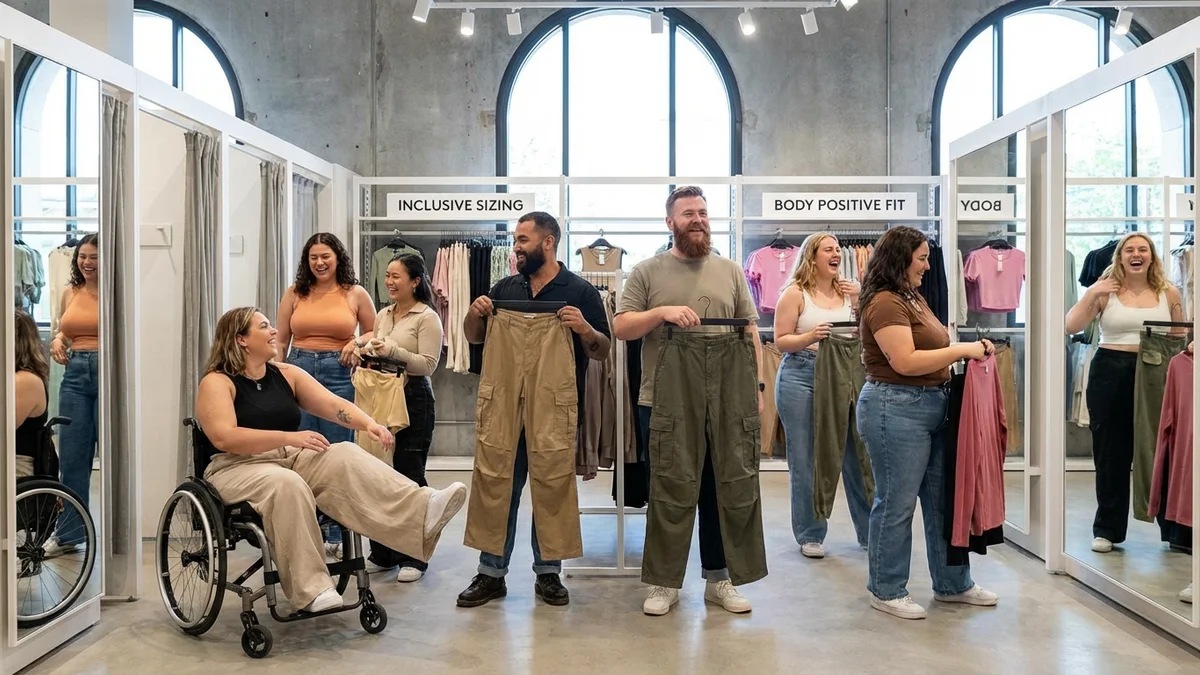
For those transitioning or exploring different clothing sections, size conversion requires extra attention to body shape differences.
MtF (Male-to-Female) Considerations
When measuring for women's pants, find your natural waist at the narrowest point between your hip bones and rib cage. This sits higher than where men typically wear pants. Hip measurements matter significantly because AMAB bodies typically have narrower hips relative to waist size.
Consider fabrics with stretch. Materials containing elastane or spandex accommodate a wider range of body shapes. They provide more flexibility during transitional periods when body measurements may be changing.
Sizing Up Strategy
Going one size up in women's pants often works better than matching the exact conversion. Men's builds typically have less curve through the hip area. The extra room prevents pulling, gaping, or discomfort at the widest part of your hips.
Look for "tall" options if standard women's inseams run too short. Many brands offer extended lengths that work better for taller individuals.
Try Clothes Virtually Before Buying
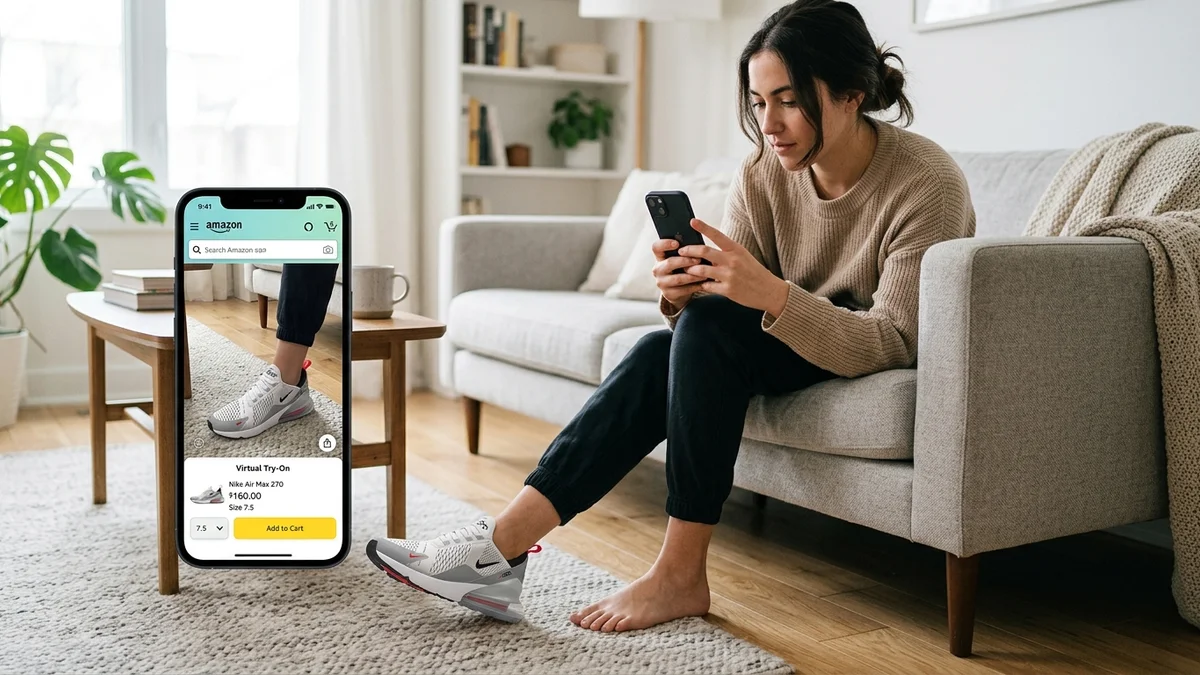
Size conversion charts help, but nothing beats seeing how clothes actually look on your body. Virtual try-on technology now makes this possible without visiting a physical store.
CheckMyFit uses AI technology to show you how different pants styles look on your specific body shape. Upload a photo, select the clothing item, and see a realistic preview of the fit. This eliminates the guesswork from online shopping, especially when buying from unfamiliar brands or shopping across gender sections.
85% of apparel brands now use or plan to implement virtual try-on tools. These technologies reduce return rates by up to 40%.
Virtual try-on proves especially valuable when:
- Converting between men's and women's sizes
- Shopping international brands with different size standards
- Trying new styles or cuts you haven't worn before
- Making purchases from brands without local stores
Key Takeaway: Combine size conversion knowledge with virtual try-on technology for the most confident online shopping experience.
Recommended Products for Accurate Measuring
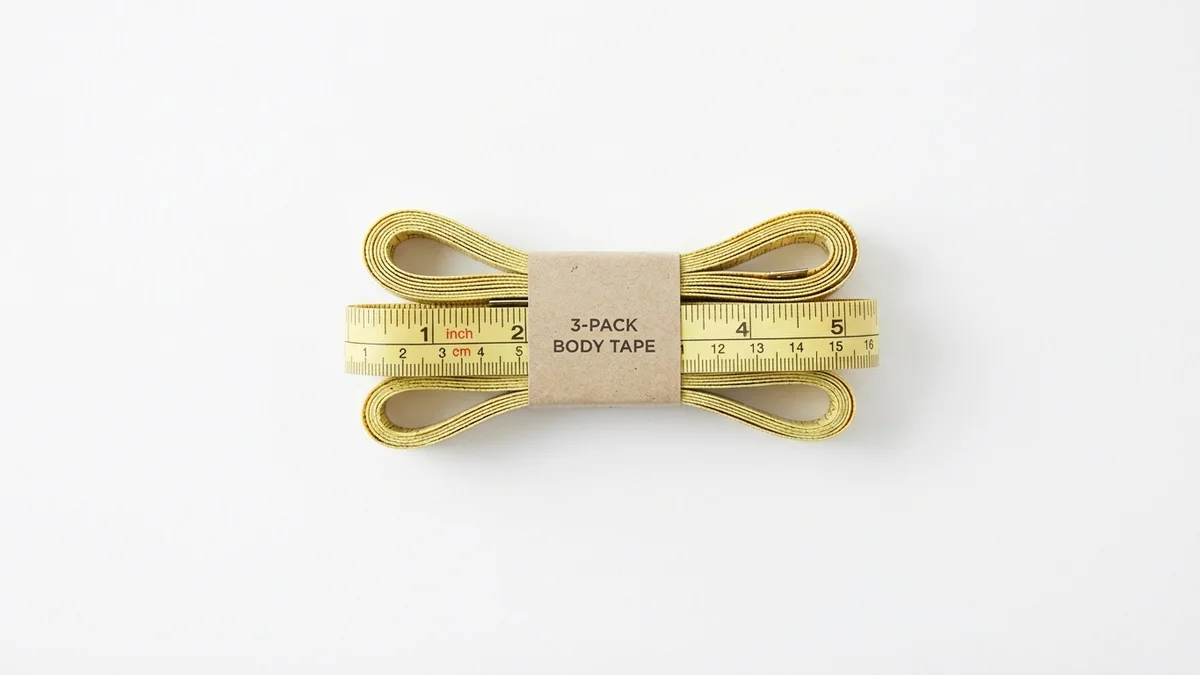
Flexible 60-inch measuring tape perfect for waist, hip, and inseam measurements. Includes both inches and centimeters for international size conversion.
View on Amazon
See your full outfit before leaving the house. Essential for checking how converted sizes actually look on your body from every angle.
View on Amazon
Comprehensive style guide covering fit, proportions, and building a wardrobe that works. Includes sizing advice for all body types.
View on AmazonFrequently Asked Questions
What is the "subtract 21" rule for pants conversion?
The subtract 21 rule provides a quick way to convert men's pants sizes to women's sizes. Take the men's waist measurement in inches and subtract 21. The result approximates the women's size number. A men's 34-inch waist minus 21 equals women's size 13, which rounds to 12 or 14 since women's sizes typically run even.
Do men's and women's pants sizes fit the same?
No, even when the waist measurement matches, men's and women's pants fit differently. Men's pants have narrower hips, lower rise, and longer inseams. Women's pants accommodate wider hips, often have higher rise options, and typically feature shorter inseams. Always check hip measurements in addition to waist size.
Why do men's pants have two numbers?
Men's pants use two numbers representing waist and inseam measurements in inches. The format "32x30" means a 32-inch waist and 30-inch inseam. Women's pants typically use a single number that corresponds to overall body measurements on each brand's specific size chart.
How do I measure my inseam at home?
Measure your inseam using pants that fit well. Lay them flat on a surface. Measure from the crotch seam straight down to the bottom hem along the inside leg. Common men's inseams range from 30 to 36 inches. Women's standard inseams typically run 28 to 32 inches.
Can I try on pants virtually before buying?
Yes, virtual try-on technology lets you see how clothes look on your body without physically trying them on. CheckMyFit uses AI to create realistic previews of how different pants styles fit your specific body shape. This works especially well when converting between sizing systems.
What size should I buy if I'm between sizes?
When you fall between sizes, consider the pant style and your priorities. Size up for comfort and easier movement. Size down for a more fitted look. For pants you'll wear with a belt, sizing up usually works better. Stretch fabrics also provide more flexibility between sizes.
How much do sizes vary between clothing brands?
Size variation between brands can be significant. A size 10 at one retailer may measure the same as a size 14 at another. Always check the specific brand's size chart before purchasing. Compare your actual body measurements to their listed dimensions rather than trusting the size number alone.
What's the best way to shop for pants online?
Take accurate body measurements first. Compare your measurements to the brand's size chart. Read customer reviews mentioning fit. Use virtual try-on tools when available. Order from retailers with free returns. Consider buying two sizes if unsure, returning the one that doesn't fit.
Conclusion
Male to female pants size conversion becomes straightforward once you understand the formula and key differences between sizing systems. Subtract 21 from men's waist measurements for a starting point. Always verify with your actual hip measurements since that's where fit varies most between genders.
Don't let sizing confusion stop you from wearing clothes you love. Measure your body accurately, compare against specific brand charts, and take advantage of virtual try-on technology to see how different styles look before buying. The right pants are out there, regardless of which section they come from.