Does My Outfit Match? A Quick Self-Check Guide
You're standing in front of the mirror. Something feels off. The colors seem okay. The fit looks fine. But you can't shake that nagging feeling: does this actually work together?
You're not alone. A 2024 survey by Statista found that 63% of people feel uncertain about their outfit at least once a week. That moment of doubt before leaving the house is universal. It doesn't matter if you own ten pieces or a hundred.
The good news? Figuring out whether your outfit matches isn't about having a "fashion eye." It comes down to a handful of clear, repeatable checks. Think of it like a preflight checklist for your clothes.
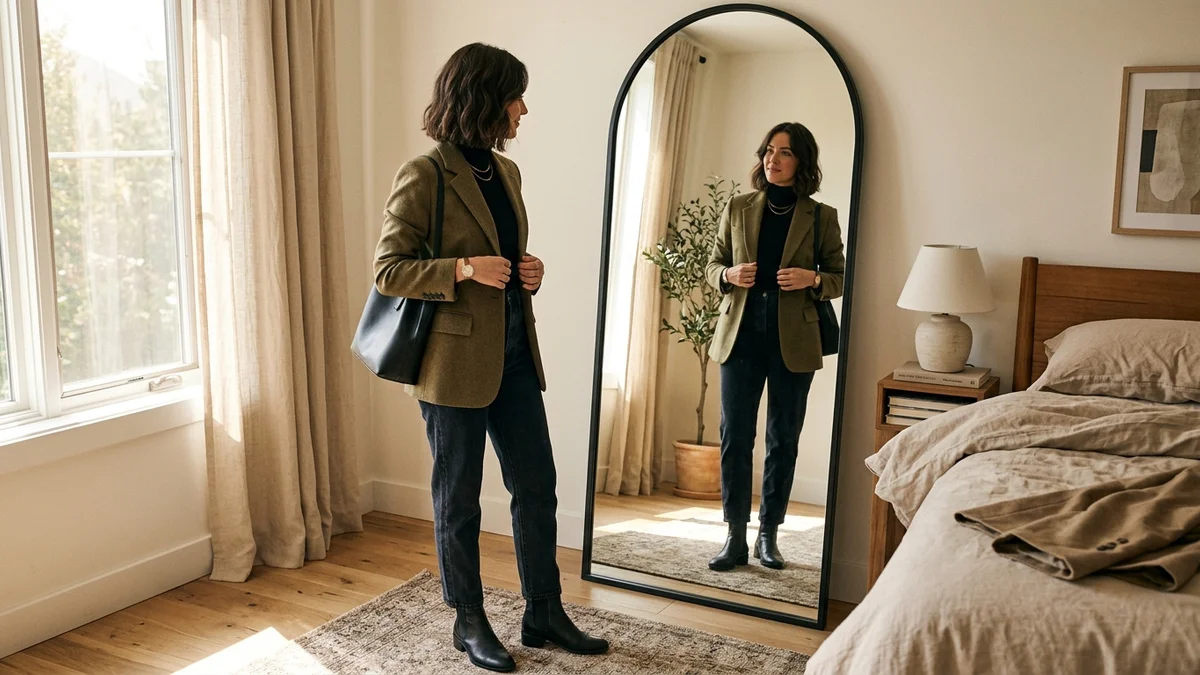
This guide gives you a simple system. Run through it before you walk out the door. In two minutes, you'll know if your look works or needs a quick swap.
Key Takeaway: An outfit "matches" when colors stay in the same temperature family, patterns vary in scale, proportions balance tight and loose, and no more than three focal points compete for attention. When in doubt, use a virtual try-on tool like CheckMyFit to see the full picture before you commit.
How to Tell If Your Outfit Actually Matches
Most people check one thing: do the colors clash? But matching goes deeper than color. A truly coordinated outfit passes four separate tests.
The Four-Point Outfit Check
| Check | What to Look For | Pass Example | Fail Example |
|---|---|---|---|
| Color | Colors share warmth or coolness | Navy + olive + tan | Navy + hot pink + lime |
| Pattern | Patterns differ in scale | Thin stripes + large plaid | Thin stripes + thin plaid |
| Proportion | Balance between fitted and relaxed | Slim pants + oversized sweater | Baggy pants + oversized hoodie |
| Formality | Pieces sit at the same dress code level | Chinos + button-down | Sweatpants + blazer |
If your outfit passes all four, it matches. If it fails one, that's usually the piece to swap.
The Squint Test
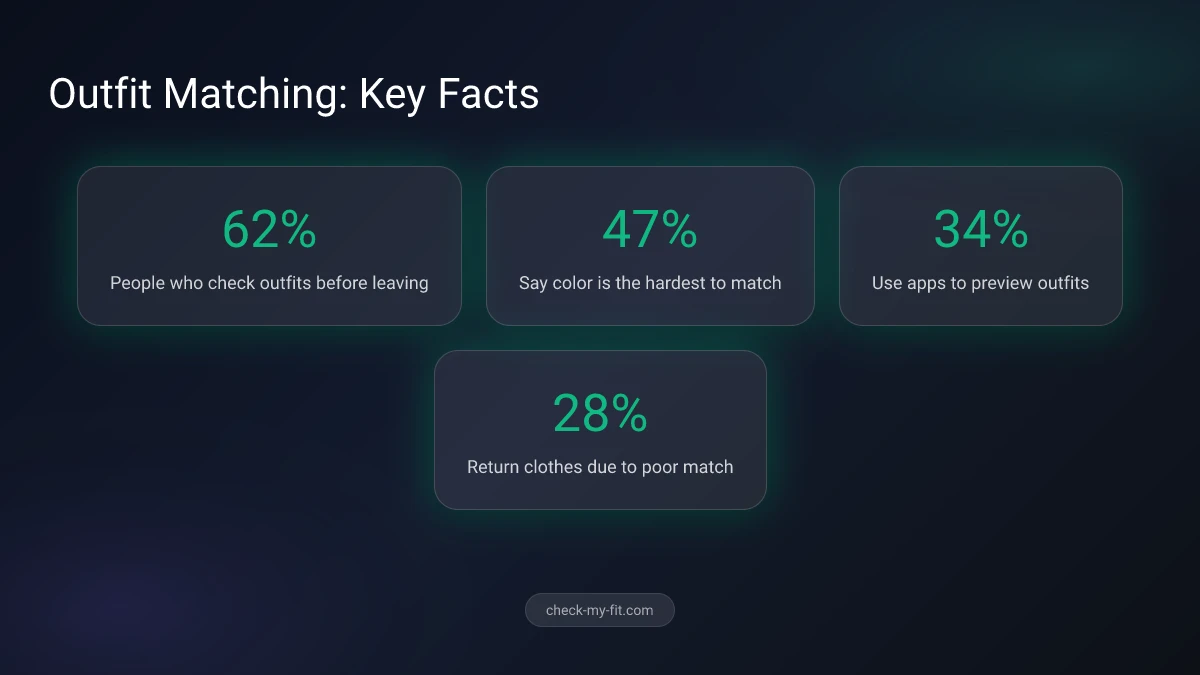
Here's a trick stylists use. Step back from the mirror and squint. When you blur the details, you see the overall shape and color blocks. If one area screams louder than the rest, something is off balance.
This works because matching is about harmony. Your eye should travel smoothly across the outfit without getting stuck anywhere.
Does My Color Combination Work? A Simple Framework
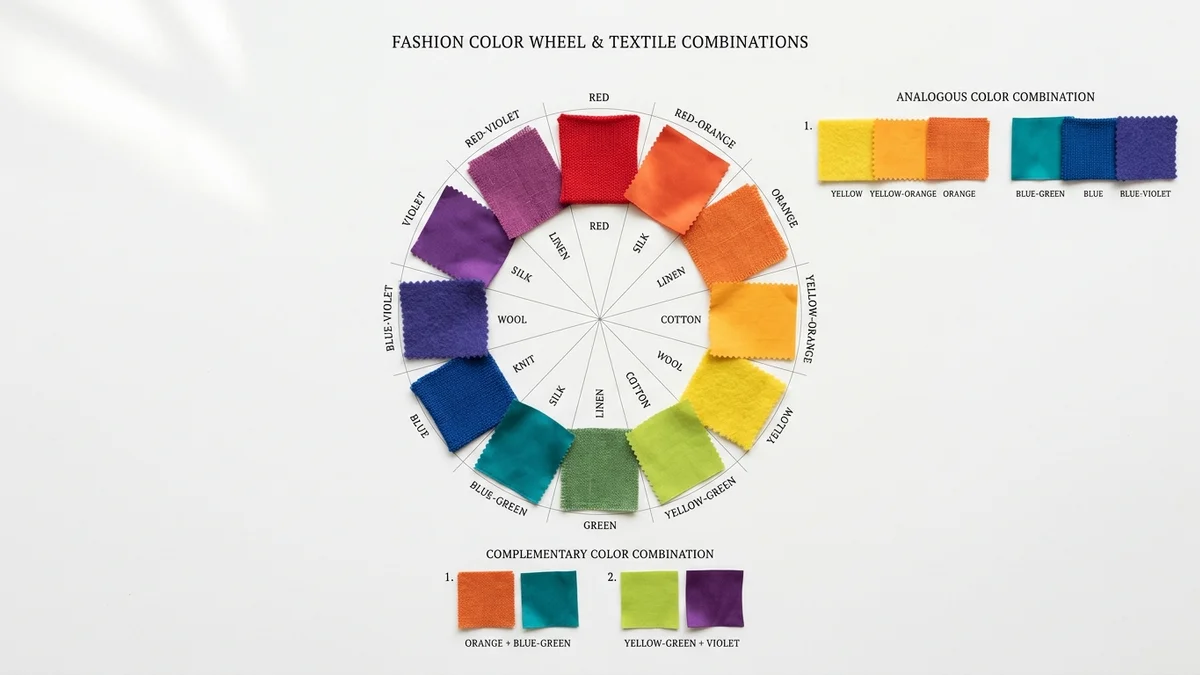
Color is where most people get tripped up. But you don't need to memorize a color wheel. You just need to understand warm vs. cool.
Warm and Cool Color Families
| Warm Colors | Cool Colors | Neutrals (Go With Both) |
|---|---|---|
| Red, orange, yellow | Blue, purple, green | Black, white, gray |
| Rust, terracotta, gold | Navy, teal, lavender | Beige, cream, tan |
| Coral, peach, mustard | Emerald, cobalt, plum | Denim, charcoal, khaki |
The rule is simple. Stick to one temperature per outfit. Warm with warm. Cool with cool. Neutrals play for both teams.
This doesn't mean you can never mix. But mixing temperatures well takes practice. If you're unsure, staying in one family is the safest bet.
The Three-Color Maximum
Limit your outfit to three colors or fewer. One dominant, one supporting, one accent. More than three creates visual noise that reads as "mismatched" even if every individual pairing is fine.
Here's what that looks like in practice:
- Dominant (60%): Your largest piece. Usually pants or a dress. Pick a neutral.
- Supporting (30%): Your top or jacket. A complementary shade.
- Accent (10%): Shoes, bag, or accessories. A pop of interest.
What Are the Rules for Matching Outfits?
Rules in fashion are more like guidelines. But these five hold up across every style, season, and occasion.
Rule 1: Match Your Metals
Gold jewelry with gold hardware on your bag. Silver watch with silver belt buckle. Mixing metals can work, but it has to look intentional. Random metal mixing looks sloppy.
Rule 2: One Busy Pattern Per Outfit
If your shirt has a bold floral, keep everything else solid. Two competing patterns create visual chaos. The exception: you can pair a small-scale pattern with a large-scale one, as long as they share a color.
Rule 3: Dress for One Occasion
Every piece should belong at the same event. A sequin top with cargo shorts sends mixed signals. Ask yourself: would I wear all of these to the same place?
Rule 4: Shoes and Belt Should Relate
They don't have to be identical. But they should feel like they belong together. Brown leather belt with brown leather boots. White sneakers with a casual canvas bag. The connection can be color, material, or formality level.
Rule 5: Undershirts Stay Hidden
Nothing breaks a polished outfit faster than a visible undershirt that wasn't planned. If your neckline reveals a layer beneath, make sure it's intentional and clean.
| Rule | Quick Test | Fix If It Fails |
|---|---|---|
| Match metals | Hold accessories side by side | Swap one piece to match |
| One busy pattern | Cover each pattern, check if the other stands alone | Remove the weaker pattern |
| Same occasion | Name the event for each piece | Replace the outlier |
| Shoes-belt connection | Check color or material link | Switch shoes or belt |
| Clean neckline | Look at collar line in mirror | Adjust or change undershirt |
Does My Outfit Suit My Body Type?
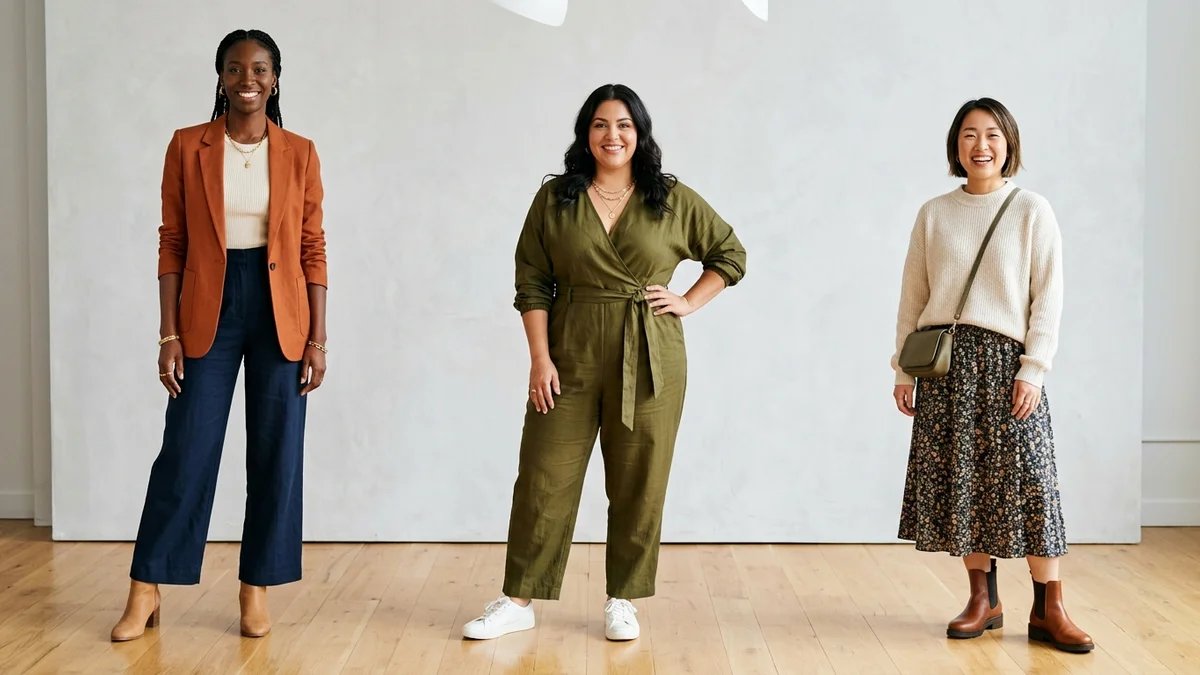
A matching outfit can still look wrong if the proportions don't flatter your frame. This isn't about hiding anything. It's about creating visual balance.
Proportion Principles by Frame
Broader shoulders: Balance your top half with wider-leg pants or A-line skirts. Avoid cap sleeves and heavy shoulder details.
Narrower shoulders: Structured jackets and boat necklines add width. Raglan sleeves soften the line.
Longer torso: High-waisted bottoms and tucked-in tops shorten the midsection visually. Belts at the natural waist help too.
Shorter torso: Low-rise or mid-rise pants give breathing room. Avoid wide belts that cut you in half.
Fuller midsection: Monochromatic outfits from waist down create a smooth line. Darker colors on the area you want to minimize. Structured fabrics hold shape better than clingy ones.
The Mirror Distance Test
Stand six feet from a full-length mirror. If your outfit creates a balanced silhouette at that distance, the proportions work. If one area looks disproportionately large or small, adjust.
This is where digital tools save time. CheckMyFit's virtual try-on lets you see how different pieces look on your body before you buy. You can test proportion combinations without spending an hour in a fitting room. It shows you the full picture, front and back, so you catch balance issues early.
7 Common Outfit Mistakes That Make Things Look "Off"
You ran through the checks and something still feels wrong. It might be one of these frequent slip-ups.
- Too many focal points. Statement earrings, bold necklace, patterned scarf, and bright shoes all fighting for attention. Pick one star and let the rest play backup.
- Ignoring undertones. A cool-toned gray with warm-toned beige creates subtle discord. Hold pieces next to each other in natural light to check.
- Wrong shoe formality. Running shoes with tailored trousers. Heels with athletic wear. Shoes set the tone for the whole outfit.
- Fabric weight mismatch. A heavy knit sweater with sheer summer pants feels disjointed. Keep fabric weights in the same season.
- Forgetting the back view. Your outfit might look great from the front but have a visible tag, bunched fabric, or awkward length from behind.
- Over-matching everything. Matching your shirt to your socks to your phone case reads as costume-like. Coordination beats matchy-matchy every time.
- Skipping the fit check. Colors and patterns can be perfect, but if the fit is off, nothing looks right. Clothes that actually fit your body beat designer pieces that don't.
A 60-Second Outfit Check Before You Leave
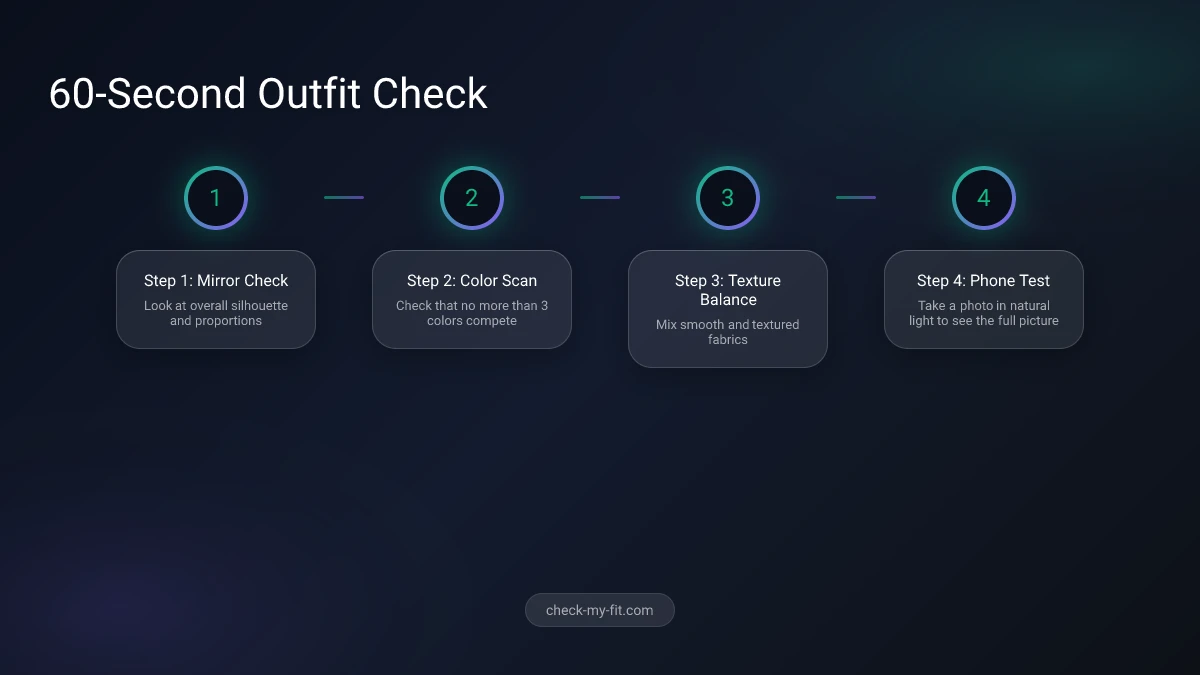
Here's your quick routine. Do this every morning and you'll never second-guess your look again.
- Squint test. Step back, squint. Balanced color blocks? Good.
- Temperature check. Are all colors warm, cool, or neutral? Good.
- Pattern count. One bold pattern max? Good.
- Proportion scan. Fitted and relaxed balanced? Good.
- Formality match. All pieces suit the same occasion? Good.
- Detail check. Metals match, neckline clean, shoes relate to belt? Good.
If you want to be extra sure, snap a photo. Photos reveal things mirrors miss. Or use CheckMyFit to digitally preview your combination from every angle.
The Bottom Line
Asking "does my outfit match?" is a sign you care about how you present yourself. That's already half the battle. The other half is having a system.
Use the four-point check. Stay within one color temperature. Limit patterns and focal points. Balance proportions for your frame. These aren't fashion secrets. They're simple, repeatable steps.
For the days when you're still unsure, technology fills the gap. CheckMyFit gives you an instant virtual try-on so you can test combinations on your actual body. No guessing. No buying and returning. Just clarity before you commit. Check out the plans and start matching with confidence.
Frequently Asked Questions
Does my outfit have to match perfectly?
No. Perfect matching often looks stiff or costume-like. Aim for coordination instead. Your pieces should relate through color, formality, or style without being identical. A little contrast adds personality and keeps your look interesting.
How do I know if two colors clash?
Hold the pieces together in natural daylight. If one color seems to vibrate or compete with the other, they clash. Colors clash most when they're similar in brightness but opposite in temperature. Navy and black, for example, often look muddy together.
Can I wear patterns with patterns?
Yes, but vary the scale. A small gingham check pairs well with large floral. The key is making sure both patterns share at least one common color. Avoid two patterns of the same size, as they compete for your eye.
What's the easiest outfit formula that always matches?
Neutral bottom, solid-color top, one accessory for interest. For example: dark jeans, white tee, and a structured bag. This three-piece formula works for casual, smart-casual, and even some business settings with small upgrades.
Should my shoes always match my outfit?
Your shoes should relate to your outfit, not necessarily match exactly. The connection can be through color, material, or formality level. Brown leather shoes work with earth tones. White sneakers work with casual outfits. Black dress shoes work with formal wear.
How can technology help me match outfits?
Virtual try-on tools like CheckMyFit let you see how clothes look on your body before buying or wearing them. Upload a photo and test different combinations digitally. It takes the guesswork out of matching and saves you from buying pieces that don't work with your wardrobe.