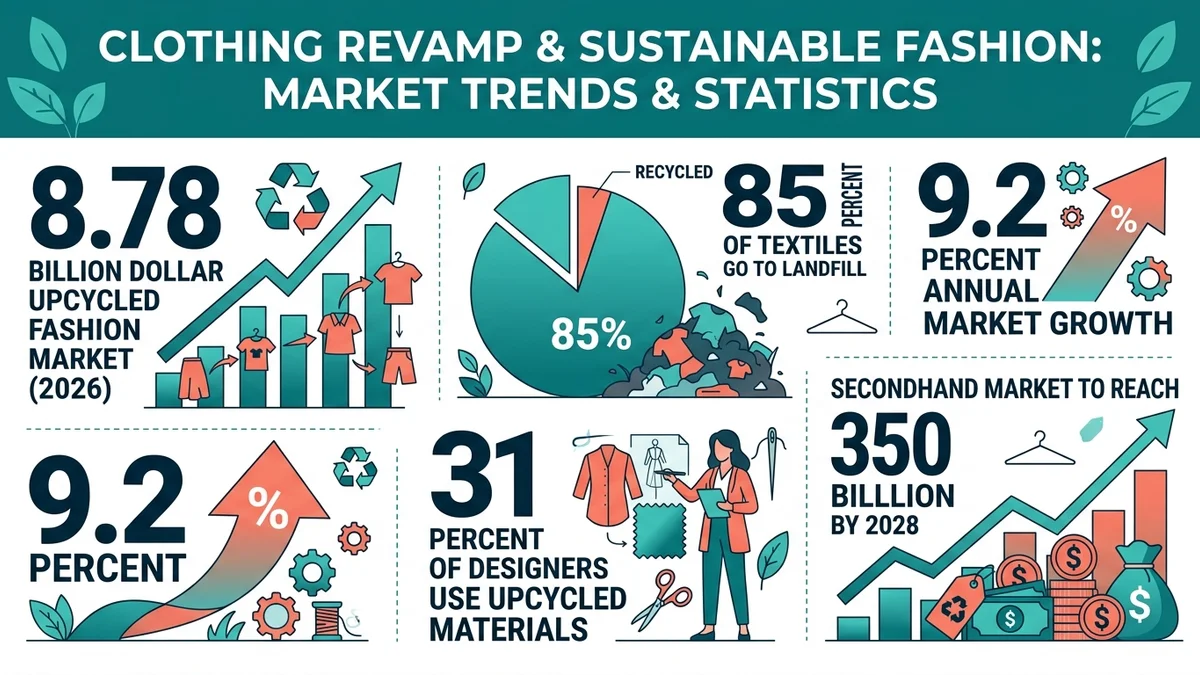
Your closet is full, but nothing feels right. Sound familiar? A clothing revamp is the answer. Instead of spending hundreds on new pieces, you can transform what you already own into fresh, on-trend outfits. In 2026, the upcycled fashion market is projected to reach $8.78 billion, and everyday people are driving this growth through simple DIY techniques. Whether you want to crop a pair of jeans, dye a faded shirt, or completely refashion an old dress, this guide covers every technique you need. From no-sew fixes to advanced alterations, you will learn how to give your wardrobe a second life without breaking the bank.
At a Glance
A clothing revamp means transforming existing garments through DIY techniques like dyeing, cropping, adding embellishments, or simple alterations. It saves money, reduces textile waste, and lets you create unique pieces. In 2026, sustainable fashion is growing at 9.2% annually. You can revamp clothes with or without sewing skills using tools like fabric glue, iron-on patches, and hem tape.
What Does It Mean to Revamp Your Clothes?
Revamping your clothes means updating, altering, or transforming existing garments to give them a fresh look and extended life. Unlike buying new items, a clothing revamp works with what you already own. It combines creativity with sustainability to reduce fashion waste while keeping your style current.
A wardrobe revamp can be as simple as swapping buttons on a blazer. Or it can be as bold as cutting a maxi dress into a crop top. The key difference from regular alterations is the creative intent. You are not just fixing clothes. You are reimagining them.
Key Takeaway: Revamping is not about perfection. It is about giving old clothes new purpose through creative transformation.
| Term | Definition | Skill Level |
|---|---|---|
| Revamping | Updating garments with new details or modifications | Beginner |
| Upcycling | Transforming old items into higher-value products | Intermediate |
| Refashioning | Completely restructuring a garment into something new | Advanced |
| Mending | Repairing damage to extend garment life | Beginner |
How Do You Revamp Clothes Without Sewing?
You can revamp clothes without sewing by using fabric glue, iron-on patches, hem tape, strategic cutting, knotting techniques, and fabric dye. No-sew methods are perfect for beginners and produce professional-looking results without any stitching skills.
Here are the most effective no-sew techniques:
Fabric Glue and Hem Tape
Fabric glue works on most materials and stays flexible after drying. Use it to attach embellishments, repair loose hems, or bond fabric layers together. Hem tape creates clean, professional-looking hems on pants and skirts in minutes.
Strategic Cutting
Transform a basic t-shirt into a tank top, crop top, or fringed design with just scissors. Cut the neckline wider for an off-shoulder look. Remove sleeves for a sleeveless vest. Trim the bottom for a cropped fit.
Iron-On Patches and Transfers
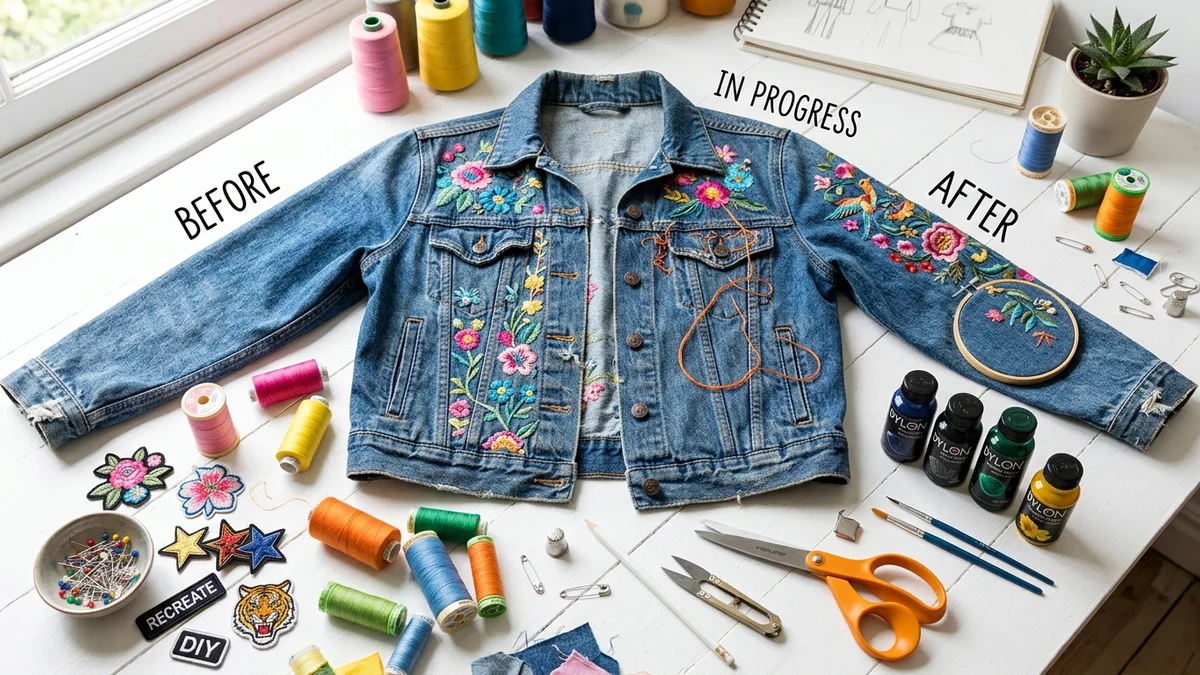
Cover holes, add personality, or completely change a garment's character with iron-on elements. Place patches strategically on denim jackets, jeans, or canvas bags for instant style upgrades.
Knotting and Tying
Tie the front of an oversized shirt for a fitted look. Create a halter top from a button-down by tying the sleeves behind your neck. Knot a scarf into a belt, headband, or bag accessory.
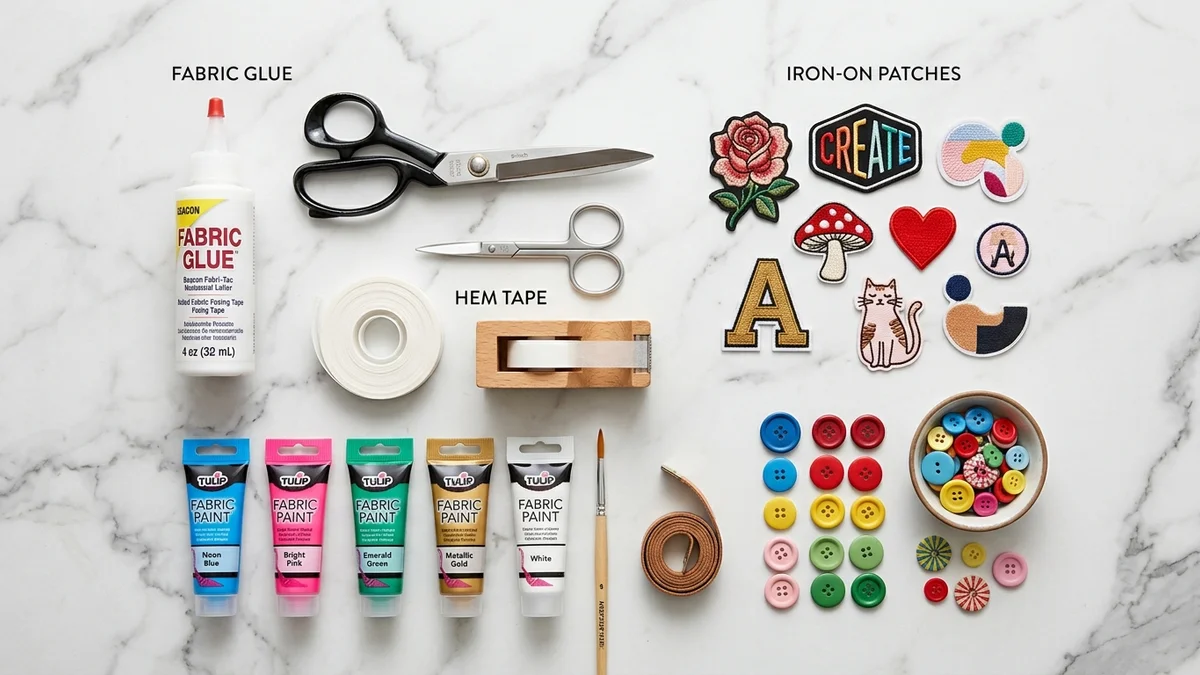
| No-Sew Technique | Best For | Difficulty | Time Required |
|---|---|---|---|
| Fabric glue | Hems, embellishments | Easy | 10-30 min |
| Iron-on patches | Denim, canvas, cotton | Easy | 5-15 min |
| Cutting and cropping | T-shirts, jeans, skirts | Easy | 10-20 min |
| Knotting | Shirts, scarves, dresses | Easy | 5 min |
| Fabric dye | Any natural fabric | Medium | 1-3 hours |
| Bleach designs | Dark denim, cotton | Medium | 30-60 min |
10 Best DIY Clothing Revamp Ideas for 2026
Looking for specific projects? These are the most popular clothing revamp techniques trending in 2026.
- Crop old t-shirts - Cut below the chest line and pair with high-waisted bottoms
- Dye faded clothes - Use fabric dye to refresh colors or create entirely new shades
- Add lace or crochet panels - Insert lace into cut sections for a boho look
- Replace buttons - Swap plain buttons with vintage, metal, or decorative options
- Create patchwork designs - Combine fabric scraps from multiple old garments
- Distress denim - Use sandpaper and scissors for a worn, trendy look
- Paint fabric designs - Use fabric paint for custom artwork on jackets and jeans
- Convert jeans to shorts - Cut and fray the edges for summer-ready styles
- Add embroidery details - Hand-stitch flowers, words, or geometric patterns
- Transform shirts into bags - Turn old t-shirts into reusable tote bags
In 2026, 31% of fashion designers incorporate pre-consumer or post-consumer textile waste into new collections, proving that upcycling is now mainstream.
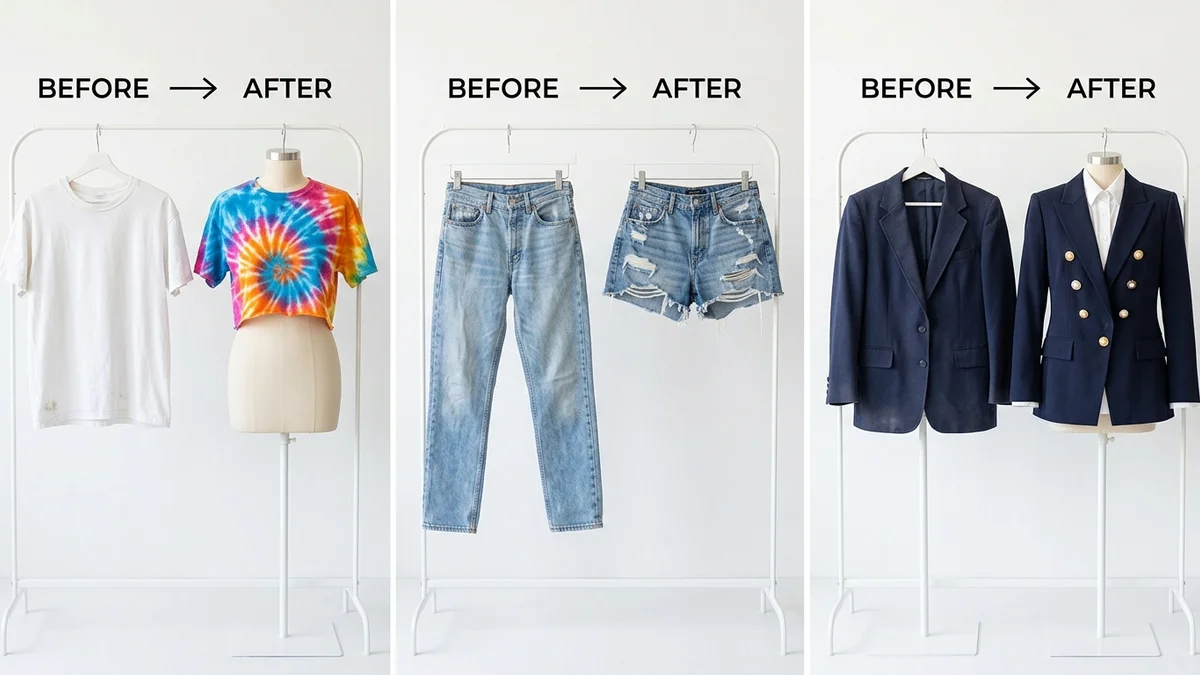
Key Takeaway: Start with simple projects like button swaps or cropping before moving to dyeing or embroidery.
How Can You Revamp Your Wardrobe on a Budget?
You can revamp your entire wardrobe for under $50 using items you already have at home plus a few inexpensive supplies. The key is starting with a closet audit, then prioritizing pieces with the most transformation potential.
Step 1: Audit Your Closet
Pull everything out. Sort into three piles: keep as-is, revamp potential, and donate. Focus on items with good fabric quality but outdated styles.
Step 2: Gather Budget-Friendly Supplies
Most revamp projects need only basic supplies. A bottle of fabric glue costs under $8. A pack of iron-on patches runs about $10. Fabric dye starts at $5 per packet.
Step 3: Prioritize High-Impact Changes
Focus on pieces you wear most. Updating five everyday items creates more impact than revamping one special-occasion dress.
| Supply | Cost | Projects It Enables |
|---|---|---|
| Fabric glue | $5-8 | Hems, patches, embellishments |
| Fabric dye kit | $5-15 | Color changes, tie-dye |
| Iron-on patches (10-pack) | $8-12 | Repairs, decoration |
| Fabric paint set | $10-15 | Custom designs, stencils |
| Replacement buttons (set) | $3-8 | Button swaps, upgrades |
| Scissors (fabric) | $8-15 | Cutting, cropping, fringing |
| Total starter kit | $39-73 | Full revamp capability |
Step 4: Use Clothing Swaps
Host or join a clothing swap event. Trade pieces you no longer want for items that feel fresh and new to you. Zero cost, maximum variety.
Common Clothing Revamp Mistakes to Avoid
Even simple revamp projects can go wrong. Here are the mistakes that ruin the most DIY clothing transformations.
- Cutting too much at once - Always cut less than you think. You can trim more, but you cannot add fabric back.
- Using the wrong glue - Regular craft glue washes out. Use fabric-specific adhesive that withstands washing and drying.
- Skipping the test - Test dye colors, bleach, or paint on a hidden area first. Inside seams work perfectly for testing.
- Ignoring fabric type - Synthetic fabrics react differently to dye and heat. Check labels before starting any project.
- Rushing the drying process - Fabric glue and dye need full curing time. Rushing leads to peeling, fading, and uneven results.
Key Takeaway: The number one rule of clothing revamping is to test everything on a small, hidden area before committing to the full garment.
How Virtual Try-On Technology Helps You Plan Your Revamp
Before cutting, dyeing, or altering any piece, visualize the result first. Virtual try-on technology lets you preview how revamped clothing will look on your actual body shape. This eliminates guesswork and prevents costly mistakes.
With tools like CheckMyFit, you can upload a photo and see how different styles, lengths, and colors look on you before making a single cut. Want to see if cropping that jacket works? Preview it digitally first. Curious about dyeing your jeans a darker shade? Visualize the color on your body type.
This approach is especially valuable for finding clothes that flatter your body type. Instead of guessing whether a crop length or neckline modification will suit you, you can see the result in seconds.
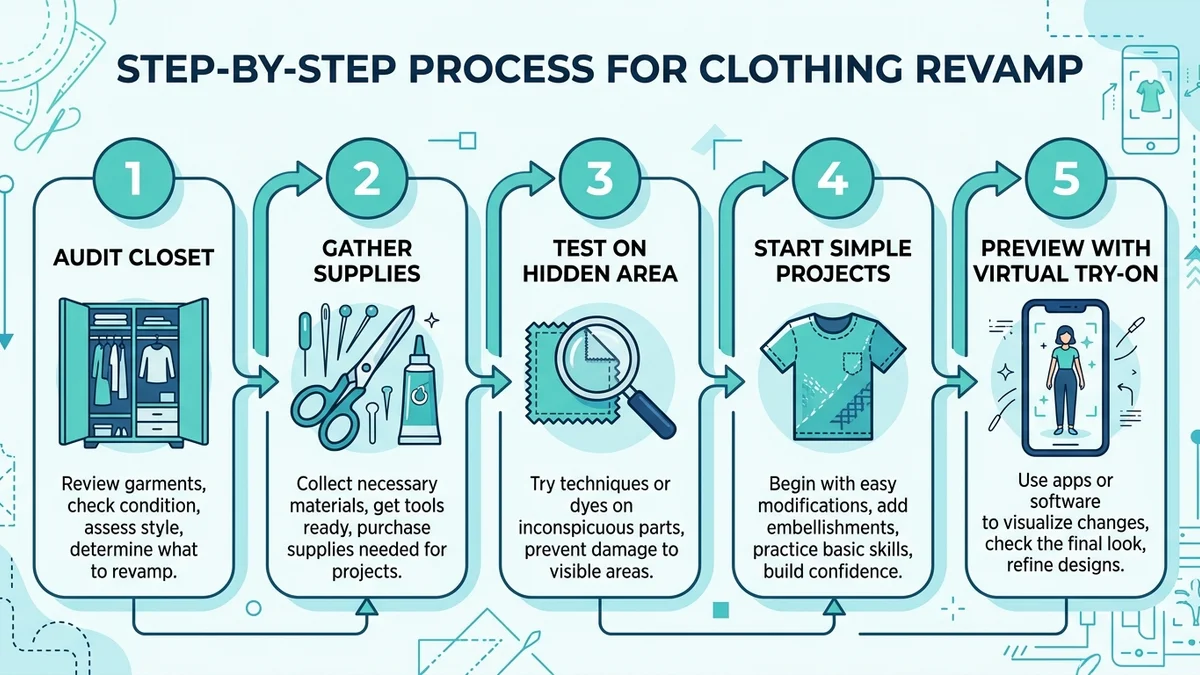
Virtual dressing room technology boosts conversion rates by roughly 40% on average, and the same visualization principles apply to DIY revamping.
Recommended Products for Your Clothing Revamp
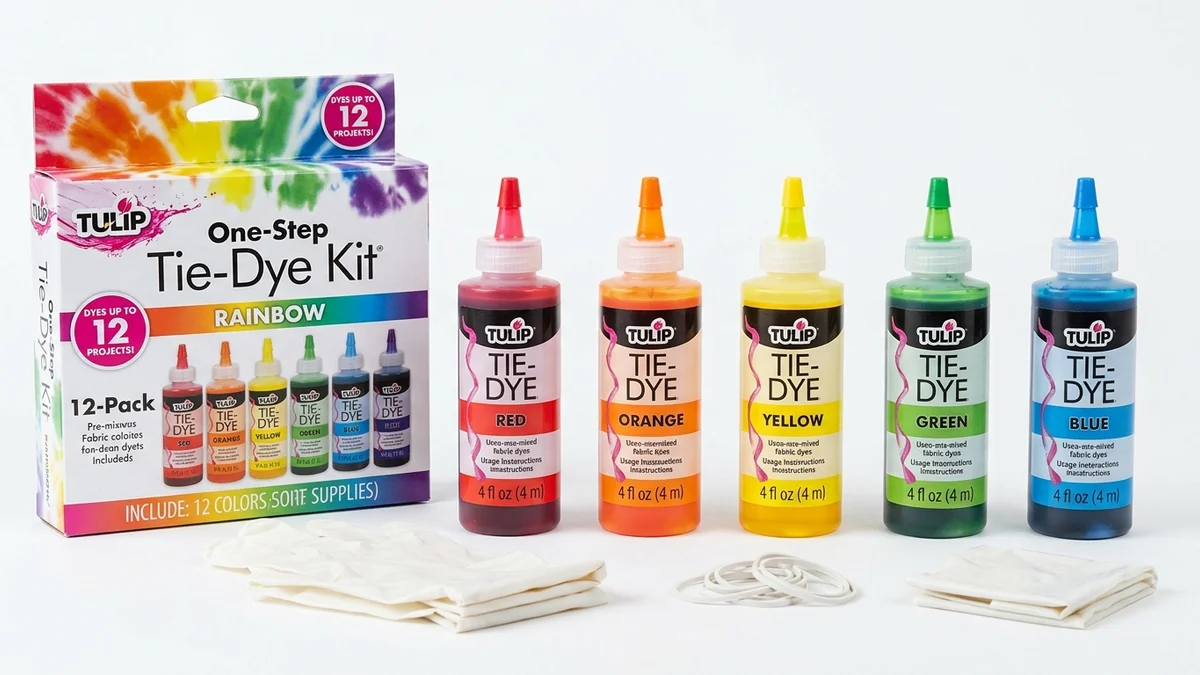
The easiest way to dye clothes at home. Includes five vibrant colors, squeeze bottles, gloves, and rubber bands for multiple garment transformations.
View on Amazon →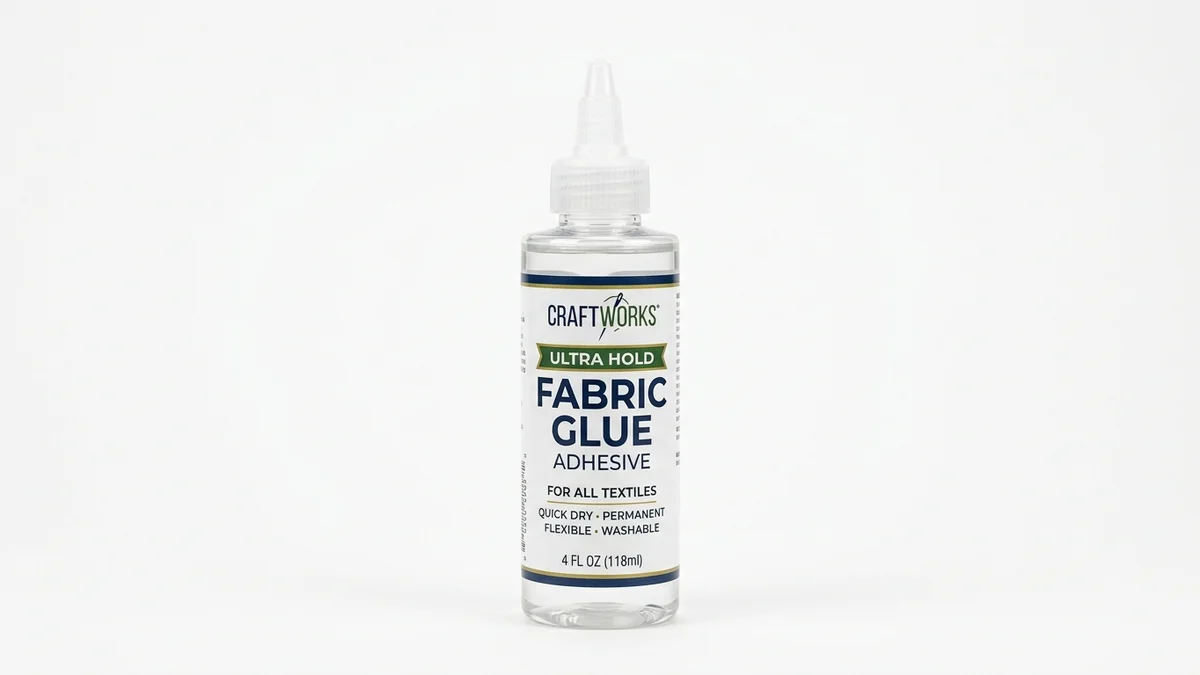
Professional-strength fabric glue that stays flexible after drying. Perfect for no-sew hems, patches, and embellishments. Machine washable and dryer safe.
View on Amazon →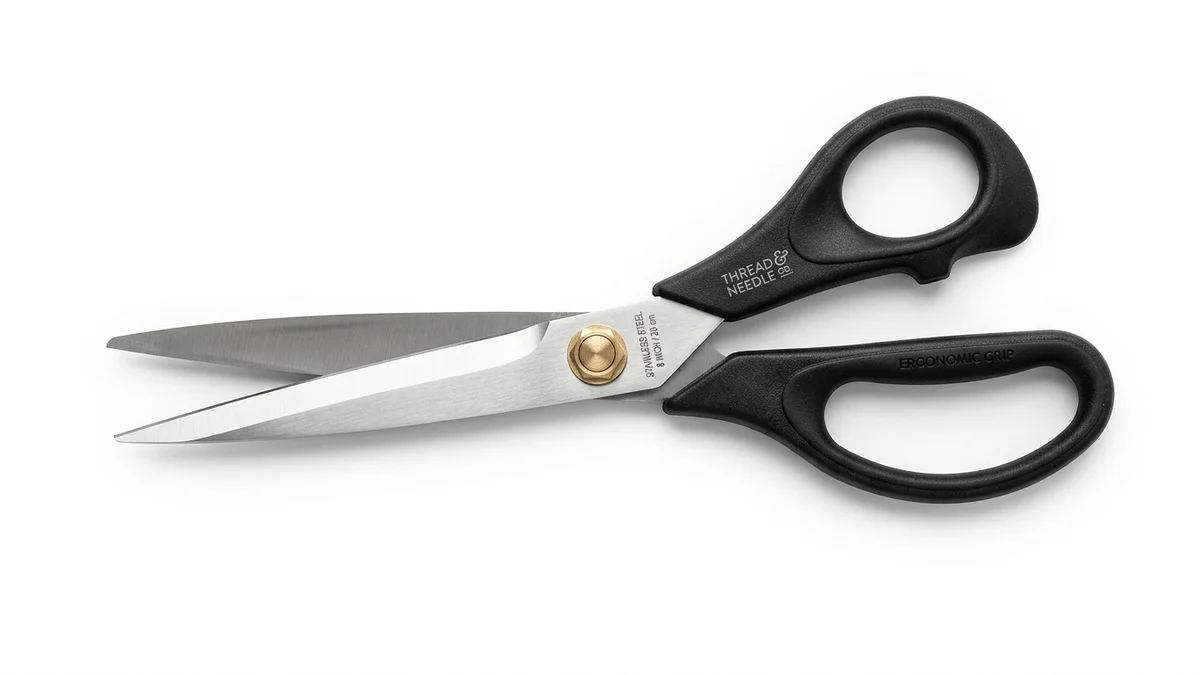
Sharp, ergonomic fabric scissors designed for clean cuts on all fabric types. Essential for cropping, fringing, and precision cutting in any clothing revamp project.
View on Amazon →The Environmental Impact of Clothing Revamping
Revamping your clothes is not just a style choice. It is an environmental statement. The fashion industry generates massive waste, and extending garment life through revamping directly reduces your footprint.
About 85% of all textiles produced go to landfills each year, and less than 1% of clothing material is recycled back into new clothing.
The sustainable fashion market is growing at 9.4% CAGR from 2023 to 2030. Every garment you revamp instead of replacing keeps textile waste out of landfills and reduces demand for new production.
In 2026, the secondhand and upcycled fashion market continues growing three times faster than new apparel. By choosing to revamp, you join millions of people making fashion more circular and sustainable.
| Environmental Metric | Fast Fashion | Clothing Revamp |
|---|---|---|
| Carbon footprint per garment | 10-30 kg CO2 | Near zero |
| Water usage | 2,700L per t-shirt | None |
| Textile waste generated | 85% to landfill | Zero new waste |
| Cost to consumer | $15-100+ per item | $0-15 per project |
| Garment lifespan extension | 0 months | 12-36 months |
Frequently Asked Questions
What tools do I need to revamp clothes at home?
You need fabric scissors, fabric glue or hem tape, and iron-on patches for basic projects. For dyeing, add fabric dye and rubber gloves. For embellishments, get fabric paint, buttons, or decorative patches. A complete starter kit costs under $50 and handles most revamp projects.
Can you revamp clothes without any crafting skills?
Yes. Many clothing revamp techniques require zero crafting experience. Swapping buttons, using iron-on patches, tying knots for fitted looks, and cropping with scissors are all beginner-friendly. Start with simple changes and build confidence before trying advanced techniques like dyeing or embroidery.
How long does a typical clothing revamp take?
Simple revamps like button swaps or iron-on patches take 5 to 15 minutes. Cropping and cutting projects need 10 to 30 minutes. Dyeing requires 1 to 3 hours including drying time. Complex projects like patchwork or embroidery may take several hours spread across multiple sessions.
What is the difference between upcycling and revamping?
Revamping updates a garment while keeping its original purpose. Upcycling transforms items into entirely new products, often of higher value. For example, shortening jeans is revamping. Turning jeans into a handbag is upcycling. Both extend garment life and reduce waste, but upcycling typically requires more skill.
Is clothing revamp better for the environment than buying new?
Significantly better. Revamping produces near-zero carbon emissions compared to 10 to 30 kg of CO2 per new garment. It uses no additional water, creates no textile waste, and keeps clothes out of landfills. In 2026, about 85% of all textiles still end up in dumps each year.
Can I revamp vintage or thrifted clothing?
Absolutely. Vintage and thrifted clothes are ideal for revamping because they often feature higher-quality fabrics and unique construction. Check fabric content labels before dyeing or using heat-based techniques. Older polyester blends react differently to dye than natural fibers like cotton or linen.
How do I visualize revamped outfits before starting?
Use virtual try-on tools like CheckMyFit to preview how modifications will look on your body. Upload a photo, select the style change you want to visualize, and see AI-generated results in seconds. This prevents irreversible mistakes on your favorite pieces.
What clothes are easiest to revamp for beginners?
Cotton t-shirts, denim jeans, and simple button-down shirts are the easiest starting points. These fabrics are forgiving, widely available, and work well with most revamp techniques including dyeing, cutting, patching, and embellishing. Avoid starting with silk, leather, or heavily structured garments.
Conclusion
A clothing revamp is one of the smartest moves you can make for your style, your wallet, and the planet. With just basic supplies and a little creativity, you can transform tired pieces into fresh, on-trend outfits. Start small with button swaps or strategic cuts, then work your way up to dyeing and embroidery as your confidence grows.
Before you make any permanent changes, use CheckMyFit to preview how your revamped pieces will look. Our AI-powered virtual try-on lets you visualize cropped lengths, new colors, and style modifications on your actual body shape. Try it free and plan your perfect clothing revamp today.