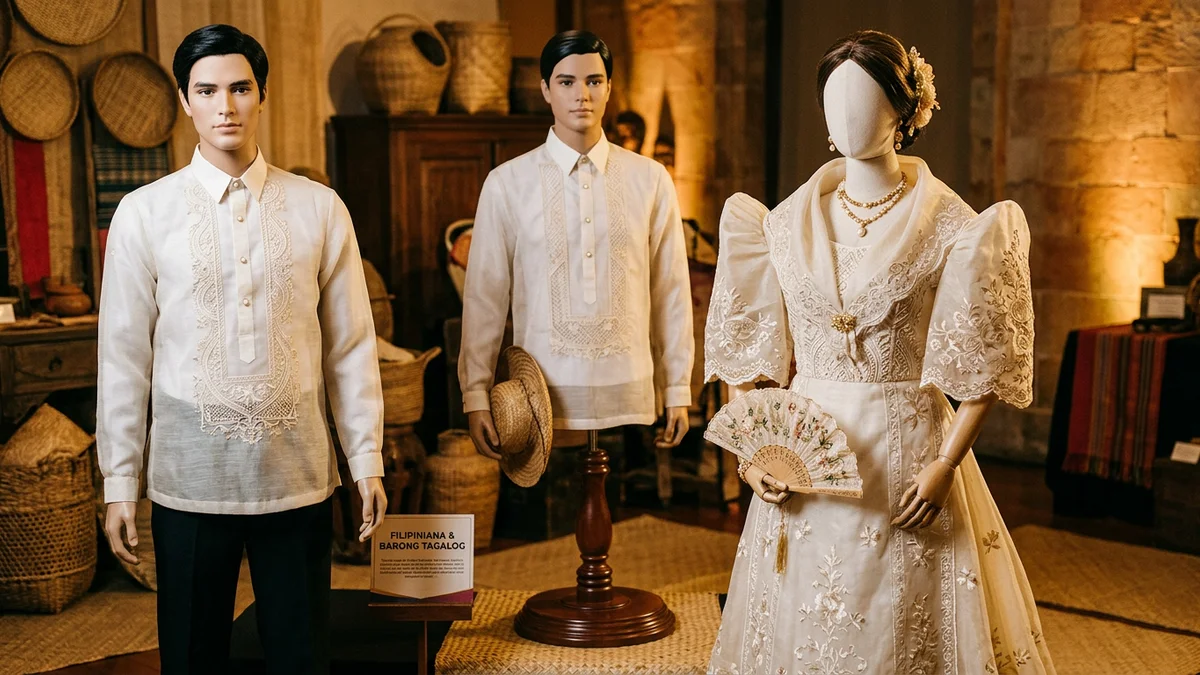
Filipino traditional clothing tells a story of resilience, identity, and artistic brilliance. From the sheer elegance of the Barong Tagalog to the graceful butterfly sleeves of the Terno, Philippine dress reflects centuries of indigenous craftsmanship blended with colonial influences.
Whether you're attending a Filipino wedding, exploring your heritage, or simply curious about Southeast Asian fashion, this guide covers every style of traditional Filipino clothing for both men and women. You'll discover the history, fabrics, regional variations, and modern ways people wear these iconic garments today.
At a Glance
Filipino traditional clothing includes the Barong Tagalog (men's embroidered formal shirt) and Baro't Saya (women's blouse-and-skirt ensemble) as the national dress. Made from piña and jusi fabrics, these garments blend pre-colonial Filipino design with Spanish colonial influence. Modern Filipino fashion reimagines these pieces with contemporary cuts while preserving cultural significance. Virtual try-on tools let you preview these styles before purchasing.
What Is Filipino Traditional Clothing?
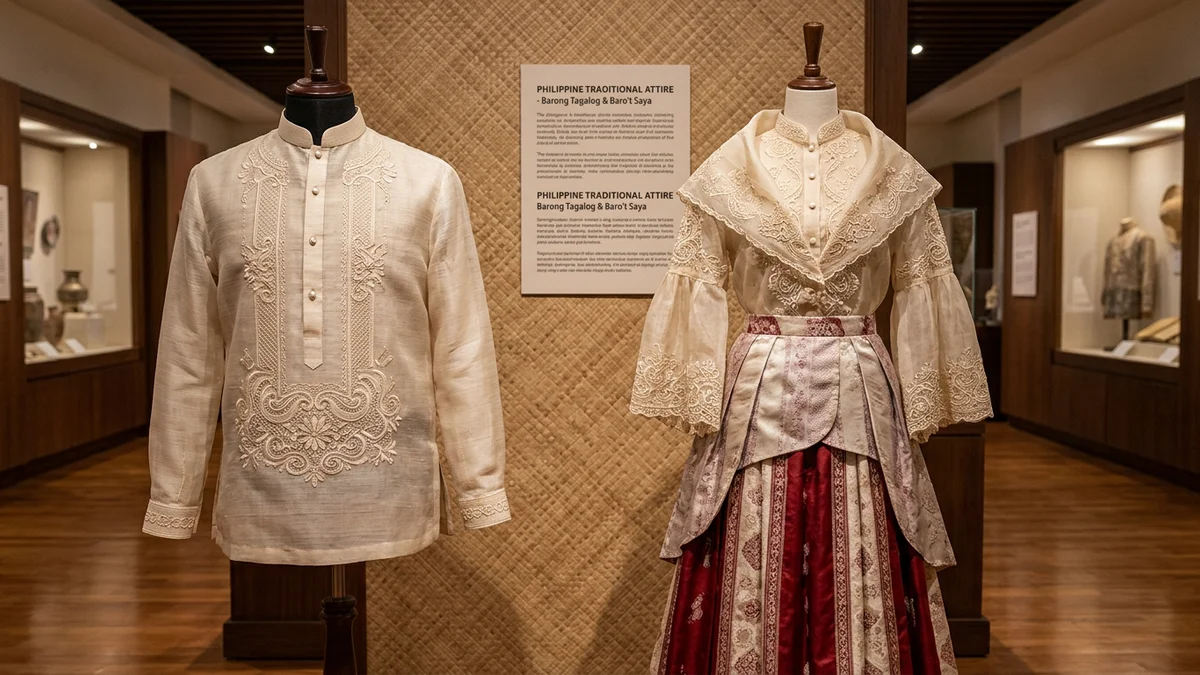
Filipino traditional clothing refers to the indigenous and historically significant garments worn across the Philippine archipelago. These garments carry deep cultural meaning and reflect the country's complex history of pre-colonial traditions, Spanish colonization, and modern national identity.
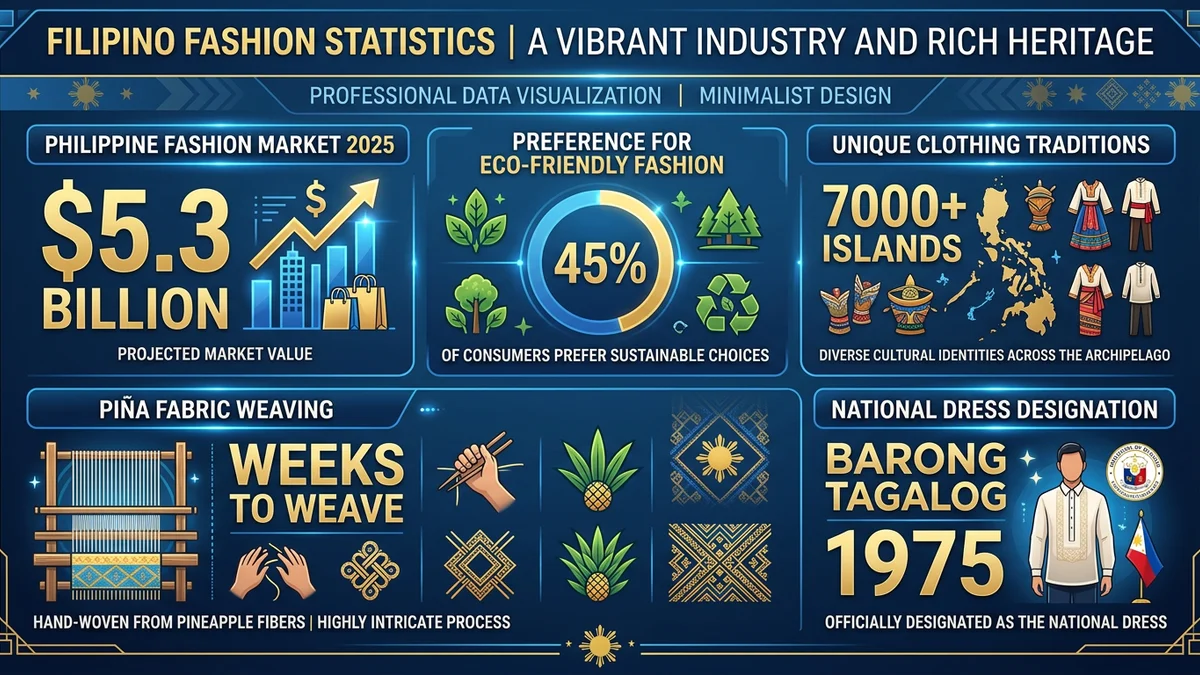
The two most recognized garments are the Barong Tagalog for men and the Baro't Saya for women. President Ferdinand Marcos officially designated the Barong Tagalog as the national attire in 1975, and Barong Tagalog Week is celebrated every June 5-11.
| Garment | Gender | Key Feature | Fabric | Occasion |
|---|---|---|---|---|
| Barong Tagalog | Men | Embroidered sheer shirt | Piña, jusi | Formal events, weddings |
| Baro't Saya | Women | Blouse + long skirt | Piña, jusi, silk | National holidays, ceremonies |
| Terno | Women | Butterfly sleeves | Piña, organza | Galas, state functions |
| Maria Clara | Women | Full-length gown | Piña, jusi | Weddings, pageants |
| Kimona | Women | Short blouse | Pineapple fiber | Visayan festivals |
| Malong | Both | Wrapped tubular cloth | Handwoven cotton | Moro daily wear |
The Philippine fashion market reached $5.3 billion in 2025, with growing global interest in traditional garments driving a revival of heritage fabrics and designs.
Key Takeaway: Filipino traditional clothing is not a single garment but a diverse collection of regional styles united by shared craftsmanship traditions and cultural pride.
What Is the Barong Tagalog and How Do You Wear It?
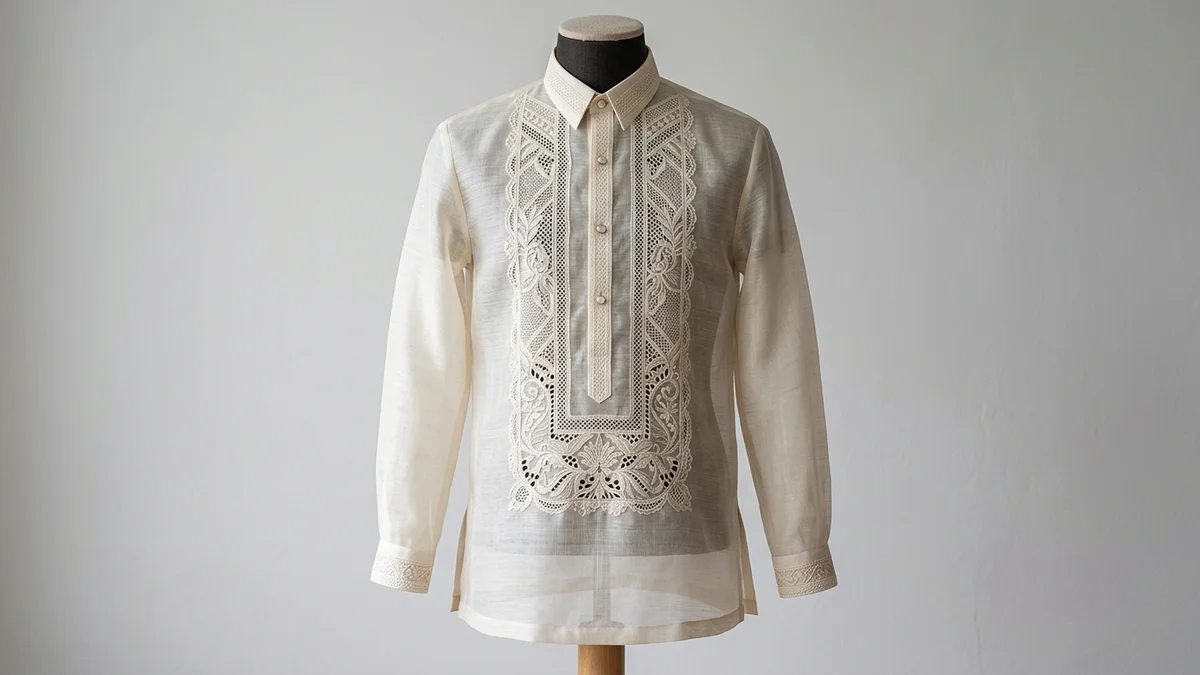
The Barong Tagalog is an embroidered long-sleeved formal shirt and the national dress of the Philippines for men. Made from sheer, lightweight fabric called nipis (typically woven from piña or abacá fibers), it combines pre-colonial Filipino design with Spanish colonial influences to create one of Asia's most distinctive garments.
Design Elements
Every Barong Tagalog shares these characteristics:
- Sheer fabric worn over an undershirt (camisón)
- Embroidery on the chest panel (pechera) or scattered across the entire shirt (sabog)
- Long sleeves with French or barrel cuffs
- No pockets and always worn untucked
- Buttoned halfway or fully down the chest
The embroidery techniques include calado (openwork drawn thread), encajes de bolilio (Venetian lace), and sombrado (shadow embroidery). Each technique requires hours of skilled handwork.
How to Wear a Barong Tagalog
- Choose your undershirt. Wear a light, plain white camisón underneath. The Barong is sheer, so the undershirt provides a clean look.
- Pair with dress trousers. Black, navy, brown, or gray trousers work best. Avoid jeans for formal occasions.
- Leave it untucked. Tucking in a Barong is considered inappropriate and hides the embroidery.
- Add leather shoes. Complete the look with polished leather dress shoes.
- Accessorize minimally. A simple watch and cufflinks are sufficient.
Key Takeaway: The Barong Tagalog is always worn untucked over an undershirt. This distinguishes it from Western dress shirts and showcases its embroidery.
What Are the Traditional Filipino Clothes for Women?
Filipino women's traditional clothing offers remarkable variety, from the simple Baro't Saya to the dramatic Terno. Each style suits different occasions and reflects different periods of Philippine history.
Baro't Saya (Blouse and Skirt)
The Baro't Saya (literally "blouse and skirt") is the foundational women's garment. It traditionally consists of four parts:
- Baro (camisa): A wide-sleeved blouse, often sheer
- Saya (falda): A long, flowing skirt
- Pañuelo (alampay): A kerchief draped over the shoulders
- Tapis (patadyong): A short rectangular cloth worn over the skirt
Upper-class women wore elaborate versions sewn with beads and colorful designs, while everyday versions used simpler cotton fabrics.
Maria Clara Dress
Named after the heroine of José Rizal's novel Noli Me Tangere, the Maria Clara dress is a formal version of the Baro't Saya. It features a floor-length skirt, heavily starched sleeves, and intricate embroidery. Brides often choose this style for traditional Filipino weddings.
Terno Dress
The Terno is the most recognizable Filipino women's garment internationally. Its signature butterfly sleeves (large, stiffened sleeves that extend outward) create a dramatic silhouette. The Terno evolved in the early 1900s and became iconic through Imelda Marcos, who frequently wore this style.
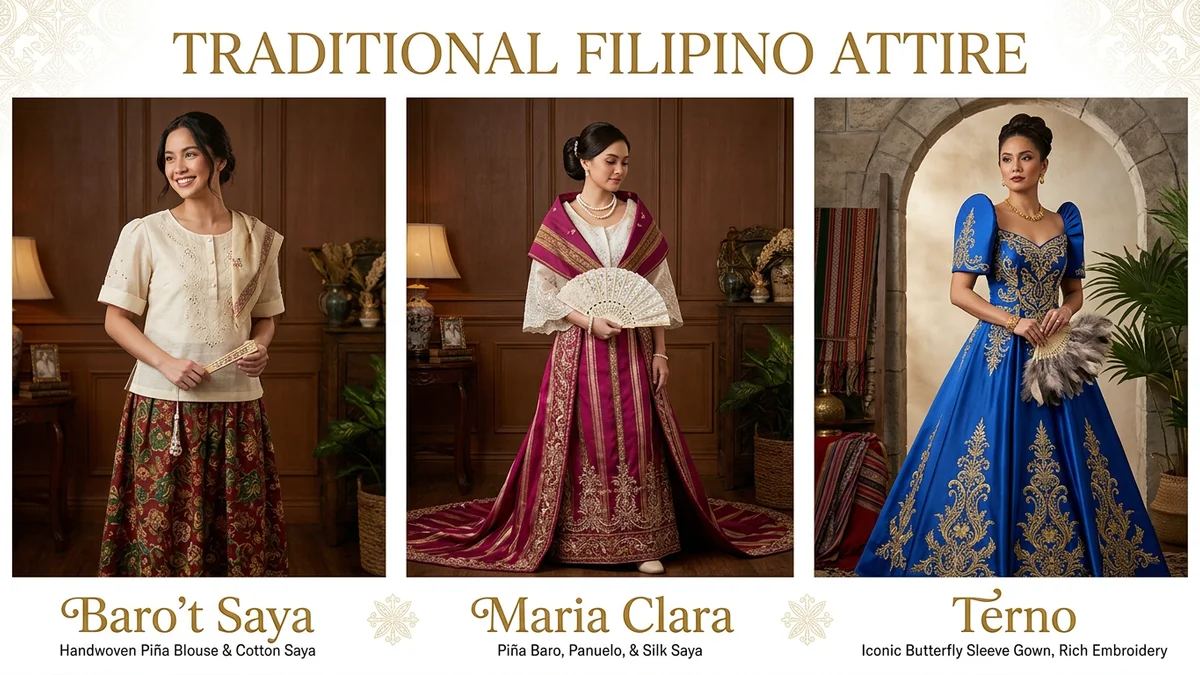
| Style | Period | Sleeves | Length | Best For |
|---|---|---|---|---|
| Baro't Saya | Pre-colonial | Wide, bell | Floor-length | National holidays |
| Maria Clara | 19th century | Puffed, stiff | Floor-length | Weddings, pageants |
| Terno | Early 1900s | Butterfly | Floor or cocktail | Galas, state events |
| Modern Filipiniana | 2020s | Various | Midi to floor | Formal events, parties |
Key Takeaway: Filipino women's traditional clothing ranges from the everyday Baro't Saya to the formal Terno, each suited to different occasions and reflecting distinct historical periods.
What Fabrics Are Used in Filipino Traditional Clothing?
The fabrics of Filipino traditional clothing are as remarkable as the garments themselves. Indigenous weaving traditions dating back centuries produce textiles found nowhere else in the world.
Piña (Pineapple Fiber)
Piña is the most prestigious Filipino textile. Weavers extract fibers from pineapple leaves, then hand-weave them into a delicate, translucent fabric. A single Barong Tagalog made from piña can take weeks to complete and costs significantly more than other fabrics.
Jusi (Banana Silk)
Jusi is a silk-like fabric originally made from abacá (banana plant fibers). Modern jusi often blends synthetic fibers for durability while maintaining its characteristic sheen. It offers an affordable alternative to piña.
Other Traditional Fabrics
| Fabric | Source | Texture | Price Range | Common Use |
|---|---|---|---|---|
| Piña | Pineapple leaves | Sheer, delicate | $$$ | Premium Barong, formal wear |
| Jusi | Banana/abacá fiber | Silky, light | $$ | Everyday Barong, dresses |
| Ramie | Ramie plant | Crisp, breathable | $$ | Modern Barong |
| Abacá | Manila hemp | Strong, textured | $$ | Accessories, bags |
| Cocoon fabric | Silk cocoon | Soft, lustrous | $$$ | Formal Filipiniana |
Over 45% of Filipino fashion shoppers now prefer eco-friendly or sustainably sourced apparel, driving renewed interest in traditional handwoven fabrics.
Key Takeaway: Piña and jusi are the signature fabrics of Filipino traditional clothing. Both come from plant fibers and require skilled handcraft to produce.
Indigenous Filipino Clothing by Region
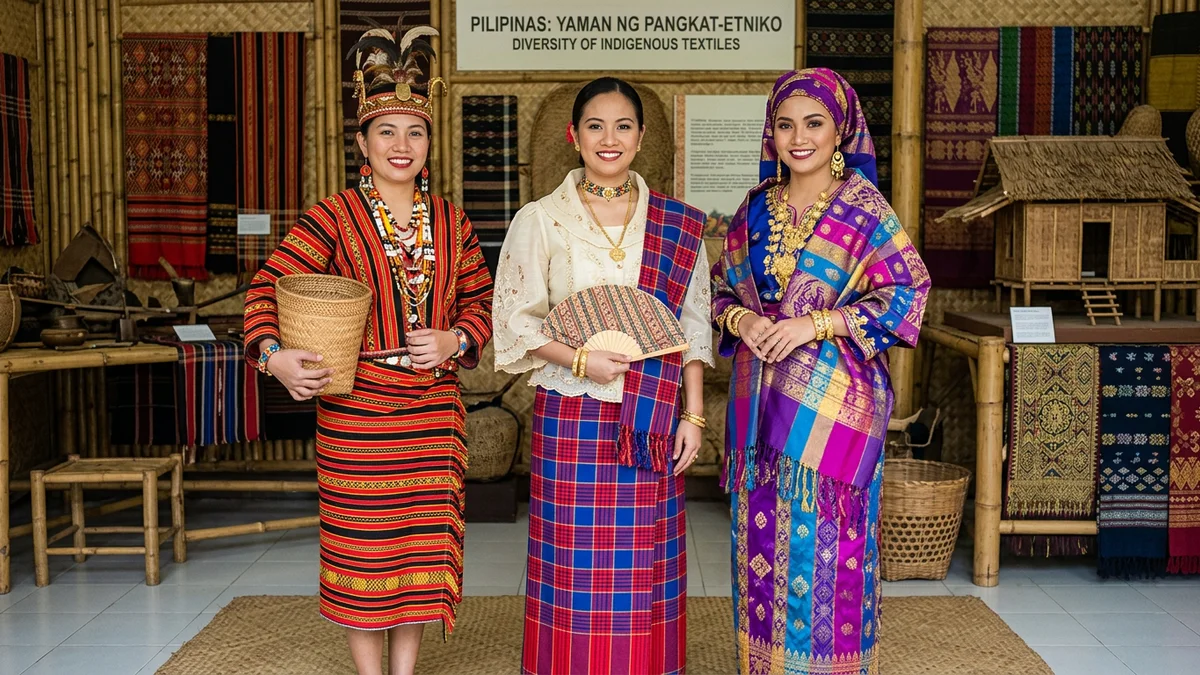
Beyond the well-known Barong and Filipiniana styles, the Philippines' 7,000+ islands host dozens of indigenous clothing traditions. Each ethnic group maintains distinct weaving patterns, materials, and cultural significance.
Luzon (Northern Philippines)
The Igorot peoples of the Cordillera mountains wear clothing with intricate hand-woven patterns. Men wear a red loincloth called wanes decorated with tribal patterns. Women wear a wrap-around skirt called lufid. Tattoos serve as important cultural markers, symbolizing bravery and status.
Visayas (Central Philippines)
The Kimona is a short, wide-sleeved blouse typical of Visayan women. Made from transparent pineapple fiber, it pairs with a knee-length or floor-length skirt in the Patadyong pattern. A handkerchief called tubao drapes over the right shoulder.
Mindanao (Southern Philippines)
The Moro peoples are renowned for their exceptional weaving skills. Key garments include:
- Malong: A colorful tubular cloth wrapped around the body, serving as skirt, blanket, or baby carrier
- Patadyong: A large fabric wrapped at the waist by both men and women
- Tao-Bo (Ppis): A men's headdress adorned with geometric patterns and Arabic calligraphy
Key Takeaway: Filipino clothing varies dramatically by region. The northern Igorot, central Visayan, and southern Moro traditions each reflect unique cultural identities within the Philippine archipelago.
How Has Filipino Traditional Clothing Evolved?
Filipino fashion has undergone dramatic transformation across several distinct eras, each leaving its mark on the garments worn today.
Pre-Colonial Era (Before 1521)
Early Filipinos wore the baro (simple collar-less shirt) and tapis (wrapped cloth at the waist). Fabrics came from abacá, cotton, and bark cloth. Jewelry, tattoos, and gold accessories indicated social status.
Spanish Colonial Era (1521-1898)
Spanish clergy deemed pre-colonial dress immodest for women and introduced the long skirt (saya). This fusion created the Baro't Saya. The Barong Tagalog also emerged during this period, with debate over whether Spaniards forced Filipinos to wear their shirts untucked to distinguish them from colonizers.
American Period & Independence (1898-1960s)
Western clothing became widespread. The Terno evolved as a distinctly Filipino formal garment with its iconic butterfly sleeves, representing a conscious choice to celebrate national identity.
Modern Renaissance (2020s)
Filipino fashion in the 2020s blends modern and traditional elements. Designers create:
- Slim-fit Barong Tagalogs in linen or ramie with minimalist embroidery
- Cocktail-length Terno dresses with innovative sleeve designs
- Barong tops paired with jeans for casual cultural wear
- Terno-style jumpsuits and off-shoulder butterfly sleeve evening gowns
Searches for "Barong Tagalog" and "Filipiniana dress" reached peak interest in late 2025, reflecting growing global appreciation for Philippine heritage fashion.
How to Try Filipino Traditional Clothing Virtually
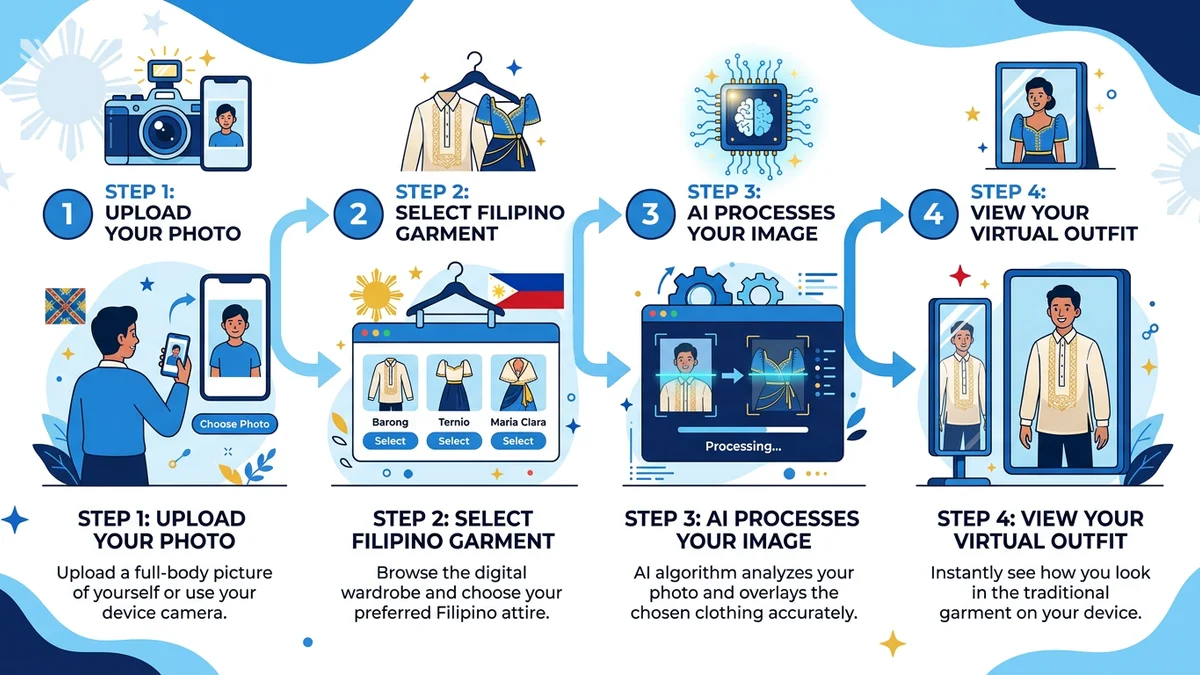
Interested in seeing how Filipino traditional clothing looks on you before purchasing? Virtual try-on technology makes this possible from anywhere in the world.
CheckMyFit uses AI-powered virtual fitting technology that lets you upload your photo and preview how different garments look on your body. This is especially valuable for traditional clothing from Southeast Asian cultures where sizing and draping can differ significantly from Western fashion.
How Virtual Try-On Works for Traditional Filipino Clothing
- Upload your photo to the virtual fitting platform
- Select the garment you want to try (Barong, Filipiniana, Terno)
- AI processes your image and maps the clothing to your body shape
- View the result showing how the outfit looks on you
This eliminates the guesswork when ordering Filipino clothing online, especially for international buyers unfamiliar with Philippine sizing. Tools like CheckMyFit help you find the perfect size and reduce the need for returns.
When to Wear Filipino Traditional Clothing
Understanding the right occasions for Filipino traditional dress helps you choose appropriately and honor cultural customs.
| Occasion | Men's Attire | Women's Attire | Formality |
|---|---|---|---|
| Wedding | Barong Tagalog (piña) | Maria Clara or Terno | Very formal |
| Graduation | Barong Tagalog (jusi) | Filipiniana dress | Formal |
| Buwan ng Wika (August) | Barong or Camisa de Chino | Baro't Saya | Semi-formal |
| Independence Day (June 12) | Barong Tagalog | Baro't Saya or Terno | Formal |
| Office Filipiniana Friday | Modern Barong | Modern Filipiniana | Business |
| Cultural festival | Regional traditional wear | Regional traditional wear | Varies |
| State dinner or gala | Formal piña Barong | Terno gown | Black tie |
Many Filipino offices observe Filipiniana Fridays, where employees wear traditional clothing to work. Schools across the Philippines also require traditional dress during Buwan ng Wika (Language Month) every August.
Recommended Products for Filipino Traditional Clothing
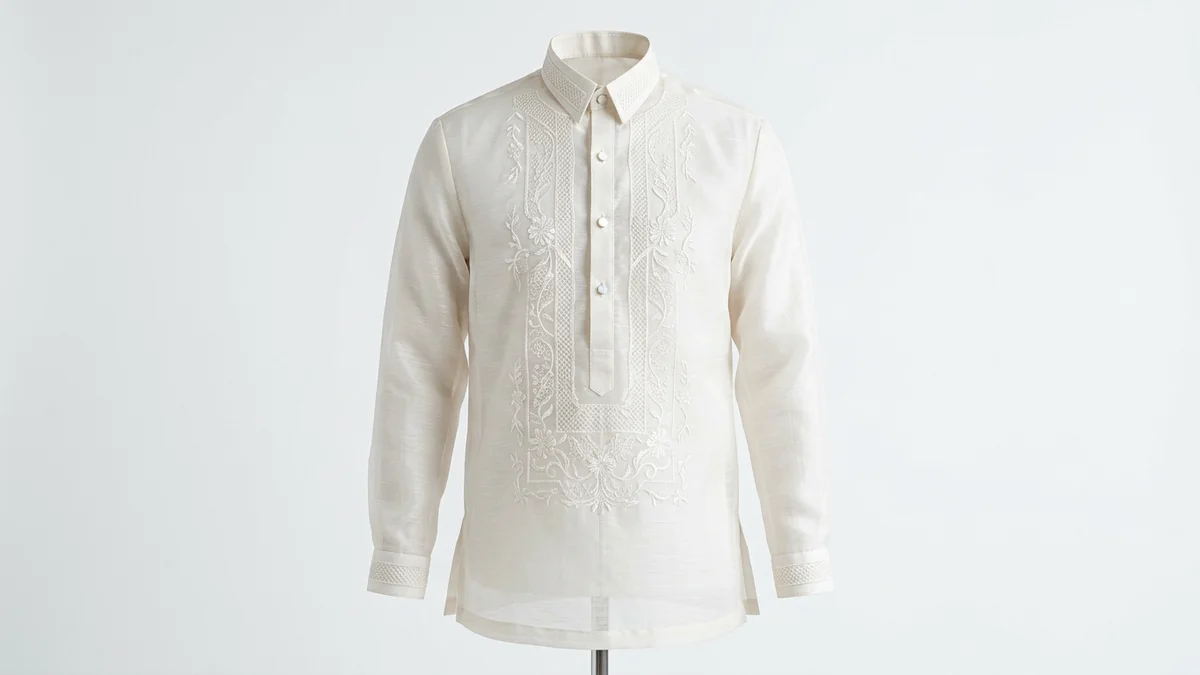
Authentic handmade Barong Tagalog in modern organza fabric with elegant embroidery. Perfect for weddings, formal events, and cultural celebrations.
View on Amazon →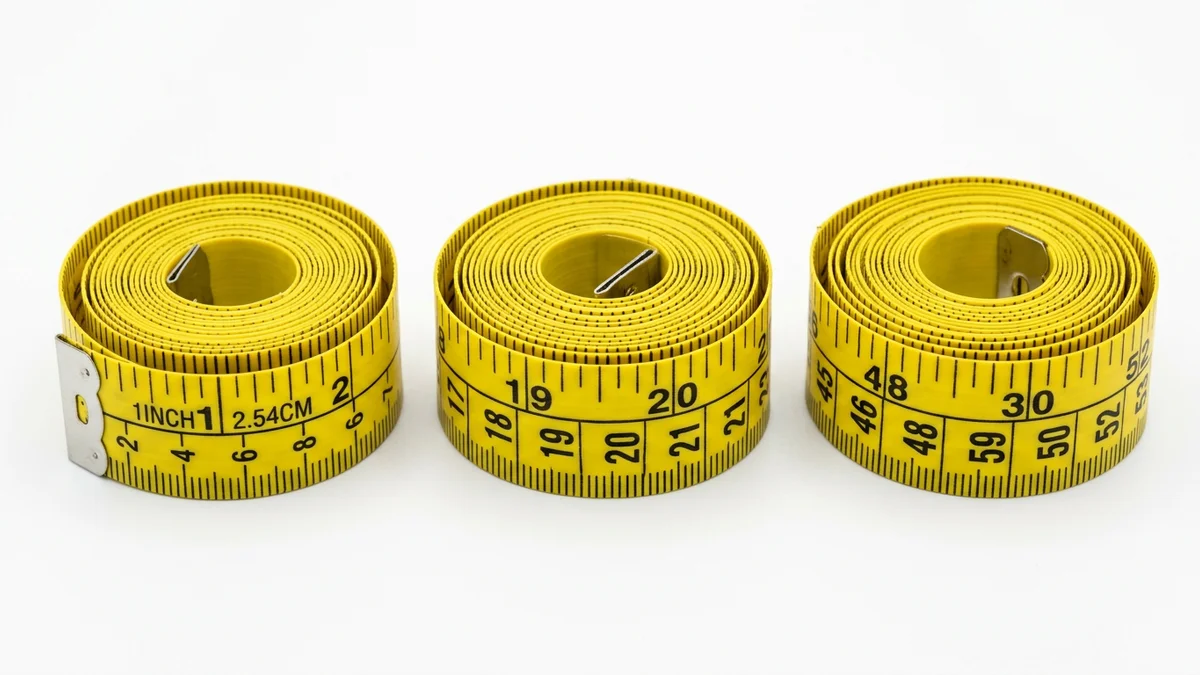
Essential for getting accurate body measurements before ordering traditional Filipino clothing online. Flexible tape measures chest, waist, and sleeve length precisely.
View on Amazon →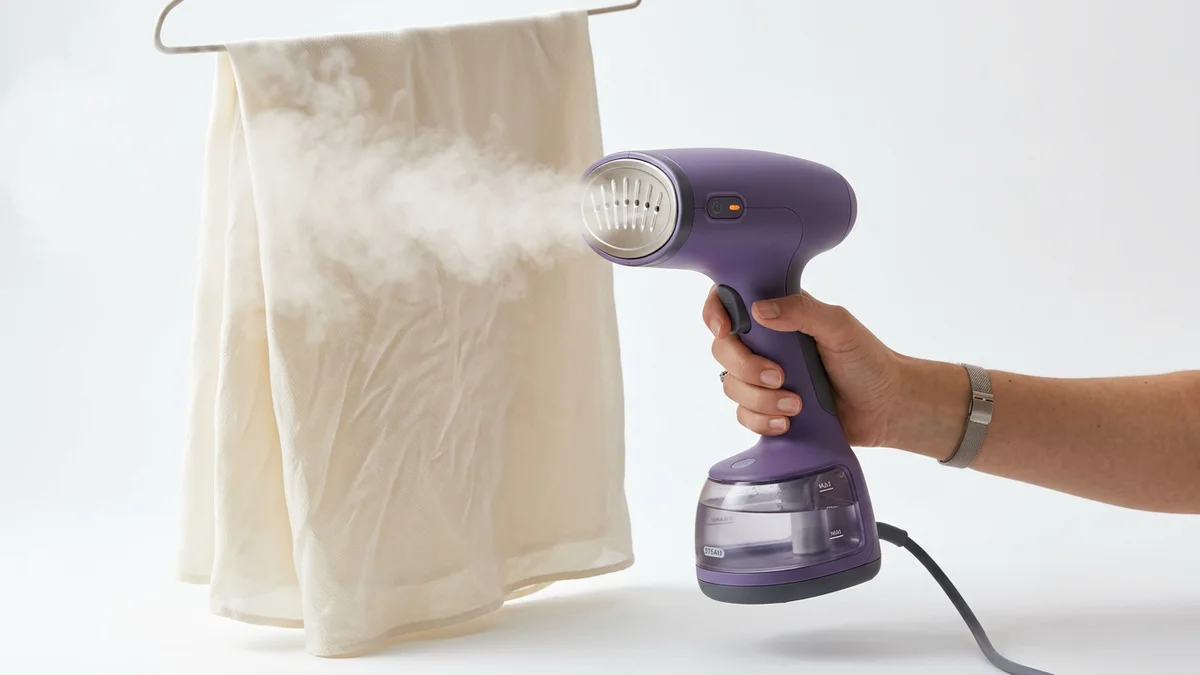
Gentle steaming is the safest way to remove wrinkles from delicate piña and jusi fabrics. Never iron traditional Filipino garments directly, as heat can damage the fibers.
View on Amazon →How to Care for Filipino Traditional Garments
Piña and jusi fabrics require special handling to preserve their beauty. Follow these care guidelines:
- Hand wash only using mild detergent soap
- Never dry clean the Barong — harsh chemicals make the fabric brittle
- Drip dry on a hanger — avoid wringing or twisting
- Steam instead of iron — direct heat damages plant fibers
- Store flat or hanging in a breathable garment bag
- Avoid perfume contact — alcohol in fragrances can stain sheer fabrics
Frequently Asked Questions
What is the national dress of the Philippines?
The Philippines has two national garments. The Barong Tagalog is the national dress for men, officially designated in 1975 by President Ferdinand Marcos. For women, the Baro't Saya (blouse and skirt) and the Terno (butterfly-sleeve dress) serve as national formal wear. Both garments are typically made from piña or jusi fabric and feature intricate Filipino embroidery.
What is the difference between Baro't Saya and Filipiniana?
Baro't Saya refers specifically to the traditional blouse-and-skirt combination worn since pre-colonial times. Filipiniana is a broader term encompassing all traditional women's formal clothing in the Philippines, including the Baro't Saya, Maria Clara dress, and Terno. Think of Filipiniana as the category and Baro't Saya as one style within it.
Can non-Filipinos wear Barong Tagalog or Filipiniana?
Yes, non-Filipinos are welcome to wear Filipino traditional clothing. Filipinos generally appreciate when foreigners embrace their cultural dress, especially at Filipino weddings, cultural events, or formal occasions. The key is wearing garments respectfully and understanding their cultural significance rather than treating them as costumes.
What is the Terno dress and who made it famous?
The Terno is a formal Filipino dress defined by its dramatic butterfly sleeves that extend outward from the shoulders. It evolved in the early 1900s as a distinctly Filipino formal garment. Imelda Marcos popularized the Terno internationally by wearing it at state functions and diplomatic events throughout the 1960s-1980s.
Where can you buy authentic Filipino traditional clothing?
Authentic Filipino traditional clothing is available from specialty retailers both in the Philippines and online. Major stores include Barong World, Kultura Filipino, Barong Warehouse, and Barongs R Us. In the Philippines, malls like SM Mall of Asia and Greenhills Shopping Center carry Filipino formal wear. Online retailers ship internationally.
What is piña fabric and why is it expensive?
Piña is a textile made from fibers extracted from pineapple leaves. The extraction and weaving process is entirely manual and extremely labor-intensive. A single meter of hand-woven piña fabric can take weeks to produce. This craftsmanship, combined with limited supply, makes piña one of the most expensive natural textiles in the world.
How is modern Filipino fashion incorporating traditional elements?
Modern Filipino designers blend traditional and contemporary elements in exciting ways. Slim-fit Barong Tagalogs use lighter fabrics like linen with minimalist embroidery. Cocktail-length Terno dresses feature innovative sleeve designs. Some designers create Barong tops paired with denim and terno-style jumpsuits, making heritage fashion accessible for everyday wear.
When is Barong Tagalog Week celebrated?
Barong Tagalog Week is celebrated annually from June 5 to June 11 in the Philippines. President Marcos established this observance in 1975 alongside designating the Barong Tagalog as the national attire. During this week, government offices and schools encourage wearing the Barong to promote Filipino cultural identity.
Conclusion
Filipino traditional clothing represents one of Southeast Asia's richest fashion heritages. From the Barong Tagalog's delicate embroidery to the Terno's iconic butterfly sleeves, these garments carry centuries of cultural meaning while evolving to fit modern style.
Whether you're shopping for a Filipino wedding, exploring your heritage, or discovering traditional clothing from across Asia, understanding these garments helps you appreciate their significance. Modern designers continue reimagining Filipino dress for contemporary life, ensuring these traditions thrive.
Ready to see how Filipino traditional clothing looks on you? Try CheckMyFit's virtual fitting tool to preview Barong Tagalog, Filipiniana dresses, and other traditional styles before you buy.