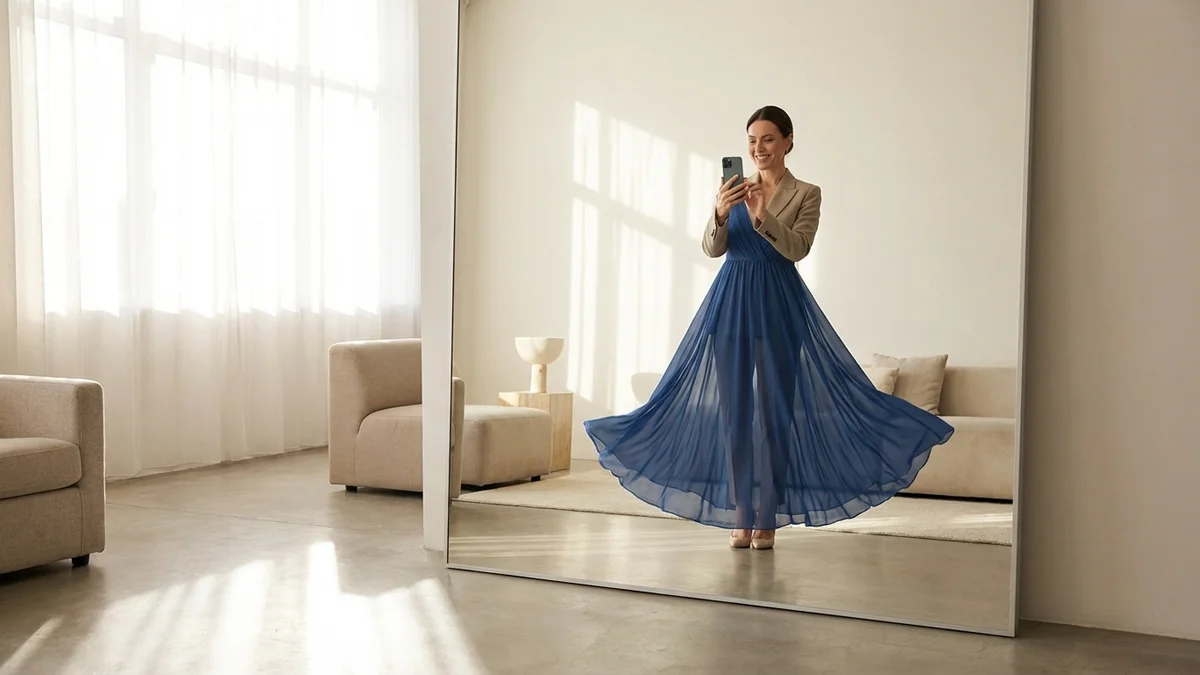
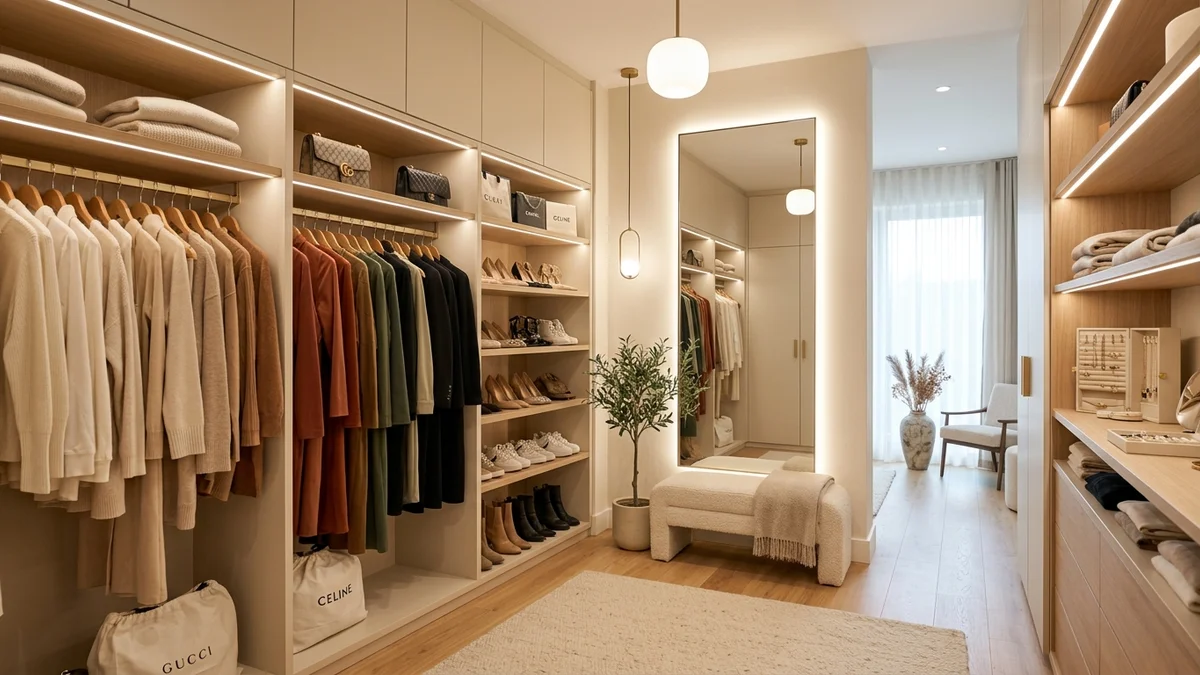
Everyone deserves a dedicated space to store, organize, and try on their clothes. Whether you call it a dressing room, walk-in closet, or fitting room, a well-designed clothes room transforms your daily routine from stressful to effortless.
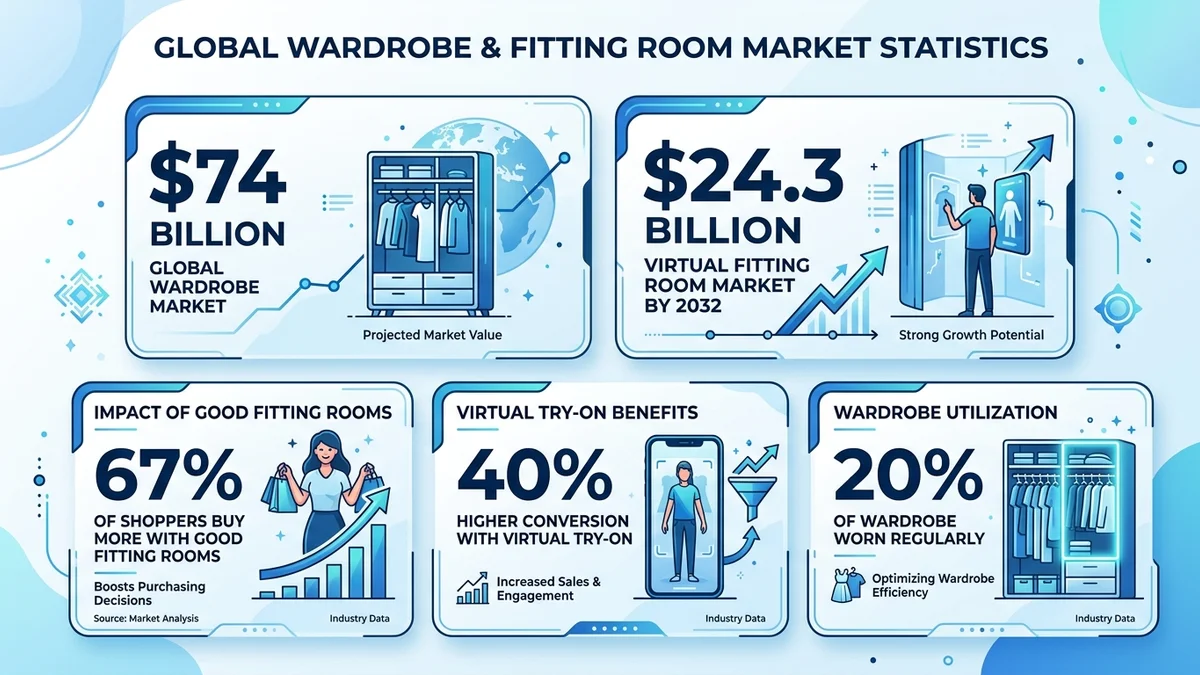
In 2026, the concept of a clothes room extends beyond physical spaces. Virtual fitting rooms powered by AI now let you try on outfits from anywhere using just your phone. The global wardrobe market is valued at $74 billion, and the virtual fitting room market is projected to reach $24.3 billion by 2032.
This guide covers everything about clothes rooms. You'll learn the different types, how to design and organize yours, and how virtual technology is redefining what a clothes room can be.
At a Glance
A clothes room is any dedicated space for storing, organizing, and trying on clothing. The term covers walk-in closets, dressing rooms, retail fitting rooms, and virtual fitting spaces. In 2026, the best clothes rooms combine smart physical organization with digital tools like AI virtual try-on. Whether you have a spare bedroom or just a corner, you can create a functional clothes room with proper planning, lighting, and storage solutions.
What Is a Clothes Room?
A clothes room is a designated area where you keep, organize, and try on your wardrobe. The term is broad and covers several distinct space types, from a small bedroom closet to a luxurious walk-in dressing room.
The concept has evolved significantly. Traditional clothes rooms were purely functional storage spaces. Modern versions serve as personal styling studios where you plan outfits, assess fit, and express your style.
What makes a space a clothes room rather than just a closet? Three key elements:
- Storage: Shelves, racks, drawers, and hanging space for your wardrobe
- Visibility: Good lighting and mirrors to see how clothes look on you
- Accessibility: An organized system that lets you find any item quickly
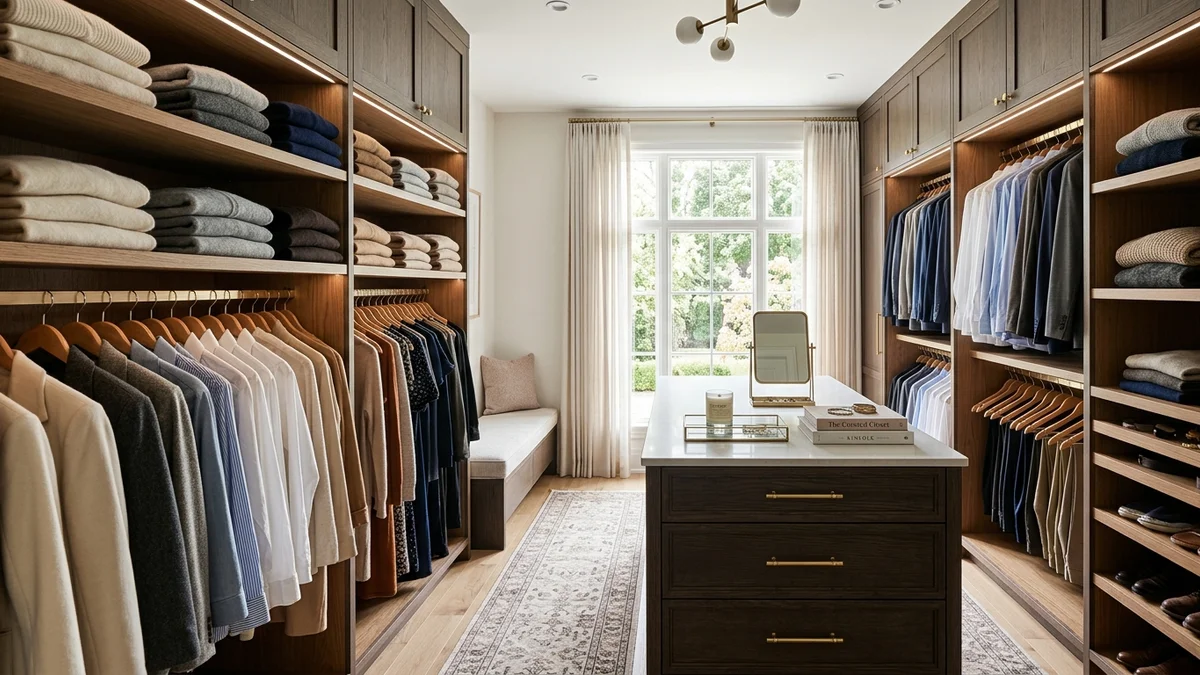
Key Takeaway: A clothes room is more than storage. It's a space designed to make getting dressed easier, faster, and more enjoyable.
Types of Clothes Rooms: Which One Fits Your Space?
Not every home has room for a luxury dressing suite. The good news is that clothes rooms come in many forms. Here's how they compare:
| Type | Space Needed | Best For | Average Cost |
|---|---|---|---|
| Walk-in closet | 1.5m x 2m minimum | Homeowners with spare space | $1,500 - $8,000 |
| Reach-in closet | Standard door width | Apartments, small bedrooms | $500 - $2,000 |
| Dressing room | Dedicated room | Fashion enthusiasts, couples | $3,000 - $15,000 |
| Retail fitting room | 1.2m x 1.2m per booth | Store owners | $500 - $3,000 per unit |
| Virtual fitting room | Phone or computer | Online shoppers, anyone | Free - $50/month |
Walk-In Closet
The walk-in closet is the most popular clothes room type. You need at least 1.5 meters by 2 meters for a single person, or 2 meters by 3 meters for a couple. Walk-in closets feature hanging rods, shelving, drawers, and often a center island for folded items.
Walk-in closet demand is growing at 7.5% annually, making it the fastest-growing segment in the clothes closet market.
Reach-In Closet
Standard bedroom closets can function as effective clothes rooms with the right organization system. Double hanging rods, shelf dividers, and door-mounted organizers maximize every inch.
Dressing Room
A dressing room is a dedicated room used exclusively for wardrobe storage and outfit preparation. It typically includes a vanity area, full-length mirror, seating, and extensive storage. Think of it as a clothes room with luxury features.
Retail Fitting Room
Retail fitting rooms are the clothes rooms you encounter while shopping. Good fitting rooms feature flattering lighting, clean mirrors, and enough space to move comfortably. Studies show that 67% of shoppers are more likely to purchase when the fitting room experience is positive.
Virtual Fitting Room
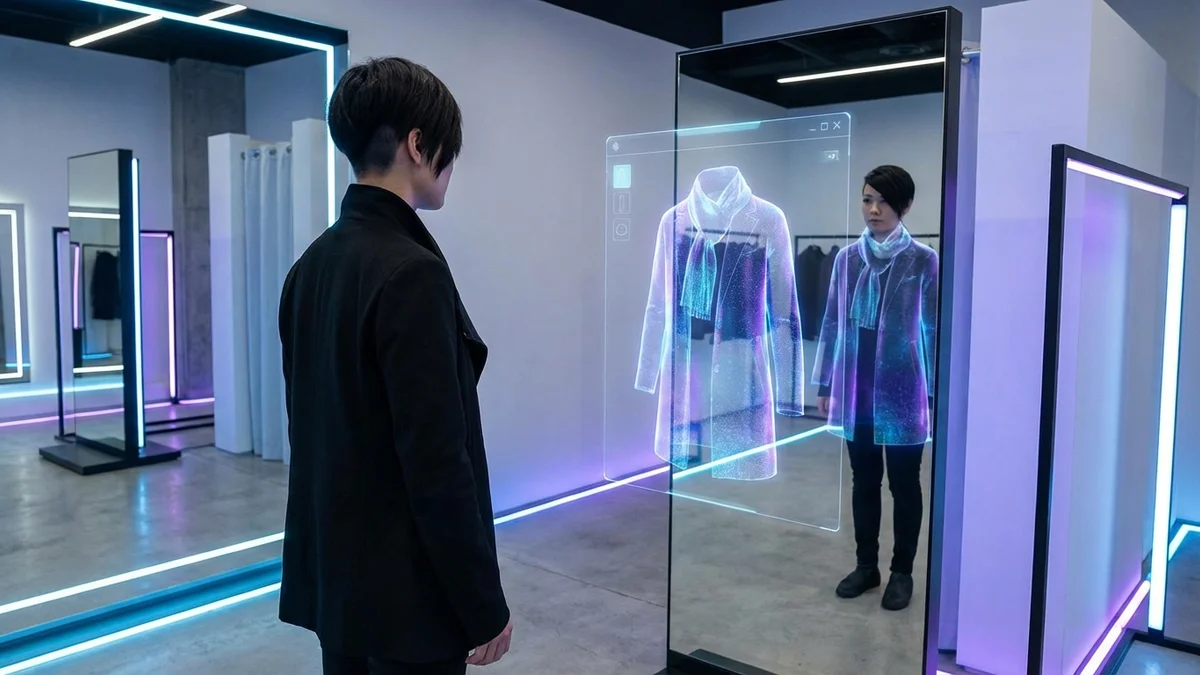
The newest type of clothes room doesn't require any physical space at all. Virtual fitting rooms use AI and augmented reality to let you try on clothes digitally. You upload a photo, select clothing items, and see how they look on your body in seconds.
What Is the Difference Between a Fitting Room and a Dressing Room?
These terms are often used interchangeably, but they have distinct meanings.
A fitting room is a small, enclosed space in a retail store designed for quick try-ons. It's practical, efficient, and focused on helping you decide whether to purchase an item. Fitting rooms are typically compact single-user cubicles with a mirror and hooks.
A dressing room is larger and more comfortable. You'll find dressing rooms in upscale retail stores, theaters, and homes. They're designed for a longer, more relaxed experience and may include seating, better lighting, multiple mirrors, and decorative elements.
A changing room is the broadest term. It refers to any space where you change clothes, including gym locker rooms, pool areas, and sports facilities.
| Feature | Fitting Room | Dressing Room | Changing Room |
|---|---|---|---|
| Size | Small (1.2m x 1.2m) | Medium to large | Varies widely |
| Purpose | Quick try-on | Extended styling | Changing clothes |
| Location | Retail stores | Stores, homes, theaters | Gyms, pools, stores |
| Comfort level | Basic | High | Basic to medium |
| Time spent | 5-10 minutes | 15-60 minutes | 2-10 minutes |
| Seating | Rarely | Usually | Sometimes |
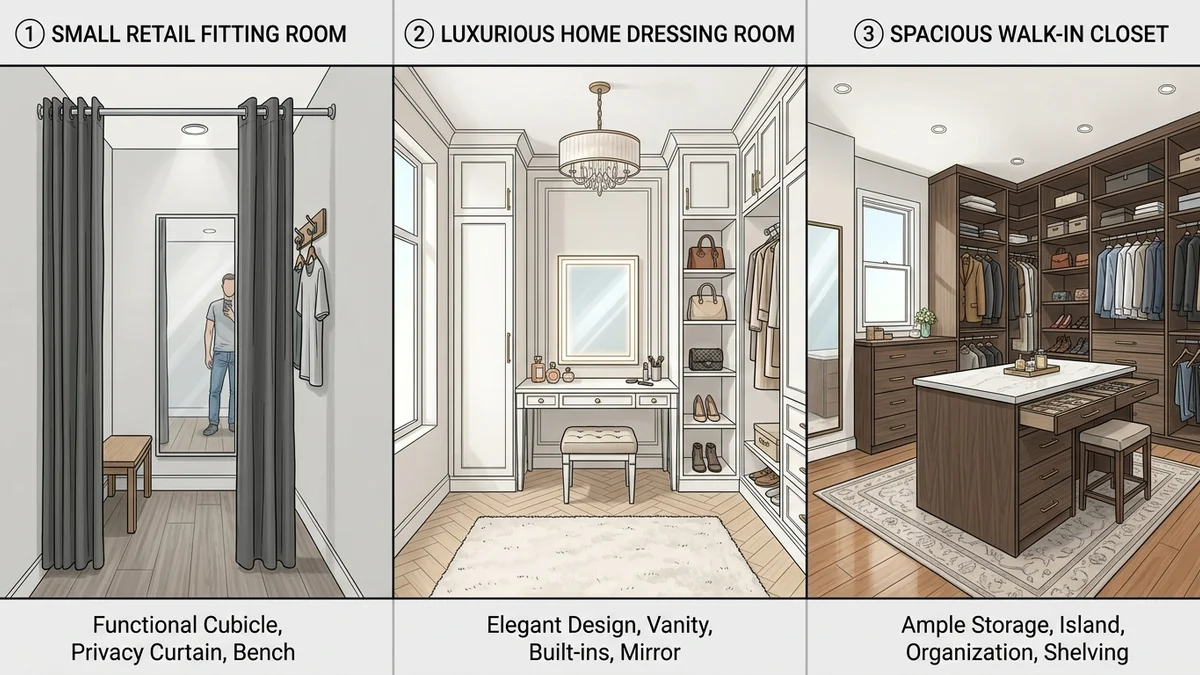
Key Takeaway: Fitting rooms are for quick decisions. Dressing rooms are for the full styling experience. Both are types of clothes rooms with different purposes.
How to Organize a Clothes Room: Step-by-Step Guide
An organized clothes room saves you time every morning and helps you get more wear from the clothes you own. Follow these steps to transform a cluttered closet into a functional clothes room.
Step 1: Declutter Your Wardrobe
Start by removing everything from your clothes room. Sort items into four categories:
- Keep: Clothes you've worn in the past 12 months that still fit
- Donate: Good-condition items that no longer suit your style
- Repair: Pieces that need minor fixes (buttons, hems, zippers)
- Discard: Damaged items beyond repair
The average person wears only 20% of their wardrobe regularly. Decluttering creates space for the pieces you actually love.
Step 2: Categorize and Sort
Once you've decluttered, organize your remaining wardrobe by category. Group similar items together:
- By type: Shirts, pants, dresses, outerwear, activewear
- By season: Current season in front, off-season stored separately
- By color: Within each category, arrange by color for visual appeal
- By frequency: Most-worn items at eye level and arm's reach
Step 3: Maximize Storage
Use every available inch of your clothes room:
- Double hanging rods: Install a second rod below for shorter items like shirts and skirts
- Shelf dividers: Keep folded stacks neat and prevent them from toppling
- Drawer organizers: Separate undergarments, socks, and accessories
- Over-the-door storage: Add hooks or pocket organizers for bags, scarves, and belts
- Vacuum-sealed bags: Store off-season clothing compactly under the bed or on high shelves
Step 4: Invest in Matching Hangers
Uniform hangers create a clean, boutique-like look and prevent clothes from slipping. Velvet hangers are slim (saving rod space) and grip fabric effectively. Replace bulky plastic and wire hangers entirely.
Step 5: Add Labels and Zones
Create designated zones for different categories. Labels on bins, baskets, and shelves help you and other household members maintain the system.
Key Takeaway: Organization isn't a one-time project. Use the "one in, one out" rule. Every time you add a new piece, remove one you no longer wear.
How to Design a Clothes Room: Ideas and Inspiration
Designing a clothes room means balancing aesthetics with functionality. Here are the essential elements to consider.
Lighting
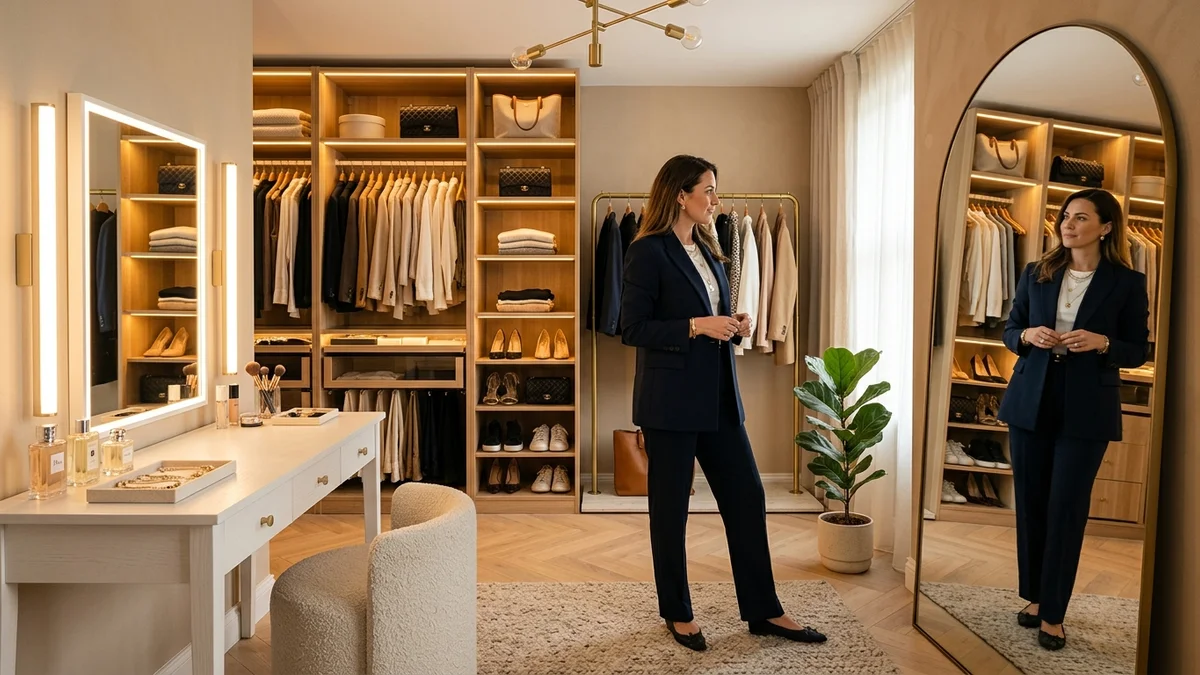
Lighting is the single most important design element in a clothes room. Poor lighting makes colors look different than they do in daylight, leading to outfit choices you regret later.
- Natural light: Position your dressing area near a window when possible
- LED strips: Install inside wardrobes and along shelves for visibility
- Overhead fixtures: Use bright, even ceiling lights rated at 4000K-5000K (daylight temperature)
- Vanity lighting: Add side-mounted lights at face height to eliminate shadows
Aim for at least five light sources in your clothes room for optimal coverage.
Mirrors
Every clothes room needs at least one full-length mirror. Position it where you can step back at least 1.5 meters to see your entire outfit. Mirrored closet doors serve double duty by reflecting light and making the space feel larger.
Seating
A bench, ottoman, or chair makes your clothes room more functional. You need somewhere to sit while putting on shoes, folding clothes, or simply deciding between outfit options. Ottomans with hidden storage add both seating and extra space.
Color Scheme
Light, neutral colors make clothes rooms feel larger and let your clothing be the visual focus. White, cream, light gray, and soft beige are the most popular choices. Dark walls can work in larger rooms for a dramatic, boutique feel.
Flooring
Carpet or padded rugs add warmth and comfort, especially if you're standing barefoot while trying on clothes. Avoid cold tile or hard surfaces in primary dressing areas.
How to Create a Clothes Room in a Small Space
You don't need a spare bedroom to have a functional clothes room. Here are proven strategies for small spaces.
Convert a nook or alcove. Many bedrooms have unused corners or alcoves that can hold a clothing rack, mirror, and small shelf unit. Add a curtain or room divider for privacy.
Use a wardrobe as a room divider. A tall wardrobe placed perpendicular to the wall creates a natural partition, defining a dressing zone within your bedroom.
Go vertical. When floor space is limited, build upward. Floor-to-ceiling shelving, high-mounted rods, and wall-mounted hooks maximize storage without expanding the footprint.
Fold like a pro. Marie Kondo's vertical folding method lets you see every item in a drawer at once. Standing shirts on end instead of stacking them can triple your visible wardrobe.
Use the back of the door. Over-the-door organizers hold shoes, accessories, jewelry, and small items without taking any floor or wall space.
| Small Space Solution | Space Saved | Cost | Difficulty |
|---|---|---|---|
| Double hanging rod | 50% more hanging | $15-$30 | Easy DIY |
| Vertical folding | 3x drawer visibility | Free | Easy |
| Over-the-door organizer | 12-20 extra pockets | $15-$25 | No tools needed |
| Vacuum seal bags | 75% volume reduction | $20-$40 | Easy |
| Shelf dividers | 30% neater stacks | $10-$20 | Easy DIY |
| Rolling rack | Mobile clothes room | $25-$60 | No assembly |
The Virtual Clothes Room: Try On Outfits Without Physical Space
The biggest revolution in clothes rooms doesn't involve any physical space at all. Virtual fitting technology turns your smartphone into a personal clothes room that you carry everywhere.
Virtual try-on technology uses artificial intelligence and augmented reality to overlay clothing onto your photo. The AI analyzes your body shape, proportions, and pose, then renders how a garment would drape and fit on you specifically.
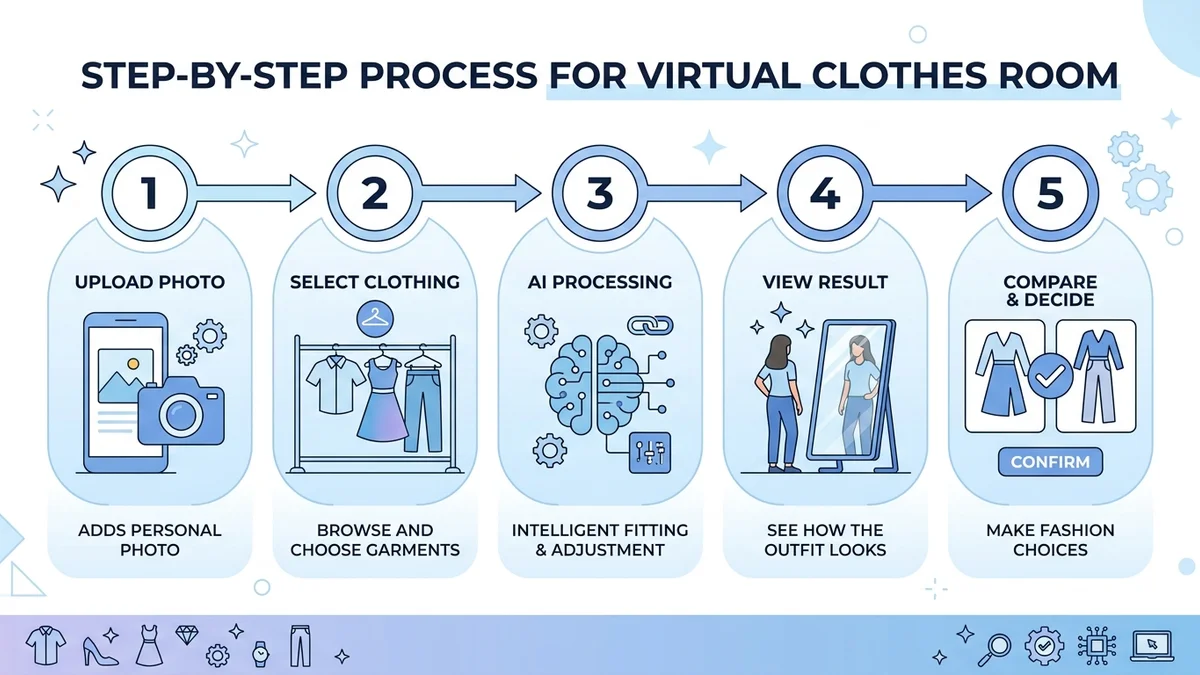
How Virtual Fitting Rooms Work
- Upload your photo or use your device camera
- Select clothing items from available catalogs
- AI processes the image, mapping your body dimensions
- View the result showing how the outfit looks on you
- Adjust and compare different items and combinations
Why Virtual Clothes Rooms Matter
Virtual fitting rooms solve real problems that physical clothes rooms can't:
- No space needed: Try on unlimited outfits from your couch
- No travel required: Skip the trip to the store fitting room
- Reduced returns: See how clothes fit before purchasing online
- Unlimited wardrobe: Access thousands of items instantly
- Body confidence: Try styles in private, pressure-free environment
Retailers using virtual fitting technology report up to 40% higher conversion rates and nearly 50% fewer returns.
Try a Virtual Clothes Room with CheckMyFit
CheckMyFit brings the clothes room experience to your phone. Upload your photo, browse clothing options, and see exactly how each piece looks on your body. It's the simplest way to experiment with new styles, plan outfits, and shop with confidence.
Whether you have a luxurious walk-in closet or no clothes room at all, virtual try-on gives everyone access to the same styling experience. Find clothes that match your body type without leaving home.
Key Takeaway: Virtual clothes rooms complement physical ones. Use your physical space for daily wardrobe storage and your virtual clothes room for shopping and styling experiments.
Essential Furniture and Accessories for Your Clothes Room
The right furniture transforms a basic closet into a proper clothes room. Here's what you need based on your space.
Must-Have Items
- Full-length mirror: Essential for outfit assessment
- Clothing rack: Extra hanging space for outfit planning or overflow
- Storage bins and baskets: Organize accessories, scarves, belts
- Drawer organizers: Keep small items separated and visible
- Step stool: Access high shelves safely
Nice-to-Have Items
- Vanity table with mirror: Makeup and grooming station
- Ottoman with storage: Seating plus hidden storage
- Garment steamer: Remove wrinkles without an ironing board
- Ring light or LED strips: Better lighting for outfit selfies
- Jewelry organizer: Display and protect accessories
Tech Additions
- Smart mirror: Mirrors with built-in lighting controls and virtual try-on
- Phone tripod: Capture outfit photos and use virtual styling apps
- LED closet lights: Motion-activated lights inside wardrobes
Recommended Products for Your Clothes Room
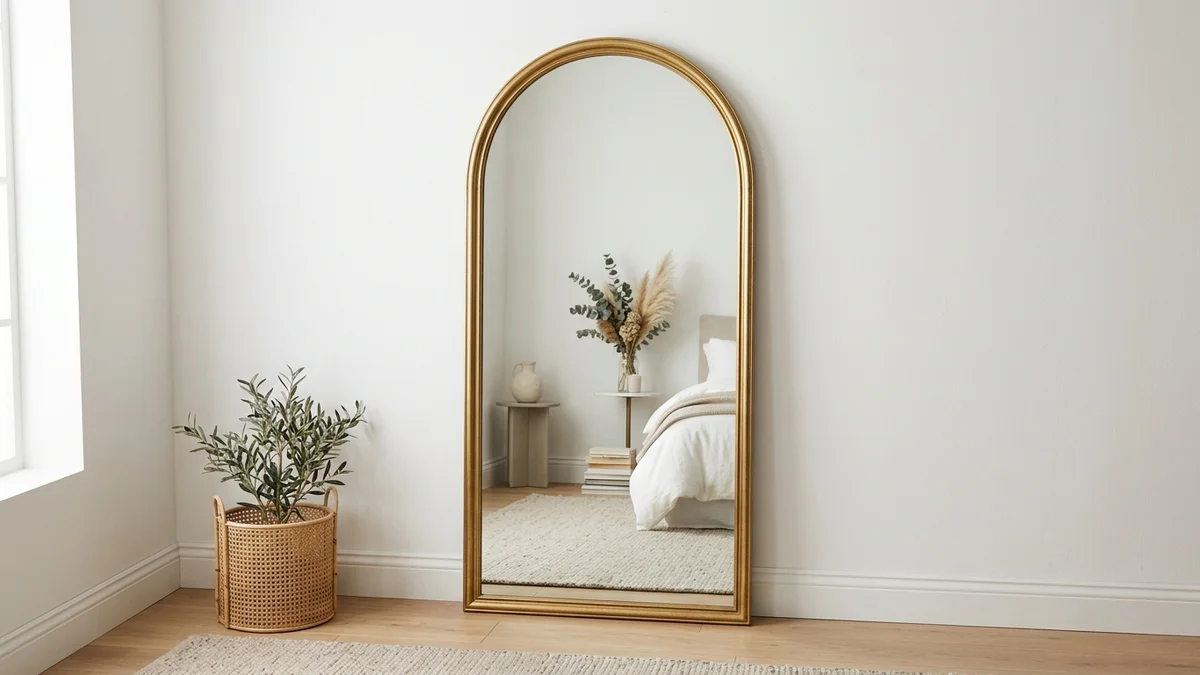
Every clothes room needs a full-length mirror. This arched design adds elegance while giving you a complete head-to-toe view for outfit assessment.
View on Amazon →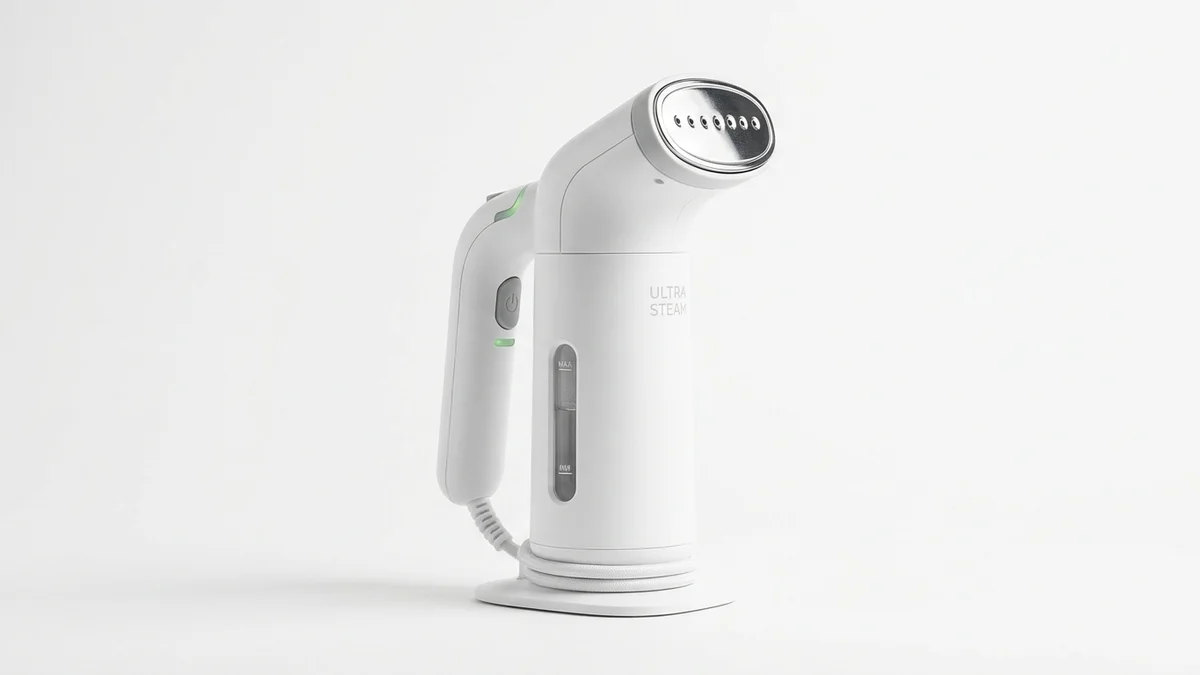
Keep clothes wrinkle-free right in your dressing room. This compact steamer heats in 60 seconds and works on all fabric types.
View on Amazon →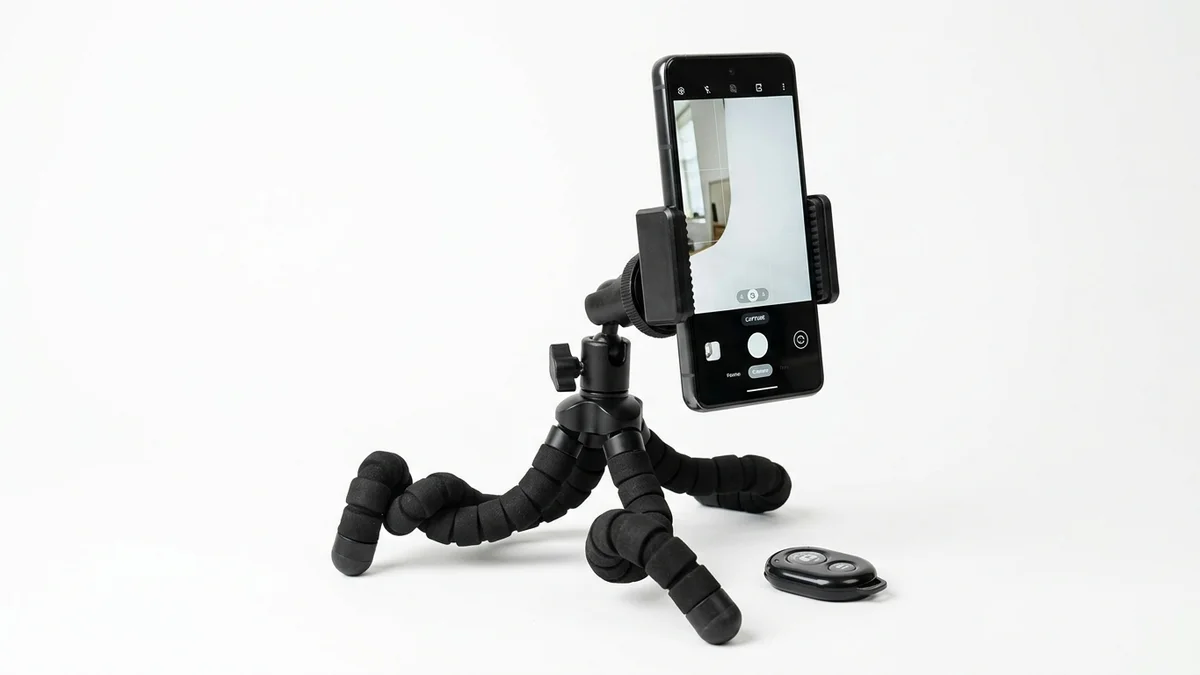
Perfect for outfit selfies and virtual try-on sessions. The Bluetooth remote lets you snap photos hands-free from across the room.
View on Amazon →Frequently Asked Questions
What size should a clothes room be?
A functional clothes room needs at least 1.5 meters by 2 meters for one person. Couples should aim for 2 meters by 3 meters or larger. Hanging clothes requires a minimum depth of 65 centimeters. For a retail fitting room, standard individual booths measure 1.2 meters by 1.2 meters. Even smaller spaces can work as clothes rooms with creative vertical storage and proper organization.
What is the best lighting for a clothes room?
Daylight-temperature LED lighting between 4000K and 5000K provides the most accurate color rendering for a clothes room. Avoid warm yellow bulbs that distort clothing colors. Combine overhead fixtures, LED strips inside wardrobes, and side-mounted vanity lights. Aim for at least five light sources distributed evenly throughout the space to eliminate shadows.
How to create a walk-in closet in a small space?
Convert an alcove, spare corner, or underused room section into a walk-in area. Use floor-to-ceiling shelving to maximize vertical space. Install double hanging rods for shorter garments. Add a curtain or sliding door instead of a hinged door to save swing space. Even a 1.5-meter by 1.5-meter area can function as an effective mini walk-in closet with smart organization.
How much does it cost to build a dressing room?
A basic reach-in closet makeover costs $500 to $2,000. Custom walk-in closet systems range from $1,500 to $8,000 depending on materials and features. A full dedicated dressing room with custom cabinetry, lighting, and luxury finishes can run $3,000 to $15,000 or more. DIY solutions using modular shelving and clothing racks start as low as $100.
Can I try on clothes virtually without a fitting room?
Yes. Virtual fitting room technology lets you try on clothes using just your phone or computer. Apps like CheckMyFit use AI to overlay garments onto your photo, showing realistic fit and drape on your actual body shape. Virtual try-on is free or low-cost and works from anywhere, no physical clothes room required.
What furniture do you need for a dressing room?
Essential dressing room furniture includes a full-length mirror, hanging rod or wardrobe, shelving for folded items, and drawer units for accessories. Recommended additions are an ottoman or bench for seating, a vanity table with mirror and lighting, and storage bins for seasonal items. A garment steamer and shoe rack round out a well-equipped dressing room.
How to turn a spare room into a closet?
Start by measuring the room and planning zones for hanging, folding, shoes, and accessories. Install wall-mounted closet systems or freestanding wardrobes along the walls. Add a center island if space allows. Include a full-length mirror, proper lighting, and a seating area. Paint walls a light neutral color to make clothing easy to see. Budget $500 to $5,000 depending on the system you choose.
What makes a good retail fitting room?
A good retail fitting room has flattering lighting at daylight temperature, a clean full-length mirror, sturdy hooks for bags and clothing, sufficient space to move comfortably, and a lockable door or secure curtain. Temperature control matters too. Fitting rooms that are too hot or cold discourage shoppers from trying on multiple items and reduce purchase rates.
Conclusion
Your clothes room is where outfit decisions happen. Whether it's a walk-in closet, a bedroom corner, or a virtual fitting room on your phone, the right setup saves time, reduces wardrobe stress, and helps you look your best every day.
Start with the basics: declutter, organize by category, and invest in proper lighting and a full-length mirror. If space is limited, go vertical with your storage and use digital tools to extend your clothes room beyond four walls.
Ready to experience the ultimate virtual clothes room? Try CheckMyFit free and see how any outfit looks on you before you buy. Your phone is now the most powerful clothes room you own.